Docker Swarm: Container Orchestration
Building, Scaling, and Managing Production-Ready Container Clusters
What's Included:
At a Glance
Docker Swarm: Container Orchestration is a professional Docker eBook by Dorian Thorne, 333 pages, available as an instant PDF and EPUB download for €13.90 with lifetime access and free updates. Building, Scaling, and Managing Production-Ready Container Clusters.
- Length: 333 pages
- Format: PDF and EPUB (instant download)
- Language: English
- Topic: Docker
- Edition: 1st Edition
- Price: €13.90
Key Highlights
- Complete Docker Swarm architecture deep dive
- Raft consensus and manager/worker coordination explained
- Service scaling, rolling updates, and rollback strategies
- Overlay networking and ingress routing mesh
- Secure secret management and TLS cluster security
- Persistent storage strategies in Swarm environments
- Monitoring, maintenance, and upgrade best practices
- Production-ready cluster design frameworks
- Career roadmap for orchestration engineers
Overview
Master Docker Swarm orchestration: cluster architecture, services, scaling, overlay networking, secrets, security, monitoring, and production-ready container cluster design.
The Problem
Running containers on a single host is not enough for production systems. High availability, automated failover, secure networking, scaling, and rolling updates require orchestration.
Without a structured understanding of cluster architecture, service replication, networking layers, and storage coordination, Docker deployments become fragile and difficult to maintain.
The Solution
This book provides a complete guide to Docker Swarm clustering. You will understand Swarm architecture, deploy scalable services, secure inter-node communication, manage secrets, and design clusters capable of handling real production workloads.
You gain both architectural insight and hands-on operational skill.
About This Book
Docker Swarm: Container Orchestration
Building, Scaling, and Managing Production-Ready Container Clusters
Running containers locally is easy. Running them reliably across multiple machines, with high availability, automated failover, rolling updates, and secure networking — that is orchestration.
Docker Swarm: Container Orchestration is a practical, production-focused guide to building and managing real container clusters using Docker’s native orchestration engine. If you already understand Docker fundamentals and are ready to move into clustered, production-grade deployments, this book is your roadmap.
Why Docker Swarm?
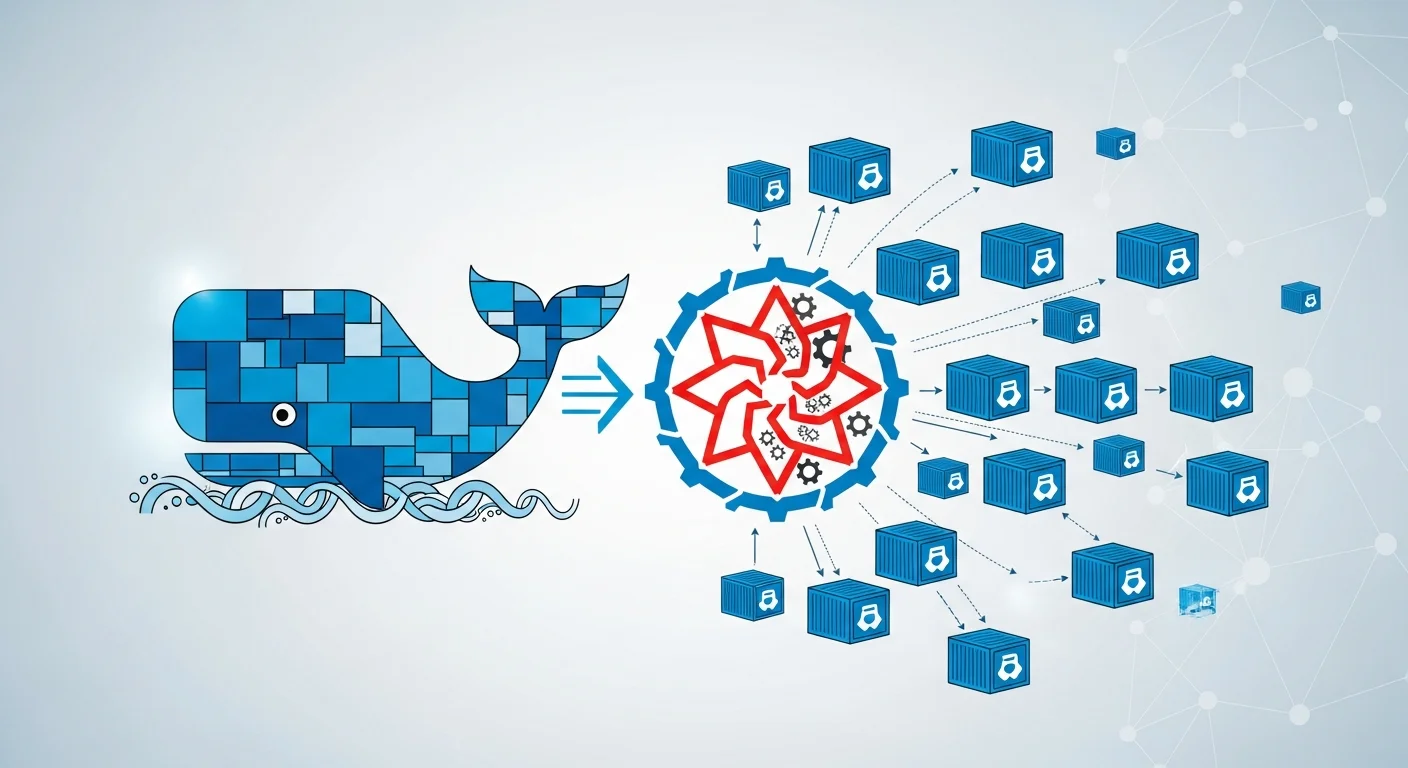
Docker Swarm transforms multiple Docker hosts into a unified cluster using tools you already know. It integrates directly with the Docker CLI and API, requires no separate control plane installation, and provides built-in service orchestration, overlay networking, load balancing, and secret management.
Its simplicity makes it accessible. Its architecture makes it powerful. This book helps you unlock both.
What You Will Learn
You will move beyond standalone containers and into cluster-level thinking. The book covers:
- Swarm Architecture: Manager nodes, worker nodes, Raft consensus, and cluster coordination internals
- Cluster Initialization & Node Management: Creating and expanding resilient Swarm clusters
- Service Management: Deploying services, replicas, scaling strategies, rolling updates, and rollback mechanisms
- Overlay Networking: Multi-host service communication and secure container networking
- Ingress & Load Balancing: Routing mesh architecture and production traffic handling
- Volume Management: Persistent storage strategies in distributed Swarm environments
- Secrets & Security: TLS mutual authentication, Docker secrets, and cluster hardening
- Monitoring & Maintenance: Health checks, upgrades, lifecycle management, and operational best practices
Designed for Production Reality
The final chapters focus on designing production-ready Swarm clusters. You’ll learn how to plan capacity, architect resilient topologies, implement secure communication, and maintain uptime during updates and maintenance windows.
This is not theory-driven orchestration. It is operational knowledge designed for real infrastructure.
Structured for Mastery
The book progresses logically:
- Foundations and architecture (Chapters 1–4)
- Services and scaling (Chapters 5–6)
- Networking and storage (Chapters 7–10)
- Security, monitoring, and maintenance (Chapters 11–14)
- Production design and career growth (Chapters 15–16)
The appendices provide cheat sheets, deployment templates, hardening checklists, troubleshooting workflows, and a career roadmap for container orchestration professionals.
Focus: Practical Docker Swarm orchestration
Level: Intermediate to Advanced
Audience: Developers, DevOps engineers, SREs, infrastructure architects
Who Is This Book For?
- Developers transitioning from single-node Docker to clustered environments
- DevOps engineers deploying containerized production workloads
- Site Reliability Engineers (SREs)
- Infrastructure architects designing container platforms
- Professionals preparing for advanced DevOps or orchestration roles
Who Is This Book NOT For?
This book is not a beginner Docker introduction. If you have not yet built images or run standalone containers, you should start with a foundational Docker guide first.
It focuses specifically on Docker Swarm orchestration, not Kubernetes or other orchestration platforms.
Table of Contents
- Why Container Orchestration Matters
- Docker Swarm Architecture
- Initializing a Swarm
- Managing Nodes
- Creating and Managing Services
- Scaling and Rolling Updates
- Overlay Networking
- Load Balancing and Ingress
- Managing Volumes in Swarm
- Storage Best Practices
- Managing Secrets
- Securing the Swarm Cluster
- Monitoring Swarm Services
- Maintaining and Upgrading Swarm
- Designing Production-Ready Swarm Clusters
- From Docker User to Orchestration Engineer
- Appendices: Cheat Sheets, Templates, Security Checklist, Troubleshooting
Requirements
- Working knowledge of Docker basics (images, containers, Dockerfiles)
- Familiarity with Linux command line
- Basic networking knowledge (IP, ports, TCP)
- Access to multiple Docker hosts (VMs or cloud instances recommended)