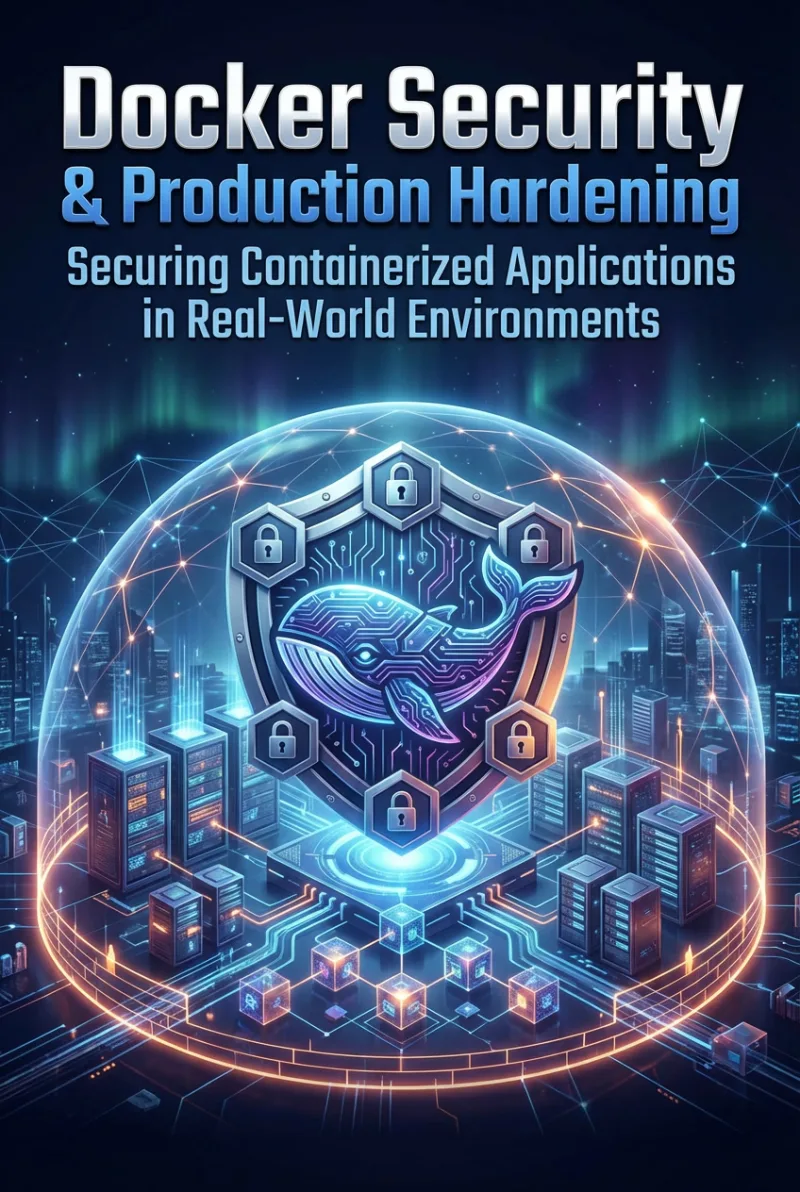
Docker Security & Production Hardening
Securing Containerized Applications in Real-World Environments
What's Included:
At a Glance
Docker Security & Production Hardening is a professional Docker eBook by Dorian Thorne, 329 pages, available as an instant PDF and EPUB download for €12.90 with lifetime access and free updates. Securing Containerized Applications in Real-World Environments.
- Length: 329 pages
- Format: PDF and EPUB (instant download)
- Language: English
- Topic: Docker
- Edition: 1st Edition
- Price: €12.90
Key Highlights
- Comprehensive Docker threat modeling framework
- Secure Dockerfile design principles
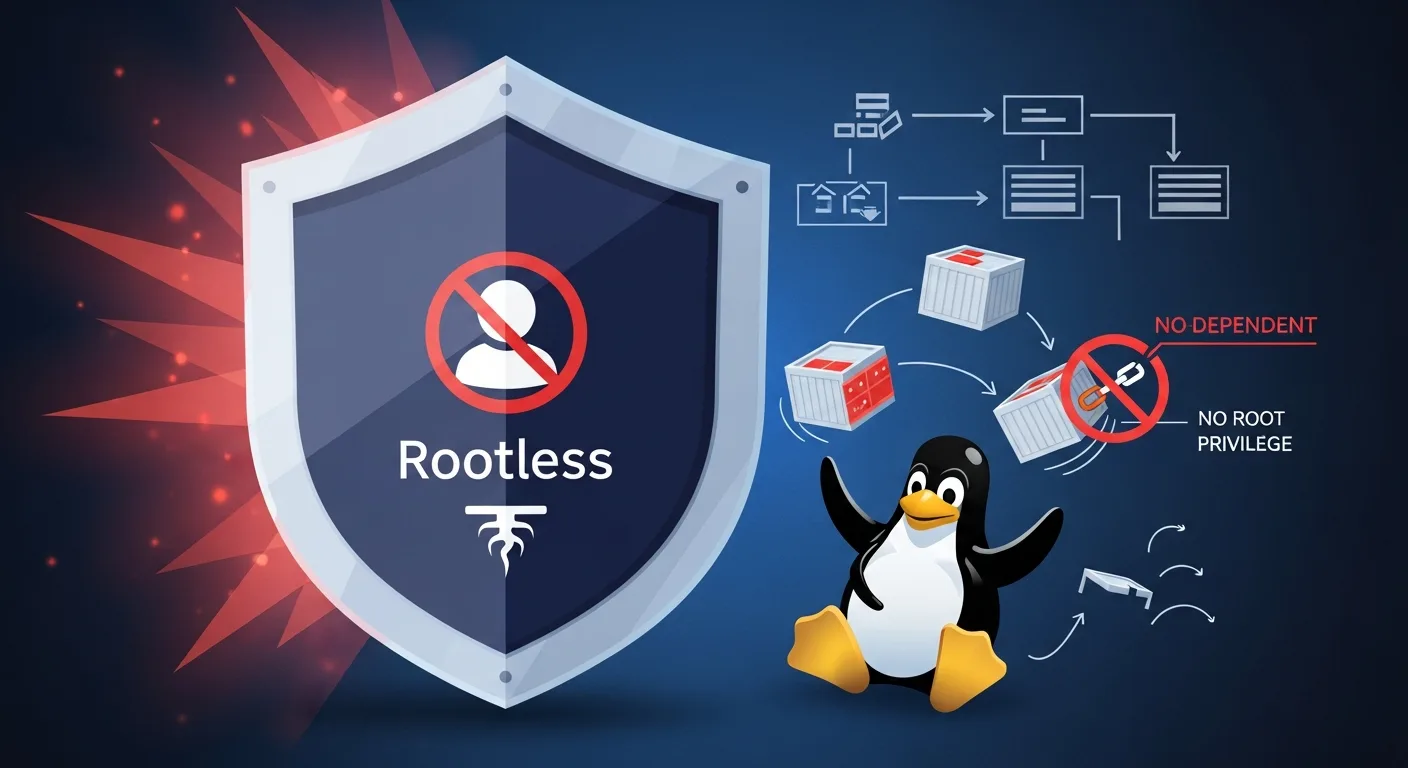
- Runtime isolation and capability hardening
- Secrets management best practices
- CI/CD pipeline security for containers
- Production-ready Docker host hardening guide
- Incident response playbook for container breaches
Overview
Learn how to secure Docker containers in production. Master image hardening, runtime security, secrets management, CI/CD protection, and container threat modeling.
The Problem
Docker environments are often deployed with insecure defaults: root containers, unverified images, exposed secrets, and weak runtime isolation.
Without proper hardening, containerized infrastructure becomes a high-speed vulnerability amplifier.
The Solution
This book provides a complete, production-ready security framework for Docker environments—from image build to runtime monitoring and incident response.
It transforms convenience-driven container setups into hardened, defensible infrastructure.
About This Book
Docker Security & Production Hardening is a comprehensive, practical guide to securing containerized applications in real-world production environments.
Docker transformed how we build and ship software—but it did not automatically solve security. Containers running as root, unverified public images, exposed secrets, overly permissive networks, and misconfigured CI/CD pipelines remain common in production systems worldwide.
This book closes that gap.
Security Is Not Optional in Modern DevOps
Containers now power startups, enterprises, CI/CD pipelines, cloud-native platforms, and edge deployments. The same speed and portability that make Docker powerful also allow insecure configurations to scale instantly.
This book provides a structured approach to securing Docker across the entire lifecycle:
- Threat modeling containerized systems
- Building minimal, hardened images
- Integrating vulnerability scanning
- Applying runtime security controls
- Implementing resource isolation and network hardening
- Managing secrets securely
- Securing CI/CD pipelines
- Hardening Docker hosts
Security from Build to Runtime
Security begins before deployment. You will learn how to:
- Create minimal attack surface images
- Avoid dangerous Dockerfile patterns
- Use scanning tools effectively
- Implement supply chain protections
- Prevent secret leakage in image layers
The core chapters address runtime hardening—capabilities, namespaces, cgroups, networking isolation, TLS configuration, secure exposure patterns, and observability.
Operational Security & Incident Response
No system is perfectly secure. This book teaches you how to detect, monitor, and respond when incidents occur in Docker environments. Logging strategies, runtime visibility, and containment techniques ensure you are prepared—not reactive.
From Docker Hardening to Cloud-Native Security
The final chapters expand your perspective beyond individual containers. You will understand how Docker security practices evolve into broader cloud-native security architecture.
This book is not theoretical. Every chapter includes practical configurations, commands, and real-world patterns forged in production environments.
If you deploy Docker in production, security is your responsibility. This book gives you the tools to do it correctly.
Who Is This Book For?
- DevOps engineers running Docker in production
- Platform and infrastructure teams
- Cloud engineers managing containerized workloads
- Security professionals auditing Docker environments
- Senior developers deploying containerized applications
Who Is This Book NOT For?
- Complete beginners learning Docker basics
- Readers seeking only introductory container concepts
- Developers with no production deployment experience
Table of Contents
- Why Container Security Is Different
- Threat Modeling Docker Environments
- Building Minimal and Secure Images
- Image Scanning and Vulnerability Management
- Securing Containers at Runtime
- Resource Isolation and Limits
- Docker Network Hardening
- Securing External Access
- Managing Secrets Securely
- Secure Configuration Practices
- Logging and Observability
- Incident Response in Docker Environments
- Hardening Docker Hosts
- Secure CI/CD for Containers
- Common Docker Security Anti-Patterns
- From Docker Hardening to Cloud-Native Security
Requirements
- Basic familiarity with Docker commands and containers
- Understanding of Linux fundamentals
- Experience deploying Docker applications