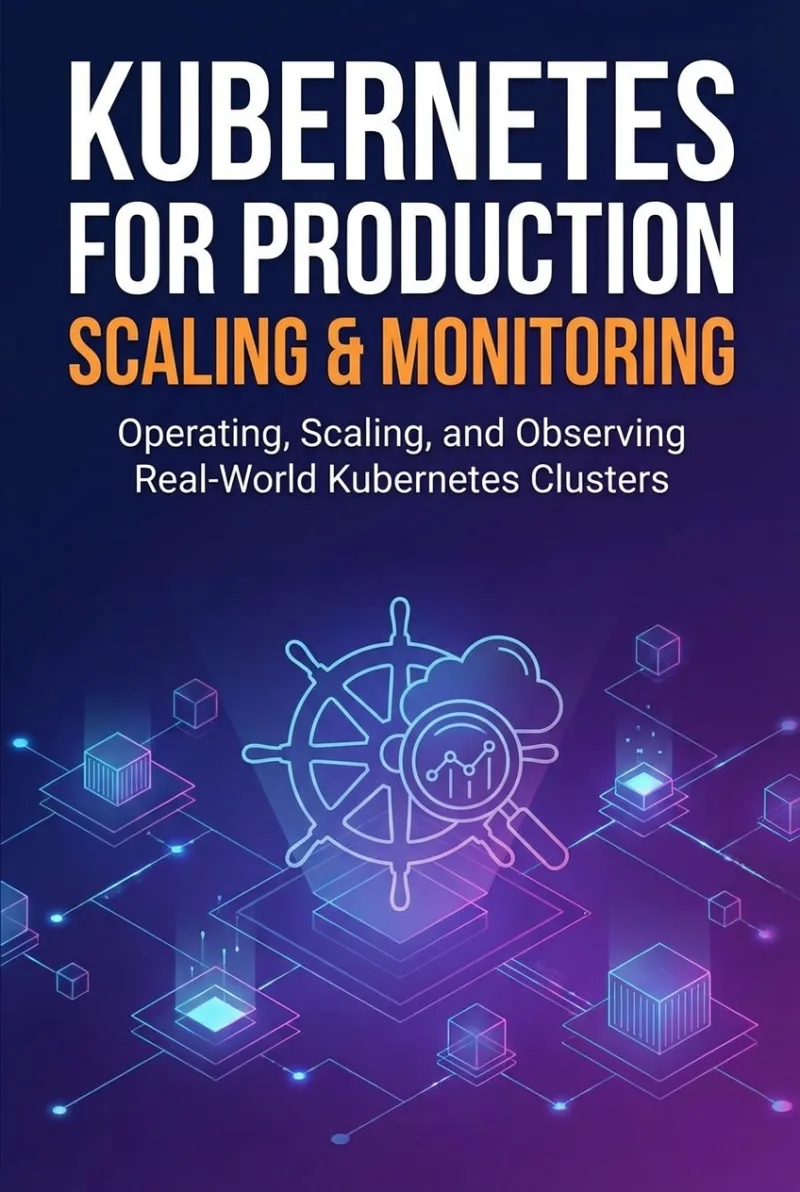
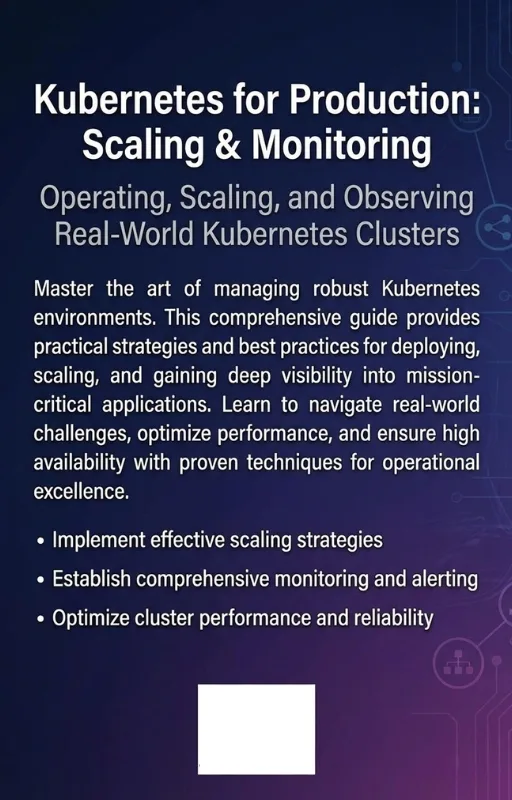
Kubernetes for Production: Scaling & Monitoring
Operating, Scaling, and Observing Real-World Kubernetes Clusters
What's Included:
At a Glance
Kubernetes for Production: Scaling & Monitoring is a professional Kubernetes eBook by Dorian Thorne, 334 pages, available as an instant PDF and EPUB download for €13.90 with lifetime access and free updates. Operating, Scaling, and Observing Real-World Kubernetes Clusters.
- Length: 334 pages
- Format: PDF and EPUB (instant download)
- Language: English
- Topic: Kubernetes
- Price: €13.90
Key Highlights
- Deep dive into Horizontal and Vertical Pod Autoscaling
- Cluster-level scaling strategies
- High availability design patterns
- Production monitoring architecture
- Centralized logging best practices
- Effective alert design frameworks
- Kubernetes incident response workflow
- Capacity planning and forecasting techniques
- Change management and safe upgrade strategies
- Production anti-pattern detection and prevention
Overview
Learn how to scale, monitor, and operate Kubernetes clusters in production. Master autoscaling, high availability, observability, incident response, and SRE best practices.
The Problem
Many teams deploy Kubernetes successfully but struggle to operate it at scale. Autoscalers misbehave, alerts lack context, and incidents take too long to diagnose.
The cluster runs — but it is not production-ready.
The Solution
This book provides a structured framework for scaling, monitoring, and operating Kubernetes clusters with confidence. It transforms reactive operations into resilient, observable production systems.
About This Book
Kubernetes for Production: Scaling & Monitoring is a comprehensive, practitioner-focused guide to operating, scaling, and observing Kubernetes clusters in real-world production environments.
Kubernetes adoption has exploded across organizations of every size. Yet running Kubernetes successfully in production requires far more than deploying workloads. It demands operational discipline, resilience design, scalable architecture, and actionable observability.
This book equips you with the tools, frameworks, and mindset required to operate Kubernetes clusters that are stable under pressure, responsive under load, and transparent during incidents.
Scaling Kubernetes the Right Way
Scaling in Kubernetes is not simply turning on autoscaling. It requires understanding:
- Horizontal Pod Autoscaling (HPA) and its tuning parameters
- Vertical Pod Autoscaling (VPA) trade-offs
- Cluster autoscaling strategies
- Load distribution patterns
- Scaling stateful workloads safely
This book explains not only how scaling mechanisms work, but when to use each and how to prevent autoscaling instability.
Designing Resilient Production Workloads
Production systems fail. Infrastructure zones go offline. Nodes crash. Deployments misbehave.
You will learn how to:
- Design highly available workloads
- Implement multi-node and multi-zone resilience
- Manage resource requests and limits properly
- Optimize storage and network performance
- Plan capacity before you hit limits
Resilience is not an afterthought. It is an architectural decision.
Observability That Enables Action
Monitoring is not about collecting metrics. It is about building systems that tell humans what matters.
This book covers:
- Metrics architecture in Kubernetes
- Production-grade logging strategies
- Designing meaningful alerts
- Incident response workflows
- Post-incident operational improvement
Observability becomes actionable when it reduces uncertainty and accelerates decision-making.
From Cluster Operations to Platform Discipline
The final chapters address production anti-patterns and guide you toward evolving from reactive operations to SRE-driven platform engineering practices.
This book does not teach Kubernetes basics. It teaches production responsibility.
Production is not a destination — it is a discipline. This guide helps you build that discipline into every cluster you run.
Who Is This Book For?
- DevOps engineers managing production clusters
- Site Reliability Engineers (SREs)
- Platform engineering teams
- Cloud-native infrastructure operators
- Engineering leaders responsible for reliability
Who Is This Book NOT For?
- Complete beginners learning Kubernetes fundamentals
- Readers without prior cluster deployment experience
- Developers seeking basic container tutorials
Table of Contents
- What Makes Kubernetes “Production-Ready”
- Kubernetes Architecture Revisited
- Horizontal Pod Autoscaling (HPA)
- Vertical and Cluster Scaling
- Designing Highly Available Workloads
- Multi-Node and Multi-Zone Resilience
- Metrics and Monitoring Fundamentals
- Logging in Production Clusters
- Designing Effective Alerts
- Incident Response in Kubernetes
- Resource Management Best Practices
- Storage and Network Performance
- Capacity Planning and Forecasting
- Change Management and Upgrades
- Production Anti-Patterns
- Evolving Toward SRE and Platform Engineering
Requirements
- Working knowledge of Kubernetes fundamentals
- Experience deploying workloads to clusters
- Basic understanding of containers and cloud infrastructure