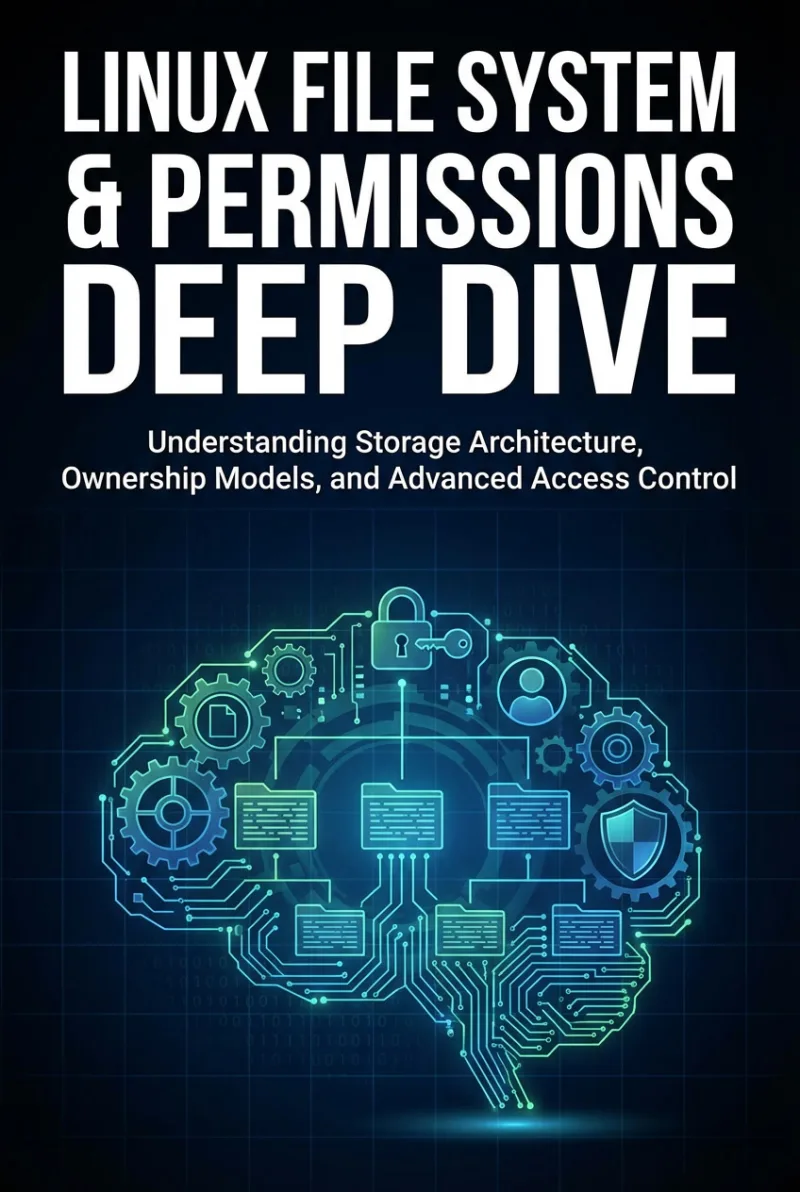
Linux File System & Permissions Deep Dive
Understanding Storage Architecture, Ownership Models, and Advanced Access Control
What's Included:
At a Glance
Linux File System & Permissions Deep Dive is a professional Linux Fundamentals eBook by Miles Everhart, 294 pages, available as an instant PDF and EPUB download for €11.90 with lifetime access and free updates. Understanding Storage Architecture, Ownership Models, and Advanced Access Control.
- Length: 294 pages
- Format: PDF and EPUB (instant download)
- Language: English
- Topic: Linux Fundamentals
- Edition: 1st Edition
- Price: €11.90
Key Highlights
- Linux Filesystem Hierarchy Standard explained
- Inodes, blocks, and metadata deep dive
- ext4 vs XFS vs Btrfs comparison
- Secure mount configuration and fstab mastery
- Ownership and permission model deep analysis
- SUID, SGID, and sticky bit real-world use cases
- ACL configuration and troubleshooting
- SELinux interaction with filesystem permissions
- Filesystem recovery fundamentals
- Designing secure Linux directory structures
Overview
Master Linux filesystems and permissions. Understand inodes, ext4/XFS/Btrfs, mounting, ACLs, special bits, SELinux interaction, and secure file structure design.
The Problem
Many Linux administrators understand basic file permissions but struggle with deeper filesystem architecture and advanced access control. Misconfigured permissions can cause security vulnerabilities, broken services, and hours of troubleshooting.
Common issues include:
- Confusion around octal vs symbolic permission modes
- Improper use of SUID, SGID, and sticky bits
- Misconfigured ACLs causing unexpected access behavior
- Incorrect mount options weakening security
- Difficulty diagnosing “permission denied” errors
- Lack of structured filesystem design strategy
Without deeper filesystem knowledge, administrators operate reactively instead of architecturally.
The Solution
Linux File System & Permissions Deep Dive provides a structured and technical understanding of Linux storage and access control systems.
You will learn how to:
- Interpret inode metadata and filesystem structure
- Configure and persist mount options securely
- Apply correct ownership and permission models
- Use ACLs effectively without introducing complexity
- Integrate SELinux context awareness with file permissions
- Diagnose and resolve permission-related system errors
- Design secure and maintainable directory structures
The result: fewer misconfigurations, stronger security posture, and deeper architectural confidence.
About This Book
Linux File System & Permissions Deep Dive is a focused, practical guide to understanding how Linux stores, organizes, and protects data at a foundational level.
Every Linux command, every service deployment, and every security boundary ultimately depends on the filesystem. Yet many administrators operate with only a surface-level understanding of inodes, permission models, ACLs, and secure mount configurations.
This book takes you beyond surface knowledge into architectural understanding.
Understand Linux Filesystem Architecture
You will build a strong technical foundation by exploring:
- The Linux Filesystem Hierarchy Standard (FHS)
- Inodes, blocks, metadata, and storage structure
- ext4, XFS, and Btrfs comparisons
- Mounting, fstab configuration, and persistent storage
Master Ownership and Permission Models
Move beyond basic rwx understanding and learn:
- User and group ownership mechanics
- Octal and symbolic permission modes
- SUID, SGID, and sticky bit behavior
- Real-world permission troubleshooting
Advanced Access Control & Security
Access Control Lists (ACLs) and SELinux integration are covered in detail, including:
- ACL limitations and production use cases
- Secure permission strategies for multi-user systems
- Diagnosing complex permission conflicts
- Filesystem corruption recovery basics
- Designing secure file structures intentionally
This book transforms you from someone who uses the Linux filesystem into someone who designs and secures it deliberately.
Who Is This Book For?
- Linux system administrators seeking deeper filesystem expertise
- DevOps engineers managing secure Linux environments
- Security professionals auditing Linux systems
- Students preparing for advanced Linux certifications
- Engineers designing multi-user or multi-tenant Linux systems
Who Is This Book NOT For?
- Absolute beginners learning basic Linux commands
- Readers seeking only introductory Linux tutorials
- Developers uninterested in system-level administration
- Advanced kernel developers seeking filesystem driver internals
Table of Contents
- Linux Filesystem Hierarchy Explained
- Inodes, Blocks, and Metadata
- ext4 and Modern Linux Filesystems
- Mounting and Persistent Configuration
- Users, Groups, and Ownership
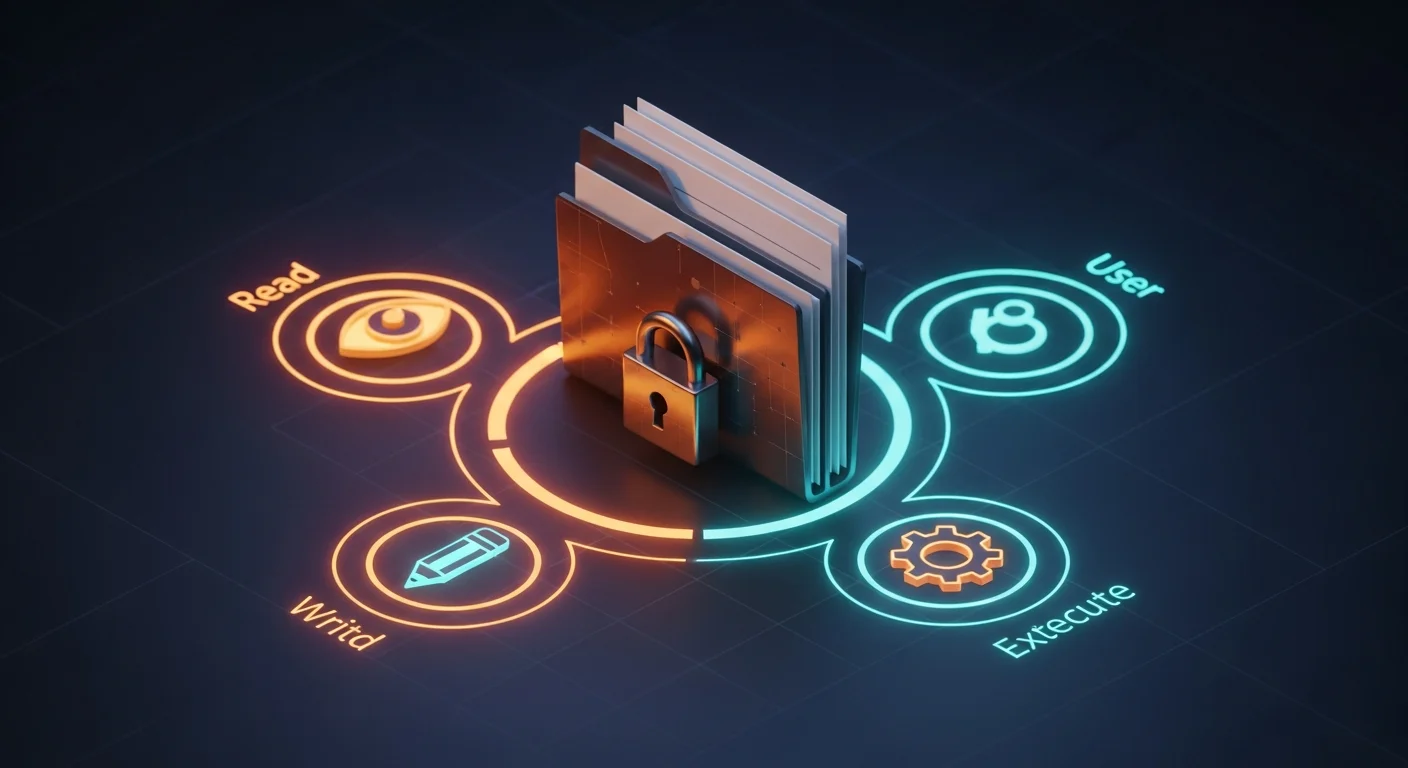
- Read, Write, Execute in Depth
- Octal and Symbolic Modes Mastery
- Special Permission Bits
- Understanding ACL Limitations and Benefits
- ACL in Production
- Secure Permission Strategies
- SELinux Interaction with Filesystems
- Diagnosing Permission Errors
- Filesystem Corruption and Recovery
- Designing Secure File Structures
- From Sysadmin to Filesystem Architect
- Appendix: chmod / chown / ACL Cheat Sheet
- Appendix: Octal Permission Reference Table
- Appendix: Secure Mount Options Guide
- Appendix: Filesystem Troubleshooting Checklist
- Appendix: Linux Security Learning Path
Requirements
- Basic familiarity with the Linux command line
- Understanding of fundamental user and group concepts
- Access to a Linux system for hands-on practice (recommended)