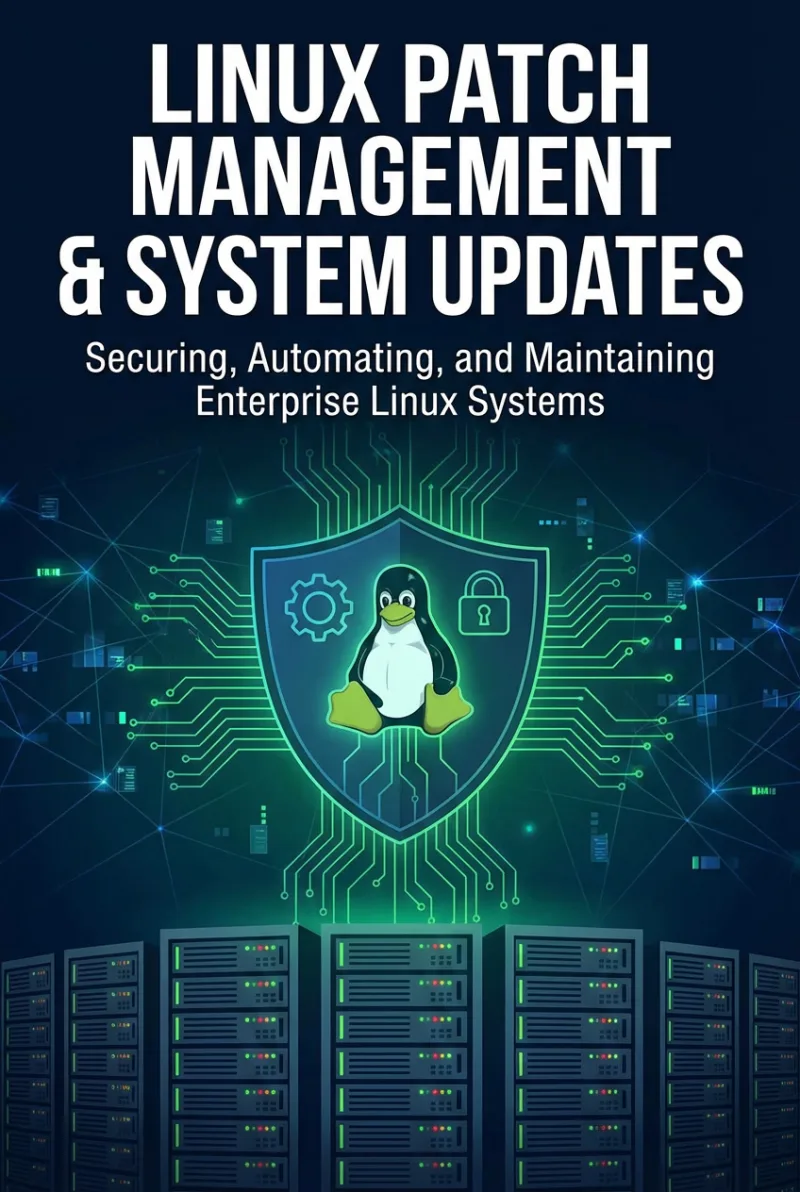
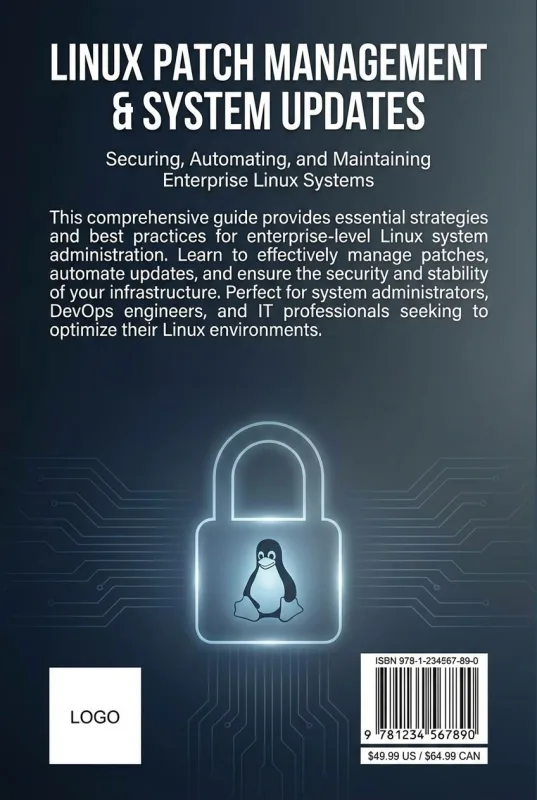
Linux Patch Management & System Updates
Securing, Automating, and Maintaining Enterprise Linux Systems
What's Included:
At a Glance
Linux Patch Management & System Updates is a professional Linux Administration eBook by Miles Everhart, 336 pages, available as an instant PDF and EPUB download for €13.90 with lifetime access and free updates. Securing, Automating, and Maintaining Enterprise Linux Systems.
- Length: 336 pages
- Format: PDF and EPUB (instant download)
- Language: English
- Topic: Linux Administration
- Edition: 1st Edition
- Price: €13.90
Key Highlights
- Deep explanation of APT and DNF package management
- CVE interpretation and vulnerability prioritization
- Kernel update management strategies
- Downtime minimization techniques
- Automation for large Linux server fleets
- Testing and staging update pipelines
- Monitoring and post-update validation
- Compliance and audit alignment
- Live patching concepts and tools
- Enterprise patch policy design
Overview
Master Linux patch management. Secure, automate, and maintain enterprise systems with APT, DNF, CVE analysis, kernel updates, live patching, compliance, and fleet-wide automation.
The Problem
Linux administrators often treat updates as routine maintenance—until a critical vulnerability exposes production systems or a rushed patch breaks essential services.
Common challenges include:
- Uncertainty around CVE severity and prioritization
- Kernel update downtime concerns
- Lack of standardized patching processes
- Manual updates across large server fleets
- Insufficient post-update validation
- Compliance audit failures due to weak documentation
Without structured patch management, Linux environments become either insecure or unstable—or both.
The Solution
Linux Patch Management & System Updates provides a disciplined framework for managing updates in enterprise Linux environments.
You will learn how to:
- Analyze vulnerabilities and security advisories accurately
- Apply updates safely with minimal downtime
- Automate patch cycles across multiple systems
- Monitor and validate updates after deployment
- Design formal patch governance policies
- Implement live patching concepts where appropriate
The result: secure systems, predictable maintenance cycles, and improved operational resilience.
About This Book
Linux Patch Management & System Updates is a comprehensive, production-focused guide to securing, automating, and maintaining enterprise Linux systems.
Installing updates on a single Linux machine is simple. Managing patches across dozens or thousands of servers—without breaking production—is a different discipline entirely. It requires strategy, process, automation, and risk management.
This book equips you with the operational maturity required to patch Linux systems confidently and safely in real-world enterprise environments.
Understand the Patch Lifecycle
You’ll begin by mastering the foundations:
- How Linux package managers (APT, DNF) work internally
- Understanding CVEs and interpreting security advisories
- Assessing risk before applying updates
Apply Updates Safely in Production
Learn practical techniques for:
- Applying security patches without service disruption
- Managing kernel updates and reboots strategically
- Minimizing downtime during patch cycles
Automate and Scale
Enterprise patching demands automation. You’ll explore:
- Automating updates across server fleets
- Building staging and validation pipelines
- Monitoring systems after patch deployment
Governance and Compliance
Beyond execution, this book teaches you how to:
- Design formal enterprise patch policies
- Satisfy compliance and audit requirements
- Implement live patching strategies
- Troubleshoot failed or partial updates
This book transforms patching from a reactive task into a strategic capability.
Who Is This Book For?
- Linux system administrators managing production servers
- DevOps and SRE professionals responsible for uptime
- Security teams overseeing vulnerability remediation
- Infrastructure managers designing patch policies
- IT professionals preparing for compliance audits
Who Is This Book NOT For?
- Home Linux users managing a single desktop system
- Readers seeking a beginner Linux introduction
- Developers uninterested in infrastructure operations
- Kernel developers seeking low-level patch development theory
Table of Contents
- Why Patch Management Is Critical
- Understanding Linux Package Management Systems
- Understanding CVEs and Security Advisories
- Applying Security Updates Safely
- Managing Kernel Updates
- Minimizing Downtime
- Automating Updates
- Managing Updates at Scale
- Testing Patches Before Production
- Monitoring After Updates
- Compliance and Audit Requirements
- Hardening Through Updates
- Live Patching Concepts
- Troubleshooting Failed Updates
- Designing an Enterprise Patch Policy
- From System Administrator to Infrastructure Strategist
- Appendix: APT and DNF Command Cheat Sheet
- Appendix: Patch Management Checklist
- Appendix: Sample Update Policy Template
- Appendix: Post-Update Validation Checklist
- Appendix: Linux Maintenance Roadmap
Requirements
- Basic Linux command-line knowledge
- Familiarity with package management concepts
- Access to a Linux test environment (recommended)