RHEL & AlmaLinux Enterprise Hosting
Build Production-Grade Web Infrastructure on Enterprise Linux
Master enterprise Linux hosting. 5 books covering AlmaLinux basics, web hosting, NGINX+PHP-FPM, Docker+Traefik, and secure hosting configurations.
Master enterprise Linux hosting. 5 books covering AlmaLinux basics, web hosting, NGINX+PHP-FPM, Docker+Traefik, and secure hosting configurations.
This series is built around one principle: finishable, focused books that build on each other. Instead of one giant 800-page reference you never complete, you get 5 tightly-scoped volumes you can actually read, practice, and apply — in the same order professionals learn rhel & almalinux enterprise hosting on the job. Topics covered include Linux command line, bash, systemd, Ubuntu 24.04 LTS, Debian, RHEL.
The complete series saves €16.87 (25% off) compared with buying the 5 books individually, with instant lifetime access to PDF and EPUB editions of every title.
Why This RHEL & AlmaLinux Enterprise Hosting Series?
- Curated pedagogical order. The 5 books are arranged so each one prepares you for the next, eliminating the "where do I start?" paralysis that kills most self-taught learners.
- Hands-on, not theoretical. Every chapter contains commands, code, or configuration you can run immediately on your own machine — no toy examples.
- Production-aware. The patterns you learn are the same ones used in real production environments, not academic simplifications.
- Vendor-neutral where it matters. Where ecosystems differ (e.g., Debian vs Red Hat, PowerShell 5.1 vs 7+, Python 2 vs 3), both are addressed so the knowledge transfers.
- Lifetime updates. When a book is revised for a new release of the underlying technology, you get the updated edition free in your account library.
What's Inside the RHEL & AlmaLinux Enterprise Hosting
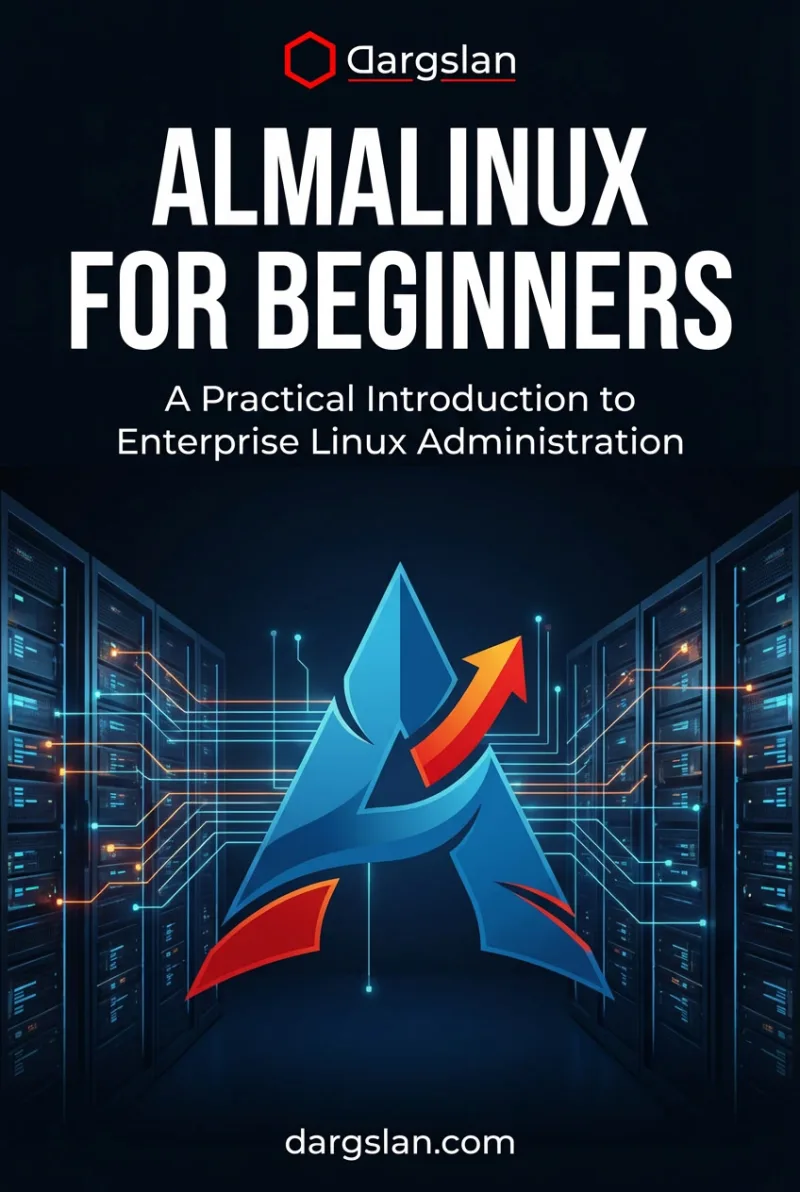
Volume 1 — AlmaLinux for Beginners
A beginner-friendly guide to AlmaLinux that teaches enterprise Linux fundamentals, system administration basics, and real-world server management skills.
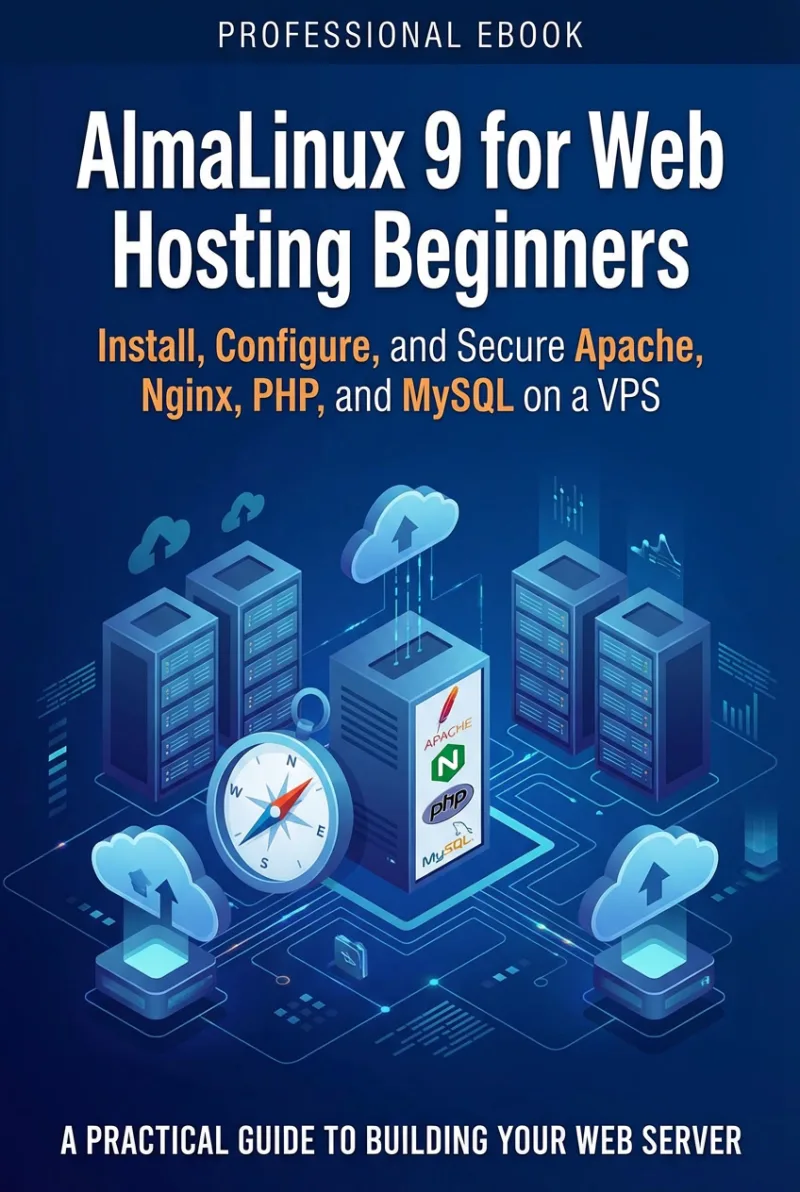
Volume 2 — AlmaLinux 9 for Web Hosting Beginners
Learn how to set up and secure a complete web hosting environment on AlmaLinux 9. Install Apache, Nginx, PHP, MariaDB, SSL, and harden your VPS step by step.
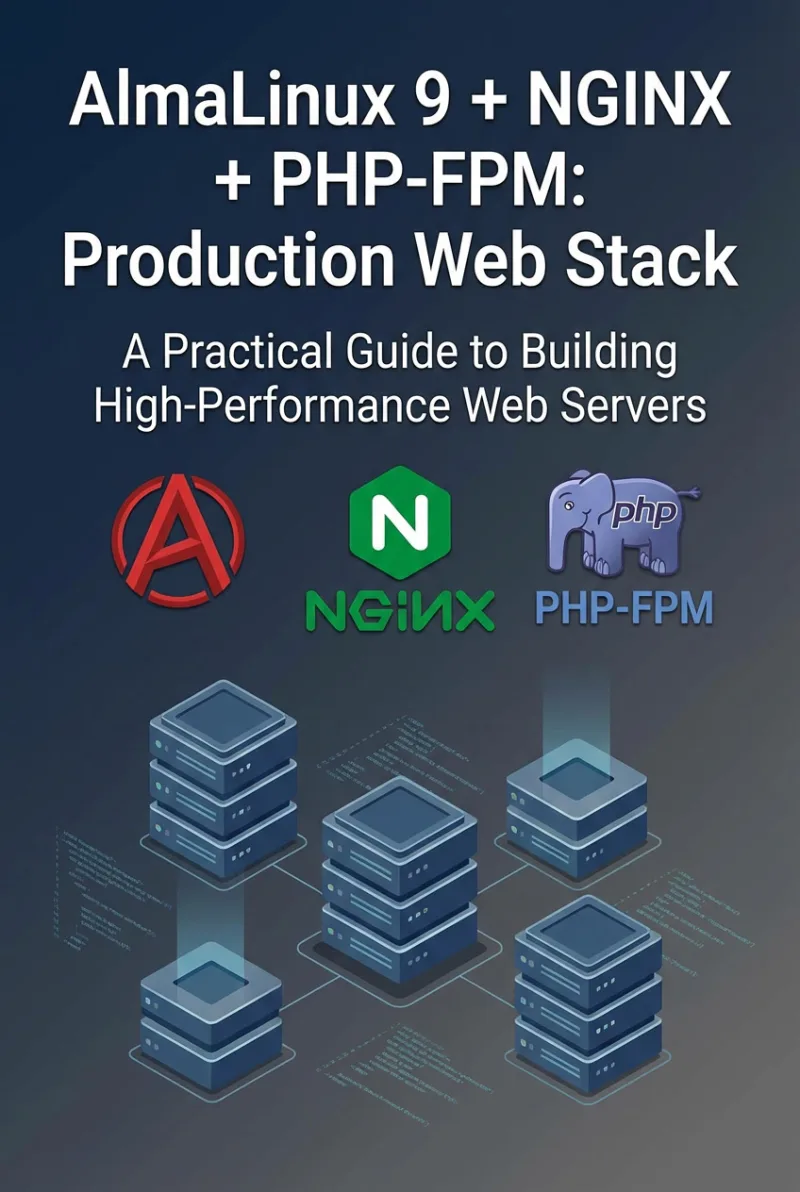
Volume 3 — AlmaLinux 9 + NGINX + PHP-FPM
Step-by-step guide to building a secure, high-performance PHP production stack on AlmaLinux 9 with NGINX and PHP-FPM. Learn installation, optimization, security hardening, SSL, scaling, monitoring, and production best practices.
Volume 4 — Rocky Linux 9 + Docker + Traefik: Self-Hosted Platform
Build a secure, scalable self-hosted platform on Rocky Linux 9 using Docker and Traefik. Learn installation, container orchestration, automatic HTTPS, security hardening, backups, scaling, and production-ready automation.
Volume 5 — Secure Web Hosting with AlmaLinux 9
Learn how to secure web hosting on AlmaLinux 9 with hardened Apache, Nginx, firewalld, Fail2Ban, PHP-FPM, MariaDB, and advanced SSL/TLS configurations.
Who This Series Is For
- DevOps engineers who want a structured, finishable path instead of stitching together free YouTube playlists and Stack Overflow answers.
- Linux system administrators who want a structured, finishable path instead of stitching together free YouTube playlists and Stack Overflow answers.
- SREs who want a structured, finishable path instead of stitching together free YouTube playlists and Stack Overflow answers.
- Career switchers targeting roles in DevOps, cloud, SRE, cybersecurity, or backend engineering.
- Team leads onboarding junior engineers and looking for a consistent reference everyone can read.
What You Will Be Able to Do After Finishing
- Work confidently with the RHEL & AlmaLinux Enterprise Hosting stack from the command line, without copy-pasting solutions you do not understand.
- Read official documentation, error messages, and source code without getting lost.
- Build, ship, and operate small-to-medium production systems end to end.
- Diagnose problems systematically using the same tooling and mental models senior engineers use.
- Pass technical interviews that go beyond memorized syntax into "why and when" questions.
Recommended Reading Order
The volumes are numbered for a reason — read them in order. Earlier volumes establish foundations the later ones assume. If you are short on time, the minimum viable subset is volumes 1 through 3; everything after that builds on those building blocks. Skipping ahead is possible but you will spend more time backfilling concepts than you saved.
Frequently Asked Questions
Do I need any prior experience to start?
No. The series assumes you are starting from scratch and explains every prerequisite as it comes up. If you can use a computer and install software, you can finish this series.
How long will it take to complete?
Most readers finish in 6–12 weeks at a pace of one book every 1–2 weeks, including hands-on exercises. Reading without practicing is faster but defeats the purpose — the topics covered are skills, not facts to memorize.
What format are the books delivered in?
Every book is delivered as both a high-quality PDF (great for desktop reading and printing) and EPUB (great for tablets, phones, and e-readers). Downloads are DRM-free and yours forever.
Is there a real discount for buying the series?
Yes. The bundled price represents a meaningful saving compared with buying each book individually, and you receive every title in the same checkout instead of having to come back later.
Are future updates included?
Yes. When any book in this series is revised — for new releases, new tooling, or major ecosystem changes — buyers receive the updated edition free in their account library.
Can I read the books on multiple devices?
Yes. Your purchase is tied to your account, not to a device. Download the PDF and EPUB as many times as you like, on as many devices as you own.
Start Today
Whether you are preparing for a new role, working toward a certification, or finally tackling a topic you have been putting off, this RHEL & AlmaLinux Enterprise Hosting series gives you the structured, finishable, hands-on path that a single giant book cannot.
Books in This Series (5)
Get the Complete Series
All 5 books for just €50.63 — save 25% compared to buying individually