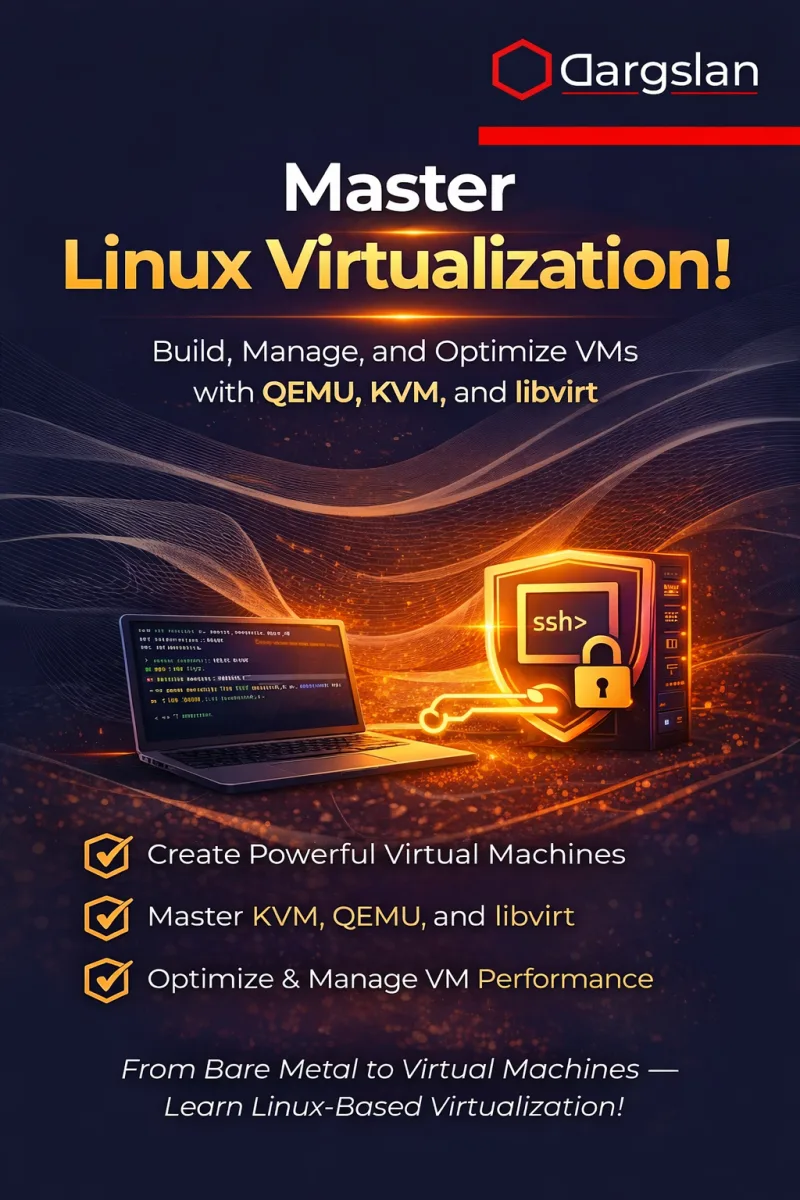
Linux Virtualization Stack: QEMU, KVM, libvirt, and virt-manager
From Bare Metal to Virtual Machines - A Comprehensive Guide to Linux-Based Virtualization
What's Included:
At a Glance
Linux Virtualization Stack: QEMU, KVM, libvirt, and virt-manager is a professional Virtualization eBook by Dargslan Editorial Team (Dargslan), 255 pages, available as an instant PDF and EPUB download for €19.90 with lifetime access and free updates. From Bare Metal to Virtual Machines - A Comprehensive Guide to Linux-Based Virtualization.
- Length: 255 pages
- Format: PDF and EPUB (instant download)
- Language: English
- Topic: Virtualization
- Edition: 1st Edition
- Price: €19.90
Key Highlights
- Clear explanation of the complete Linux virtualization stack
- Hands-on VM creation via CLI and GUI
- Virtual networking and storage configuration
- Performance tuning for KVM-based workloads
- Security best practices for virtualized hosts
- Automation using cloud-init and Ansible
Overview
Learn how to build, manage, and optimize Linux virtualization using QEMU, KVM, libvirt, and virt-manager from bare metal hosts to automated virtual machines.
The Problem
Many Linux users rely on proprietary virtualization platforms or use KVM without fully understanding how the Linux virtualization stack works, leading to poor performance, security gaps, and inefficient management.
The Solution
This book provides a complete, Linux-native approach to virtualization, teaching how QEMU, KVM, libvirt, and virt-manager work together to create secure, high-performance virtual machines.
About This Book
Master Native Linux Virtualization
Linux Virtualization Stack is a hands-on, practical guide to building and managing virtual machines using Linux's native virtualization technologies. Instead of relying on proprietary hypervisors like VMware, this book shows how to leverage QEMU, KVM, libvirt, and virt-manager for a flexible, high-performance virtualization environment.
The Linux virtualization stack is fully integrated with the kernel, offering near-native performance, excellent hardware support, and complete control over your infrastructure.
What You Will Learn
- How QEMU and KVM work together for hardware-accelerated virtualization
- Understanding the role of libvirt as a management and automation layer
- Installing the complete virtualization stack on various Linux distributions
- Creating and managing VMs with virt-manager (GUI)
- Command-line VM management with virsh
- Virtual disk formats and storage pool configuration
- Virtual networking: bridges, NAT, and isolated networks
- Snapshots, cloning, and VM templates
- Live migration between hosts
- Performance tuning: CPU pinning, hugepages, and virtio drivers
- Security best practices and VM isolation
- Automation with cloud-init, Ansible, and Terraform
Who Is This Book For?
This book is designed for Linux administrators who want full control over virtualization. It is ideal for:
- Linux system administrators building VM infrastructure
- DevOps engineers creating development and test environments
- Home lab enthusiasts exploring open-source virtualization
- Organizations seeking alternatives to proprietary hypervisors
- Anyone who wants to understand how Linux virtualization works
Why This Book?
Every chapter is based on real-world Linux hosts and workflows. Configuration examples, troubleshooting steps, and optimization tips ensure immediate applicability.
Prerequisites
Solid Linux command-line experience is required.
Author: Dargslan
Who Is This Book For?
- Linux system administrators
- DevOps and SRE engineers
- Homelab and self-hosting enthusiasts
- Cloud and infrastructure architects
- Developers using Linux-based VMs
Who Is This Book NOT For?
- Absolute beginners with no Linux experience
- Users looking for desktop-only virtualization tools
- Readers focused exclusively on proprietary hypervisors
Table of Contents
- Introduction to Virtualization
- Overview of the Linux Virtualization Stack
- Understanding QEMU
- Diving into KVM
- libvirt – The Abstraction Layer
- virt-manager – The GUI Frontend
- Creating VMs from the Command Line
- Managing Virtual Networks
- Virtual Storage Configuration
- Snapshots and VM Cloning
- Performance Optimization
- Security Considerations
- Automation with cloud-init and Ansible
- Troubleshooting and Maintenance
Requirements
- Basic Linux command-line knowledge
- Understanding of system administration concepts
- Hardware with virtualization support recommended