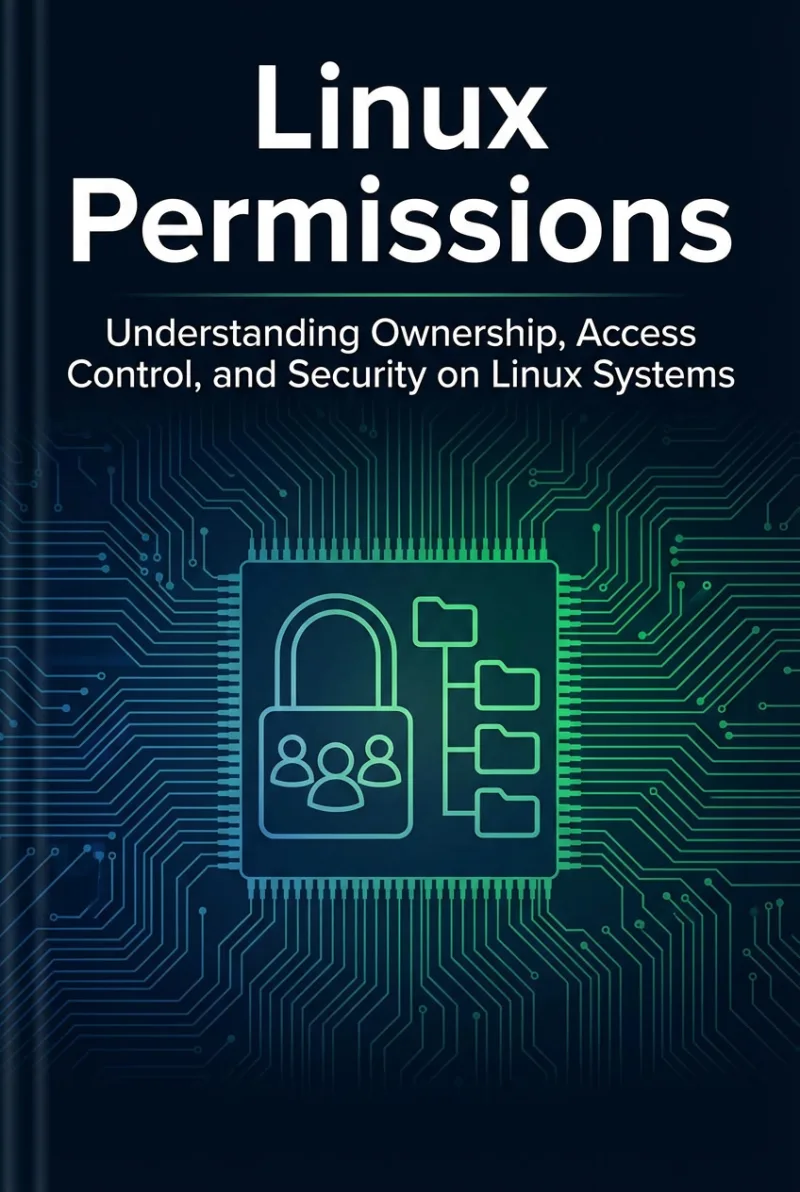
Linux Permissions
Understanding Ownership, Access Control, and Security on Linux Systems
What's Included:
At a Glance
Linux Permissions is a professional Linux Administration eBook by Bas van den Berg, 301 pages, available as an instant PDF and EPUB download for €12.90 with lifetime access and free updates. Understanding Ownership, Access Control, and Security on Linux Systems.
- Length: 301 pages
- Format: PDF and EPUB (instant download)
- Language: English
- Topic: Linux Administration
- Edition: 1st Edition
- Price: €12.90
Key Highlights
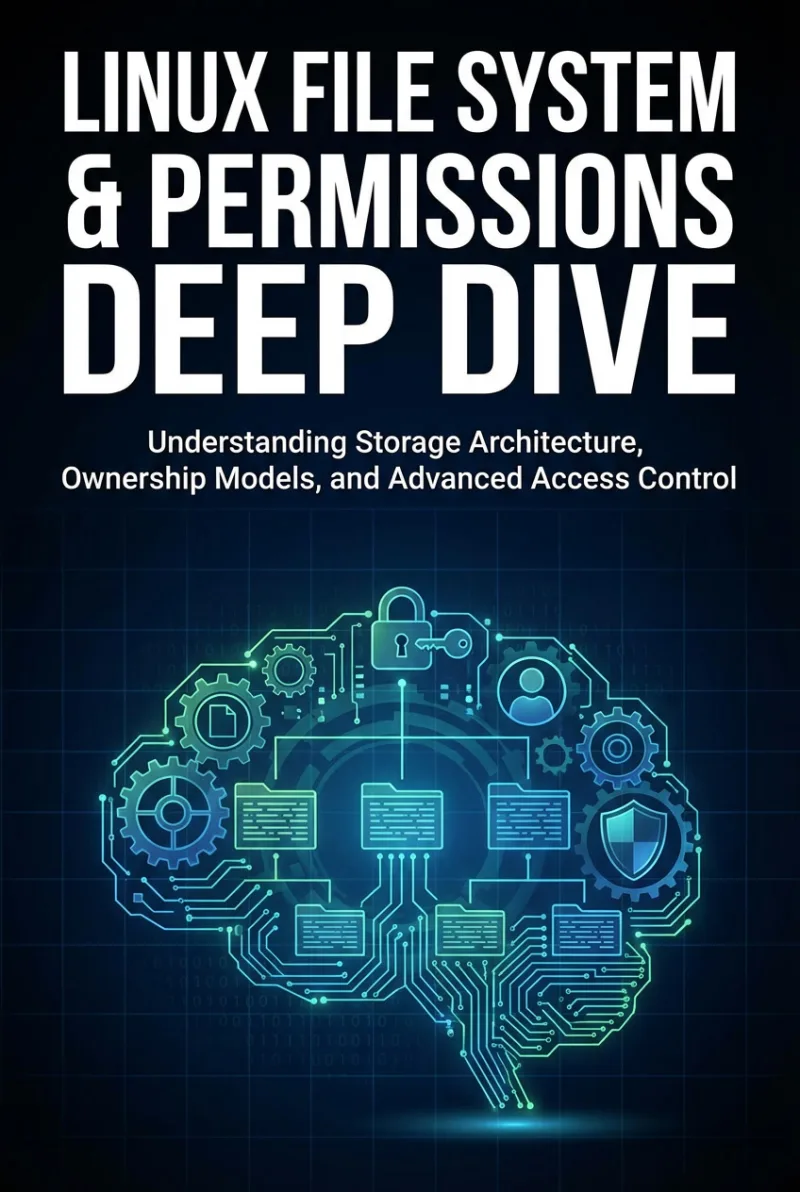
- Complete guide to Linux file and directory permissions
- Symbolic and numeric permission mastery
- SUID, SGID, and sticky bit explained clearly
- umask configuration and default permission control
- Access Control Lists (ACLs) for fine-grained security
- Permission troubleshooting methodology
- Web server and service permission best practices
- Introduction to SELinux in context
- Real-world anti-pattern analysis
- Security-first permission design approach
Overview
Master Linux permissions, ownership, ACLs, SUID/SGID, umask, and SELinux basics. Learn how to secure files, directories, services, and web servers with confidence
The Problem
Permission errors are among the most common and frustrating issues in Linux environments.
Improper ownership and insecure file settings can lead to broken deployments or serious security vulnerabilities.
The Solution
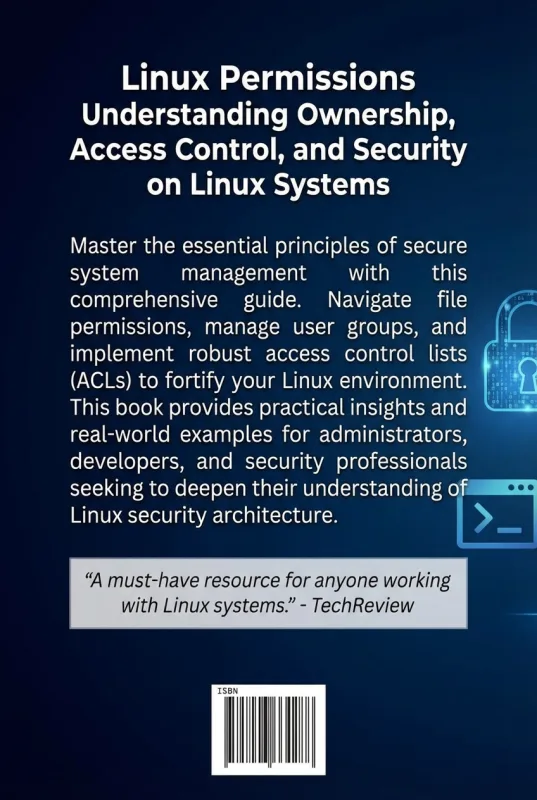
This book provides a systematic, practical approach to understanding and securing Linux file permissions, ACLs, and access control mechanisms.
About This Book
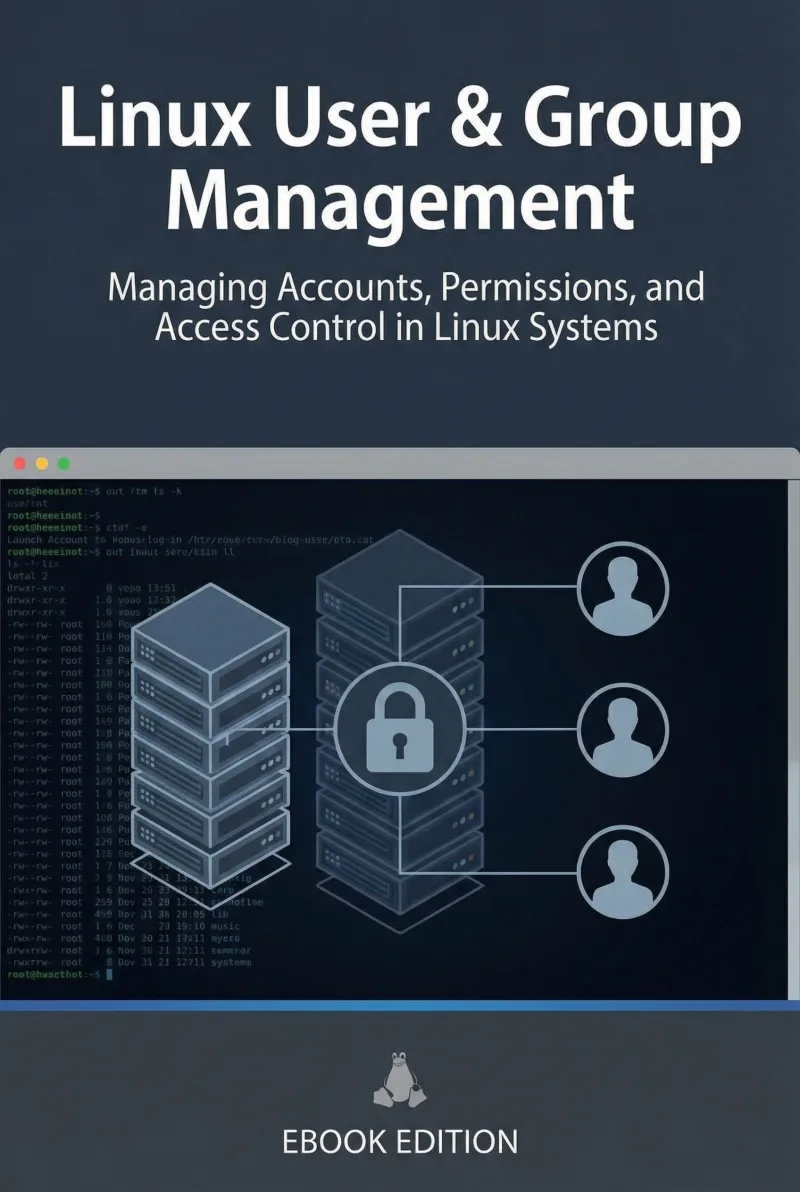
Linux Permissions is a comprehensive and practical guide to mastering ownership, access control, and file security on Linux systems.
Every Linux system relies on permissions to protect its files, directories, and services. Yet many administrators and developers struggle with broken deployments, insecure configurations, and confusing permission errors.
Build a Strong Foundation
You will begin by understanding:
- Why permissions are the first line of defense in Linux security
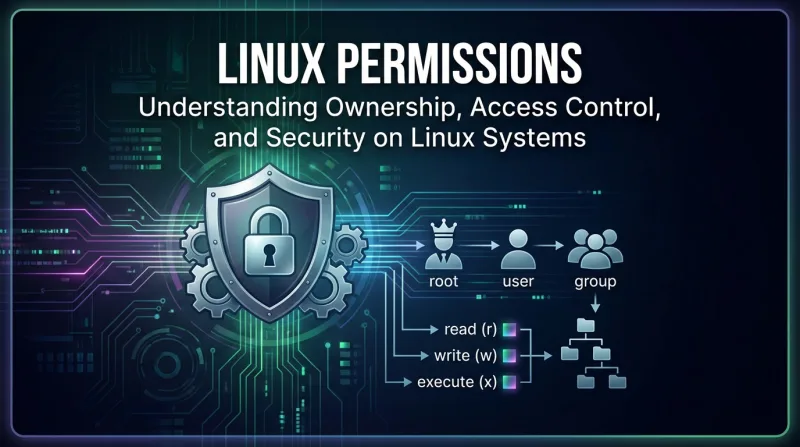
- How users and groups form the ownership model
- What read, write, and execute truly mean in practice
- How permissions differ between files and directories
Master chmod, chown, and Numeric Modes
You will gain full command of:
- Symbolic and octal permission modes
- File and directory permission management
- Recursive permission strategies
- Safe permission design patterns
Go Beyond the Basics
This book dives deep into advanced permission mechanics:
- SUID, SGID, and the sticky bit
- Default permissions and
umask - Access Control Lists (ACLs)
- Auditing and verification techniques
Real-World Scenarios
Permissions are not abstract theory. You will learn how to:
- Configure secure web server directories
- Manage service account permissions safely
- Troubleshoot permission-denied errors methodically
- Avoid dangerous anti-patterns like
chmod 777
Understand SELinux in Context
The book introduces SELinux fundamentals, explaining how mandatory access controls extend traditional Linux permissions and how to avoid common misconfigurations.
By the end, you will not just know how to set permissions — you will understand the security architecture behind them.
Who Is This Book For?
- Linux system administrators
- DevOps engineers and developers
- Students preparing for Linux certifications
- Security professionals working with Linux systems
Who Is This Book NOT For?
- Readers with no Linux command-line experience
- Kernel developers seeking deep SELinux internals
- Users looking for GUI-based tutorials
Table of Contents
- Why Permissions Matter
- Users, Groups, and Ownership
- Understanding Read, Write, and Execute
- Symbolic and Numeric Modes
- Managing File Permissions
- Managing Directory Permissions
- SUID, SGID, and Sticky Bit
- Default Permissions and umask
- Access Control Lists (ACLs)
- Permission Troubleshooting
- Permissions for Web Servers
- Permissions for System Services
- Auditing Permissions
- Permissions and SELinux Basics
- Permission Anti-Patterns
- From Permission Basics to Security Architecture
Requirements
- Basic familiarity with the Linux command line
- Access to a Linux system or virtual machine for practice
- Willingness to experiment safely with permissions