🎁 New User? Get 20% off your first purchase with code NEWUSER20 Register Now →
Menu

Categories

Programming Concepts Intermediate

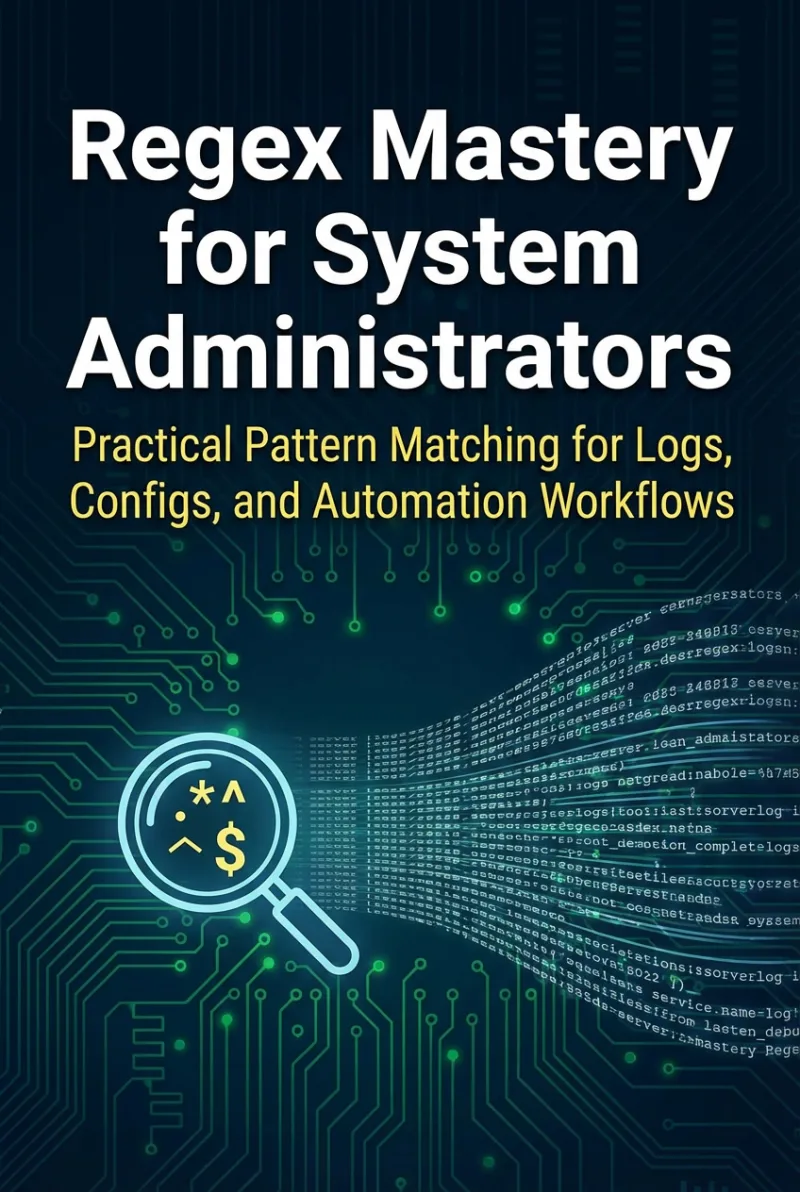
What is Regex (Regular Expression)?

A sequence of characters that defines a search pattern, used for string matching, validation, and text manipulation.

Regular expressions are powerful pattern-matching tools. Common syntax includes . (any character), * (zero or more), + (one or more), ? (optional), [] (character class), ^ (start), $ (end), and () (grouping).

Uses include email validation, log parsing, search-and-replace, and data extraction. While powerful, complex regex can be hard to read. Tools like regex101.com help build and test patterns. Every major programming language supports regex.
Related Terms

Factory Pattern
A creational design pattern that provides an interface for creating objects without specifying their exact classes.
Dependency Injection
A design pattern where objects receive their dependencies from external sources rather than creating them internally.
Immutable Object
An object whose state cannot be modified after creation, providing thread safety and predictable behavior in concurrent systems.
Composition over Inheritance
A design principle favoring object composition (has-a relationships) over class inheritance (is-a relationships) for code reuse.
Garbage Collection
An automatic memory management process that identifies and reclaims memory no longer in use by a program.
Refactoring
Restructuring existing code without changing its external behavior to improve readability, maintainability, and performance.
View All Programming Concepts Terms →