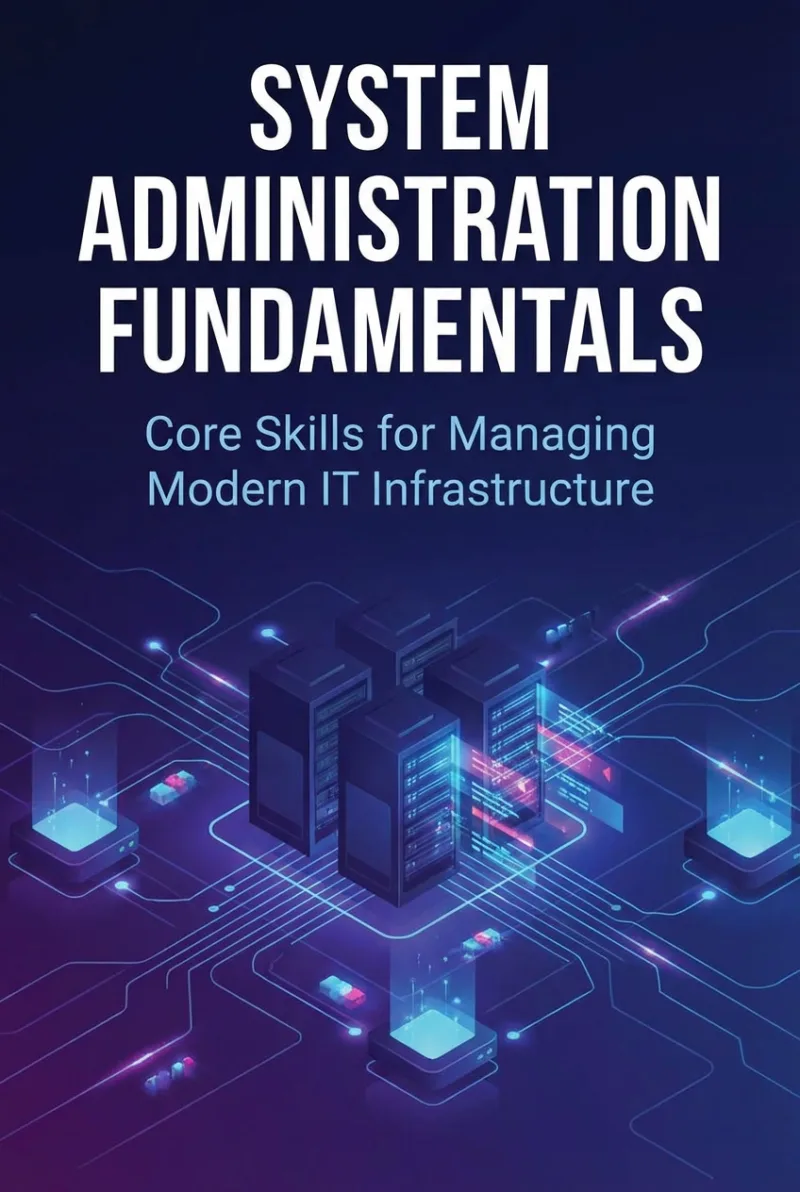
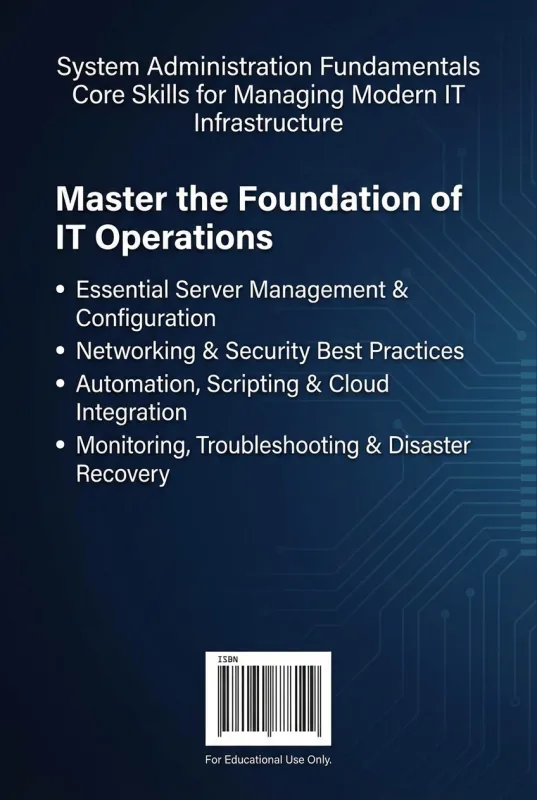
System Administration Fundamentals
Core Skills for Managing Modern IT Infrastructure
What's Included:
At a Glance
System Administration Fundamentals is a professional System Administration eBook by Lucas Winfield, 356 pages, available as an instant PDF and EPUB download for €12.00 with lifetime access and free updates. Core Skills for Managing Modern IT Infrastructure.
- Length: 356 pages
- Format: PDF and EPUB (instant download)
- Language: English
- Topic: System Administration
- Edition: 1st Edition
- Price: €12.00
Key Highlights
- Complete system administration foundation
- Cross-platform Windows and Linux coverage
- Networking essentials for administrators
- Storage and backup best practices
- Security fundamentals and monitoring
- Introduction to scripting for automation
- Troubleshooting methodology framework
- Career growth roadmap toward infrastructure engineering
- Real-world operational mindset
- Ready-to-use reference appendices
Overview
Master core system administration skills including Linux, Windows, networking, storage, security, scripting, troubleshooting, and modern IT infrastructure fundamentals.
The Problem
Breaking into system administration can feel overwhelming due to the breadth of technologies involved.
Many resources focus on a single tool or platform, leaving gaps in foundational understanding.
The Solution
This book provides a structured, comprehensive roadmap covering the core system administration skills required to manage modern IT environments confidently and effectively.
About This Book
System Administration Fundamentals is a comprehensive guide to the essential skills required to manage modern IT infrastructure with confidence.
Behind every stable application, every secure network, and every reliable cloud deployment stands a system administrator who understands how systems work together. This book equips you with those core capabilities.
Build a Strong Foundation
You will begin by understanding the real role of a system administrator and how modern IT infrastructure is structured.
- Core responsibilities of system administrators
- Infrastructure layers and system dependencies
- On-premises vs cloud environments
- Operational thinking and reliability principles
Master Operating Systems
Both Windows and Linux environments are covered, giving you cross-platform confidence.
- Core OS administration concepts
- User and group management
- Permissions and access control basics
- Service and process management
Understand Networking and Remote Administration
No system works in isolation. You will learn:
- Networking fundamentals for administrators
- Ports, protocols, and services
- Remote management tools and practices
- Secure remote access methods
Protect and Manage Data
Data reliability is a core responsibility. You will explore:
- Disk and storage management
- Backup strategies and recovery planning
- Disaster recovery fundamentals
Security and Monitoring
You will develop proactive defense skills:
- Security basics for administrators
- System hardening principles
- Logging and monitoring practices
- Early detection of operational issues
Automation and Professional Growth
The final chapters elevate your capabilities:
- Introduction to scripting
- Documentation discipline
- Change management fundamentals
- Structured troubleshooting methodology
- Career growth roadmap toward infrastructure engineering
This book is designed to transform foundational knowledge into practical, career-ready competence.
Who Is This Book For?
- Aspiring system administrators
- IT support professionals transitioning to infrastructure roles
- Junior admins formalizing their knowledge
- Students preparing for system administration careers
Who Is This Book NOT For?
- Advanced DevOps engineers seeking deep platform specialization
- Security specialists focused solely on offensive techniques
- Readers looking for vendor-specific certification exam prep
Table of Contents
- What a System Administrator Really Does
- Understanding IT Infrastructure
- Windows and Linux Fundamentals
- User and Group Management
- Networking Fundamentals for Admins
- Remote Administration
- Disk and Storage Management
- Backup and Recovery Fundamentals
- Managing System Services
- Web and Application Services
- Security Basics for System Administrators
- Logging and Monitoring
- Introduction to Scripting
- Documentation and Change Management
- Troubleshooting Methodology
- From Junior Admin to Infrastructure Engineer
Requirements
- Basic familiarity with computers and operating systems
- Access to a Windows or Linux test environment
- Willingness to practice hands-on administration tasks