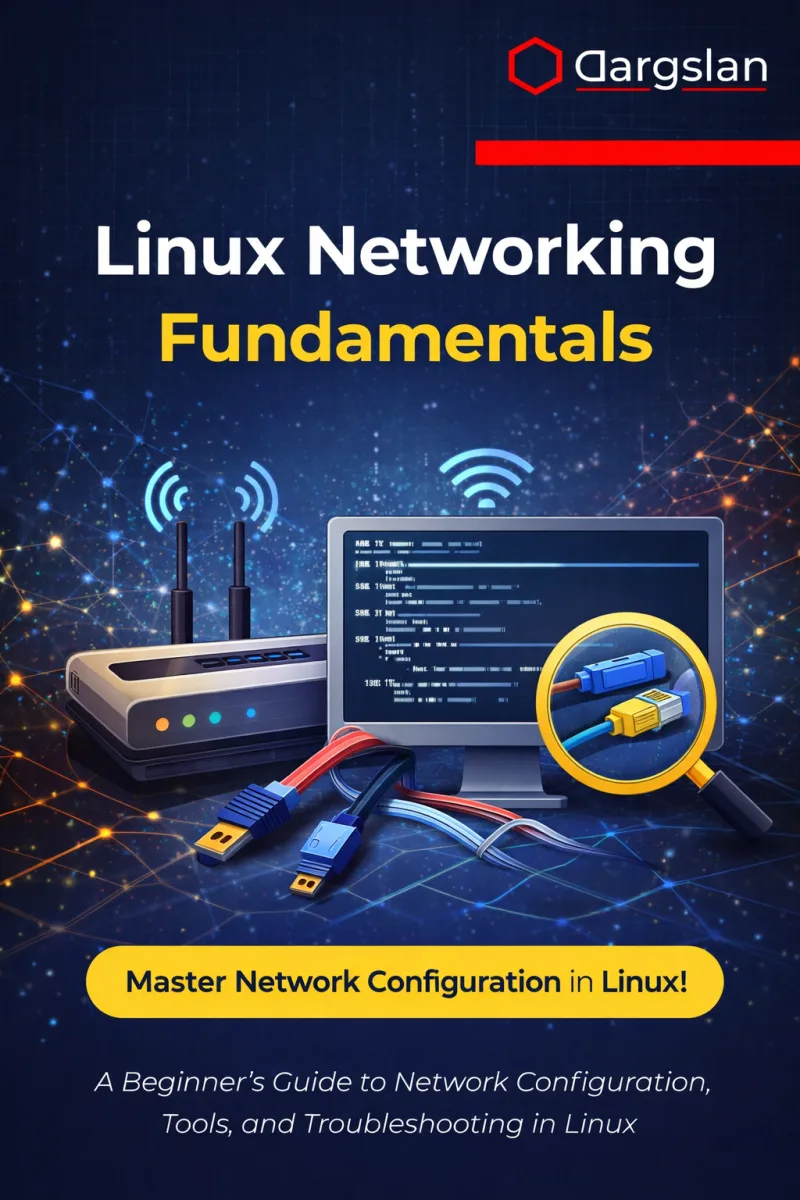

Linux Networking Fundamentals
A Beginner’s Guide to Network Configuration, Tools, and Troubleshooting in Linux
What's Included:
At a Glance
Linux Networking Fundamentals is a professional Linux Networking eBook by Dargslan Editorial Team (Dargslan), 329 pages, available as an instant PDF and EPUB download for €9.90 with lifetime access and free updates. A Beginner’s Guide to Network Configuration, Tools, and Troubleshooting in Linux.
- Length: 329 pages
- Format: PDF and EPUB (instant download)
- Language: English
- Topic: Linux Networking
- Edition: 1st Edition
- Price: €9.90
Key Highlights
- Beginner-friendly Linux networking explanations
- Modern and legacy Linux networking tools
- Clear examples using real Linux commands
- Step-by-step troubleshooting techniques
- Firewall and security basics
- VPN and secure connection fundamentals
- Practice labs and real-world scenarios
Overview
Learn the fundamentals of Linux networking. Configure interfaces, IP addressing, DNS, routing, firewalls, and troubleshoot network issues step by step.
The Problem
Many Linux users struggle with networking concepts such as IP addressing, routing, DNS, and troubleshooting connectivity problems. Without a solid foundation, even simple network issues become difficult to resolve.
The Solution
This book provides a clear, structured introduction to Linux networking, combining theory with hands-on practice to help readers confidently configure and troubleshoot Linux networks.
About This Book
Build a Strong Foundation in Linux Networking
Linux Networking Fundamentals is a beginner-friendly, hands-on guide designed to help you understand how networking works in Linux systems. Networking is one of the most important skills for Linux users, system administrators, DevOps engineers, and IT professionals.
From configuring network interfaces and IP addresses to troubleshooting connectivity problems, Linux networking knowledge is essential in real-world environments—whether on-premises, in the cloud, or in containers.
What You Will Learn
- How Linux networking works under the hood
- Network interfaces: physical, virtual, and loopback
- IP address configuration: static and DHCP
- The modern ip command vs. legacy ifconfig
- Routing fundamentals: tables, gateways, and metrics
- DNS and hostname resolution: /etc/hosts, /etc/resolv.conf
- NetworkManager and systemd-networkd
- Essential diagnostic tools: ping, traceroute, ss, netstat
- Packet analysis with tcpdump
- Basic firewall concepts with iptables and firewalld
- Network troubleshooting methodology
- VPNs and secure network connections
- Networking in containers and virtual machines
Who Is This Book For?
This book is designed for Linux users who want to understand networking. It is ideal for:
- Linux beginners learning system administration
- System administrators managing Linux servers
- DevOps engineers troubleshooting connectivity
- Students preparing for Linux certifications
- Anyone who wants to understand how Linux handles networks
Why This Book?
This book focuses on real Linux commands, tools, and configurations used in everyday environments. You will understand not just how to configure networking, but why it works the way it does.
Prerequisites
Basic Linux command-line experience is helpful but not required.
Author: Dargslan
Who Is This Book For?
- Linux beginners and students
- Aspiring system administrators
- Developers working on Linux-based systems
- IT professionals transitioning to Linux
- Anyone who wants to understand Linux networking fundamentals
Who Is This Book NOT For?
- Advanced network engineers looking for CCNP-level content
- Readers seeking vendor-specific enterprise networking guides
- Users with no basic Linux command-line experience
Table of Contents
- Introduction to Linux Networking
- Understanding Network Interfaces
- IP Addressing and Subnetting
- DNS and Hostname Management
- Network Configuration Tools
- Routing and Gateways
- Testing Network Connectivity
- Managing Network Services
- Linux Firewall Basics
- Monitoring and Troubleshooting Networks
- File Sharing and Network File Systems
- Configuring a Basic Linux Router
- VPNs and Secure Connections
- Practical Networking Scenarios
Requirements
- Basic Linux command-line knowledge
- No prior networking experience required