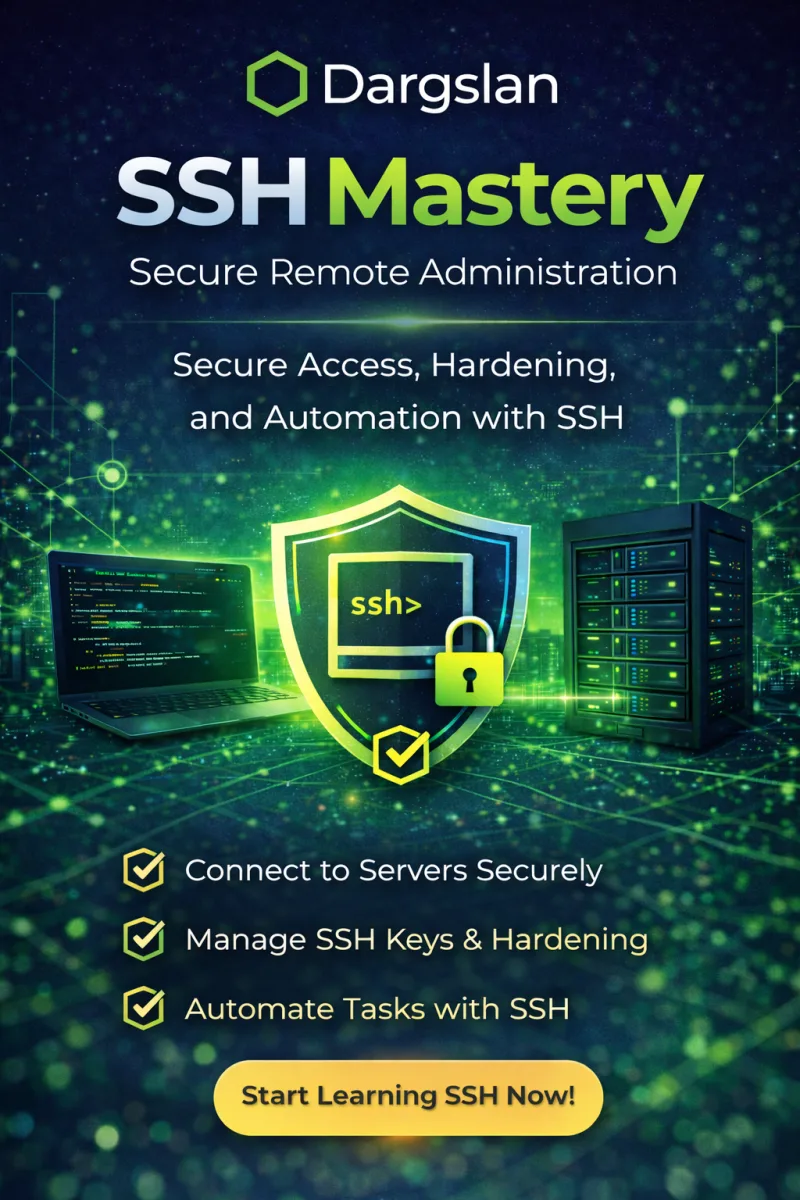
SSH Mastery: Secure Remote Administration
Secure Access, Hardening, and Automation with SSH
What's Included:
At a Glance
SSH Mastery: Secure Remote Administration is a professional SSH & Remote Access eBook by Bas van den Berg, 476 pages, available as an instant PDF and EPUB download for €16.90 with lifetime access and free updates. Secure Access, Hardening, and Automation with SSH.
- Length: 476 pages
- Format: PDF and EPUB (instant download)
- Language: English
- Topic: SSH & Remote Access
- Price: €16.90
Key Highlights
- Deep explanation of SSH internals and security model
- Professional SSH key management practices
- Production-ready SSH hardening techniques
- Tunneling and port forwarding explained clearly
- Automation and DevOps integration with SSH
- Auditing, logging, and incident response guidance
- Enterprise and cloud SSH architectures
Overview
Master SSH beyond basic login: secure authentication, key management, hardening, tunneling, automation, auditing, and enterprise-grade SSH practices for modern infrastructure.
The Problem
Most SSH setups rely on default configurations, weak authentication, and unmanaged keys. This leads to security risks, operational inefficiency, and serious exposure in production environments.
The Solution
This book provides a structured, security-first approach to SSH—covering hardening, automation, auditing, and enterprise-scale usage with practical, proven techniques.
About This Book
From Basic SSH Usage to True Secure Remote Administration
SSH Mastery: Secure Remote Administration is a deep, practical guide for professionals who rely on SSH daily and want to use it securely, efficiently, and at scale. SSH is one of the most critical tools in modern infrastructure—but also one of the most frequently misconfigured.
Weak authentication, unmanaged keys, and default settings turn SSH into a major security risk. This book shows you how to do it right and transform SSH from a simple login tool into a secure, automated component of your infrastructure.
What You Will Learn
- How SSH works internally: encryption, key exchange, and authentication protocols
- SSH key generation, management, and best practices
- Secure SSH client configuration (~/.ssh/config)
- Hardening SSH servers: sshd_config security settings
- SSH agent usage and secure agent forwarding
- Local, remote, and dynamic port forwarding (tunneling)
- Jump hosts and ProxyJump for bastion access
- SSH multiplexing for connection reuse and performance
- Certificate-based authentication with SSH CA
- Automating SSH in scripts and DevOps workflows
- SSH logging, auditing, and monitoring
- Incident response for SSH-related security events
- Enterprise and cloud SSH architectures
Who Is This Book For?
This book is designed for IT professionals who use SSH extensively. It is ideal for:
- Linux and Unix system administrators
- DevOps and SRE engineers
- Security professionals hardening access controls
- Anyone managing servers remotely
- Teams implementing secure automation
Why This Book?
Every concept is tied to real operational scenarios, production security requirements, and modern infrastructure practices.
Prerequisites
Basic Linux command-line experience and familiarity with SSH basics is recommended.
Author: Bas van den Berg
Who Is This Book For?
- Linux and Unix system administrators
- DevOps and SRE engineers
- Security engineers and blue-team professionals
- Cloud infrastructure administrators
- IT professionals responsible for secure remote access
Who Is This Book NOT For?
- Users who only need basic SSH login commands
- Absolute beginners with no command-line experience
- Readers looking for GUI-based remote access tools
Table of Contents
- What SSH Is and Why It Matters
- How SSH Works
- SSH Client Basics
- Secure Authentication Methods
- Managing SSH Keys Securely
- SSH Agent and Key Forwarding
- SSH Server Configuration Basics
- Hardening SSH for Production
- SSH Tunneling and Port Forwarding
- SSH Multiplexing and Efficiency
- SSH in Automation Workflows
- SSH and Configuration Management
- Logging and Auditing SSH Access
- Responding to SSH Security Incidents
- SSH in Enterprise Environments
- SSH in Cloud and Hybrid Setups
- SSH Security Best Practices Checklist
- From SSH User to SSH Master
Requirements
- Basic Linux or Unix command-line knowledge
- Understanding of servers and remote administration
- Access to a Linux server or VM recommended