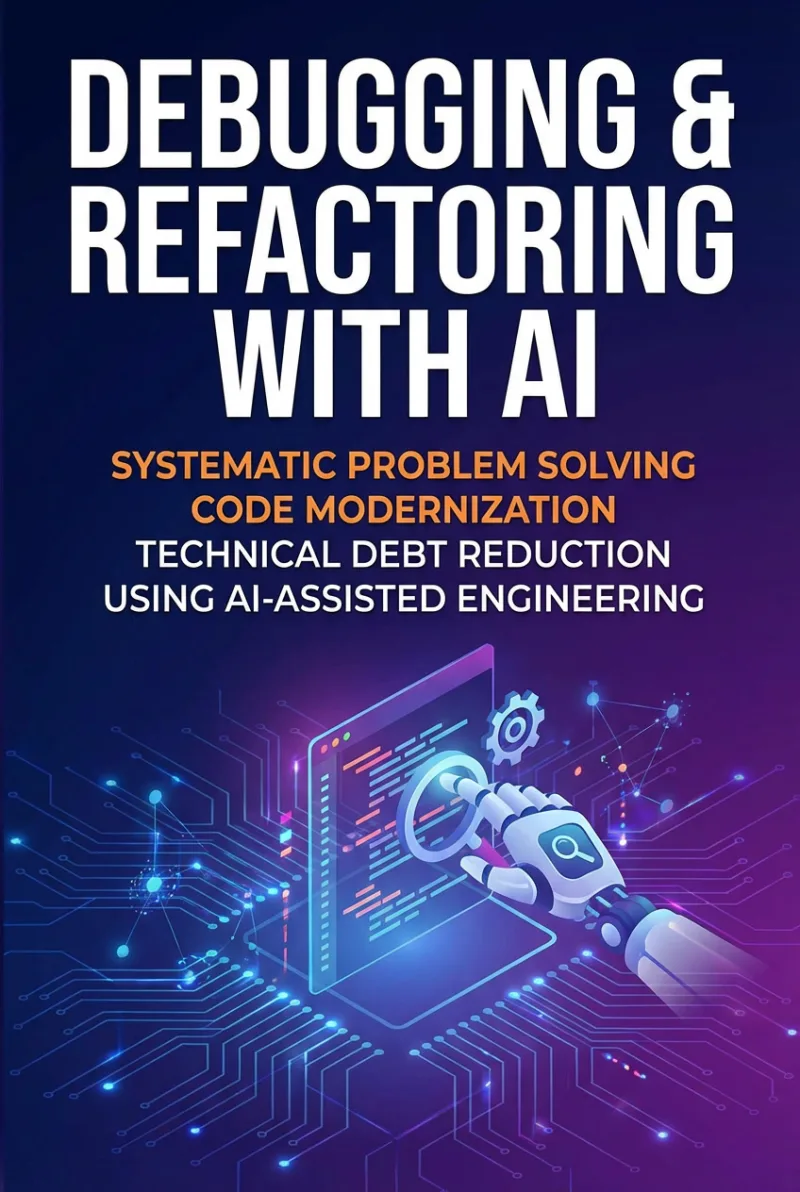
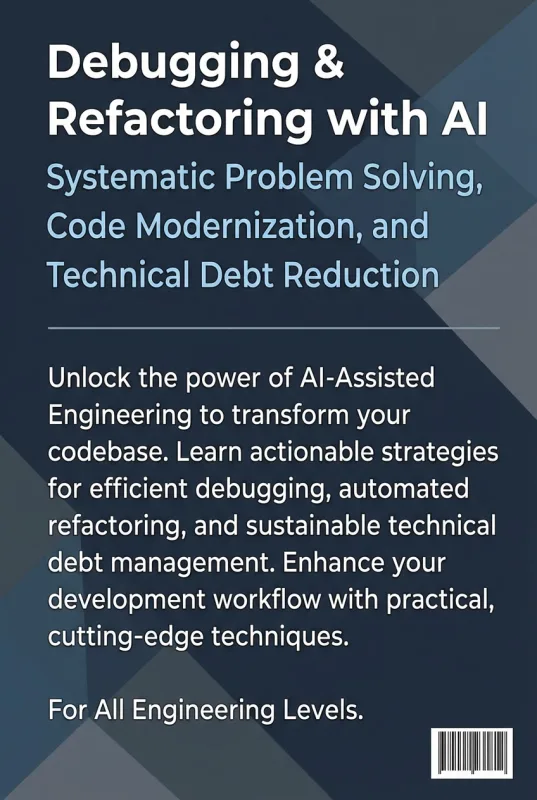
Debugging & Refactoring with AI
Systematic Problem Solving, Code Modernization, and Technical Debt Reduction Using AI-Assisted Engineering
What's Included:
At a Glance
Debugging & Refactoring with AI is a professional DATA & AI eBook by Lucas Winfield, 234 pages, available as an instant PDF and EPUB download for €9.90 with lifetime access and free updates. Systematic Problem Solving, Code Modernization, and Technical Debt Reduction Using AI-Assisted Engineering.
- Length: 234 pages
- Format: PDF and EPUB (instant download)
- Language: English
- Topic: DATA & AI
- Edition: 1st Edition
- Price: €9.90
Key Highlights
- Structured debugging framework
- AI-assisted root cause analysis
- Runtime, logic, performance, and distributed debugging
- Technical debt reduction strategies
- Legacy system modernization
- Security-focused structural improvements
- Safe refactoring with automated tests
- Full real-world debugging case study
Overview
Master systematic debugging, AI-assisted code analysis, safe refactoring, and technical debt reduction. Learn how to modernize legacy systems and solve complex software defects with structured AI workflows.
The Problem
Most developers debug reactively:
- Adding random log statements
- Guessing at potential causes
- Restarting services repeatedly
- Patching symptoms instead of root causes
This approach leads to fragile fixes, recurring defects, and growing technical debt.
AI tools can accelerate debugging—but without structure, they amplify confusion rather than clarity.
The Solution
Debugging & Refactoring with AI introduces a systematic, repeatable engineering framework:
- Hypothesis-driven debugging
- Execution-path tracing with AI assistance
- Root-cause isolation before remediation
- Refactoring as structural prevention
- Test-backed transformation of legacy systems
Instead of chasing bugs, you’ll diagnose systems.
About This Book
Debugging & Refactoring with AI is a practical, structured guide to solving software defects systematically and modernizing codebases with AI-assisted engineering.
Debugging has long been treated as an art learned through frustration. This book reframes it as a disciplined engineering practice—enhanced by artificial intelligence but grounded in deep technical reasoning.
You’ll learn how to move beyond guesswork, build a repeatable debugging framework, and use AI to accelerate diagnosis without surrendering judgment.
What You'll Learn
- How AI changes the debugging landscape
- Building a systematic debugging framework
- Diagnosing runtime and logic errors efficiently
- Tracing and resolving performance bottlenecks
- Debugging distributed systems with structured analysis
- Refactoring fundamentals and safe restructuring practices
- AI-assisted code modernization workflows
- Reducing technical debt through structural improvements
- Refactoring safely under test protection
- Security-focused refactoring techniques
- Designing for scalability and long-term maintainability
- End-to-end debugging and refactoring case study
This is not a book about quick fixes. It is about becoming a developer who understands systems deeply—and improves them systematically.
Every bug is an opportunity to strengthen architecture.
Who Is This Book For?
- Developers who want a structured debugging methodology
- Engineers integrating AI into problem-solving workflows
- Tech leads reducing technical debt across teams
- Backend and full-stack engineers maintaining legacy systems
- Senior developers refining high-leverage engineering skills
Who Is This Book NOT For?
- Readers seeking only beginner-level coding tutorials
- Developers uninterested in refactoring or long-term maintainability
- Those looking for superficial “AI trick” lists
Table of Contents
- The New Era of Debugging
- Understanding How AI Analyzes Code
- Building a Systematic Debugging Framework
- Debugging Runtime Errors
- Debugging Logic Errors
- Debugging Performance Bottlenecks
- Debugging Distributed Systems
- Refactoring Fundamentals
- AI-Assisted Code Refactoring
- Modernizing Legacy Codebases
- Safe Refactoring with Tests
- Security-Focused Refactoring
- Refactoring for Scalability & Maintainability
- Full Debugging & Refactoring Case Study
- Becoming a High-Leverage Problem Solver
Requirements
- Foundational programming experience
- Basic understanding of application architecture
- Familiarity with version control and testing practices
- Access to an AI coding assistant (recommended)