The software development landscape has fundamentally shifted. AI coding assistants like GitHub Copilot, Claude, and ChatGPT are no longer experimental tools — they are core productivity multipliers used by millions of developers daily. But here is the truth most articles won't tell you: knowing how to use an AI chatbot doesn't make you an AI-powered developer.
Becoming truly effective with AI in your development workflow requires a structured approach. You need to build skills in layers, from understanding AI coding fundamentals all the way up to architecting complex systems with AI support. In this guide, we map out the complete career path — the 8 essential skill areas that separate developers who merely use AI from those who thrive because of it.
Why 2026 Is the Tipping Point
According to recent industry surveys, over 75% of professional developers now use AI coding assistants at least weekly. Companies are actively seeking developers who can leverage AI tools effectively — and they are willing to pay a premium for this skill set. The developers who invest in structured AI skill-building now will have a significant competitive advantage in the job market for years to come.
But there is a catch: most developers are stuck at the surface level. They use AI to autocomplete code or answer quick questions, but they don't know how to:
- Craft precise prompts that generate production-quality code
- Integrate AI into debugging and refactoring workflows
- Address AI-specific security vulnerabilities
- Design system architectures that account for AI capabilities and limitations
- Build full-stack applications with AI assistance across every layer
This guide — and the 8-volume learning path we have built around it — addresses exactly these gaps.
The 8-Stage AI Developer Career Path
We have identified 8 progressive skill stages that form a complete AI-powered developer career path. Each stage builds on the previous one, creating a coherent learning experience rather than scattered, disconnected tutorials.
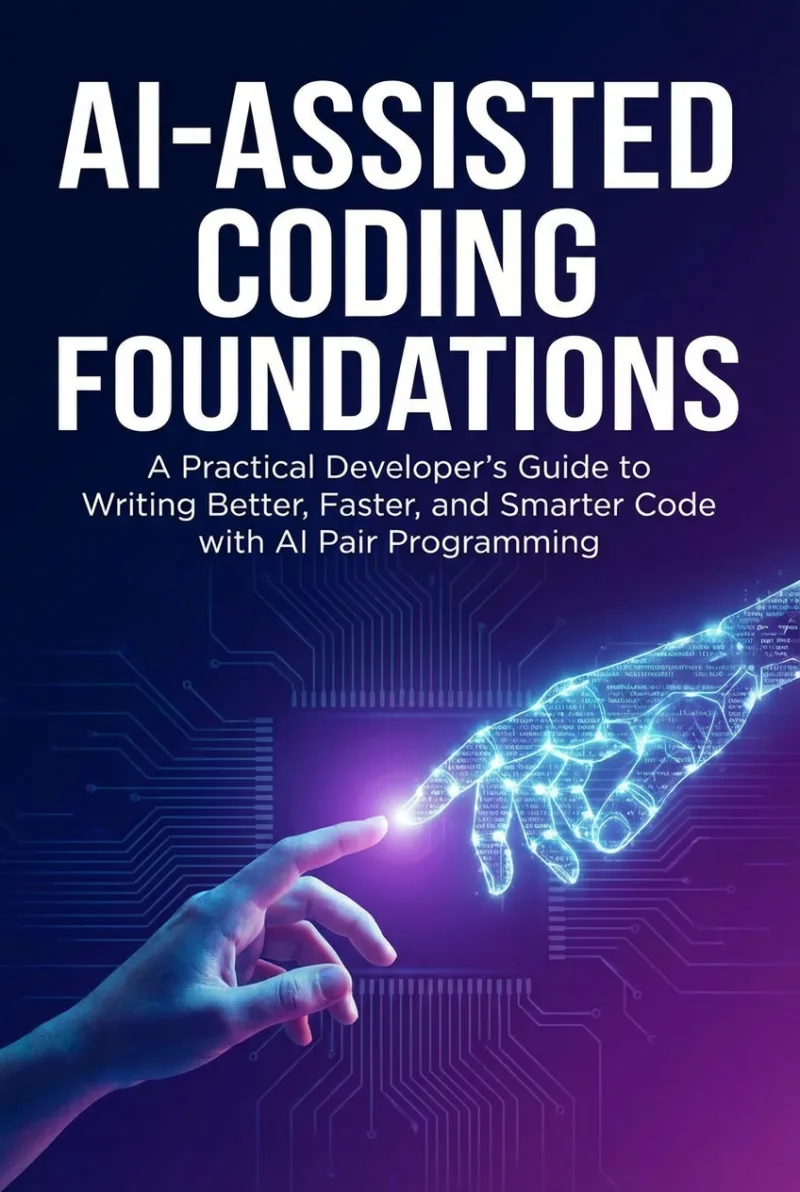
Stage 1: AI-Assisted Coding Foundations
Before you can run, you need to walk. This stage covers the fundamentals: understanding how AI code generation models work, setting up your AI-powered development environment, and learning the basic interaction patterns that make AI coding assistants useful.
Key skills you will develop:
- Understanding transformer architectures at a practical level
- Setting up and configuring AI coding assistants (Copilot, Claude, Cursor)
- Recognizing when AI suggestions are helpful vs. harmful
- Building a mental model for human-AI collaboration in coding
Many developers skip this stage and jump straight into advanced usage, which leads to frustration and poor results. The foundations matter.
Recommended reading: AI-Assisted Coding Foundations
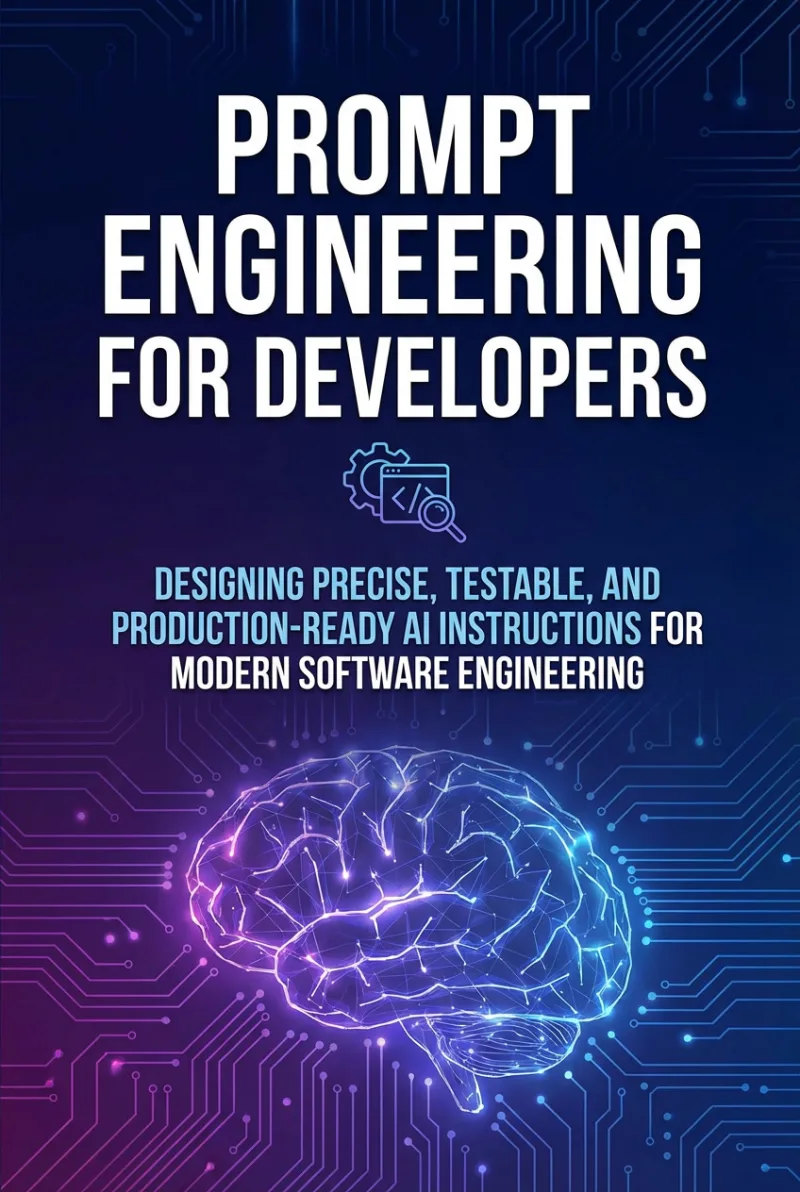
Stage 2: Prompt Engineering for Developers
This is where most developers see the biggest immediate improvement. Prompt engineering for code generation is fundamentally different from writing prompts for text or images. You need to understand context windows, provide the right level of specification, and structure your prompts to get consistent, high-quality output.
What separates good prompts from great ones:
- Providing architectural context, not just task descriptions
- Using examples and constraints to guide output format
- Chaining prompts for complex multi-file changes
- Debugging prompt failures systematically
A developer who masters prompt engineering can be 3-5x more productive than one who uses AI casually. This is not hyperbole — it is the consistent finding across productivity studies.
Recommended reading: Prompt Engineering for Developers
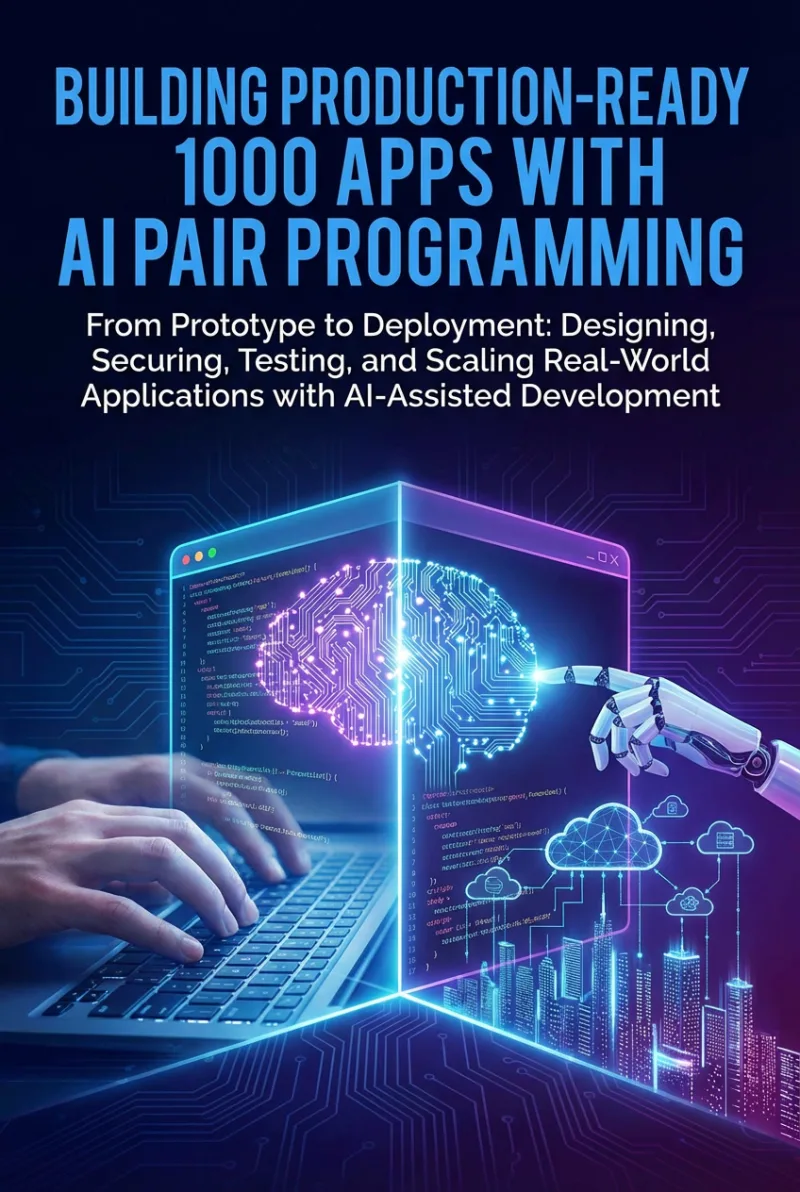
Stage 3: Building Production-Ready Apps with AI Pair Programming
Generating code snippets is easy. Building production-ready applications with AI assistance is an entirely different challenge. This stage focuses on the practical workflow of using AI as a true pair programming partner throughout the development lifecycle.
Core competencies:
- Planning application architecture with AI-assisted analysis
- Test-driven development with AI-generated test cases
- Code review workflows incorporating AI analysis
- Managing AI-generated code quality and technical debt
- Continuous integration practices for AI-assisted codebases
Recommended reading: Building Production-Ready Apps with AI Pair Programming
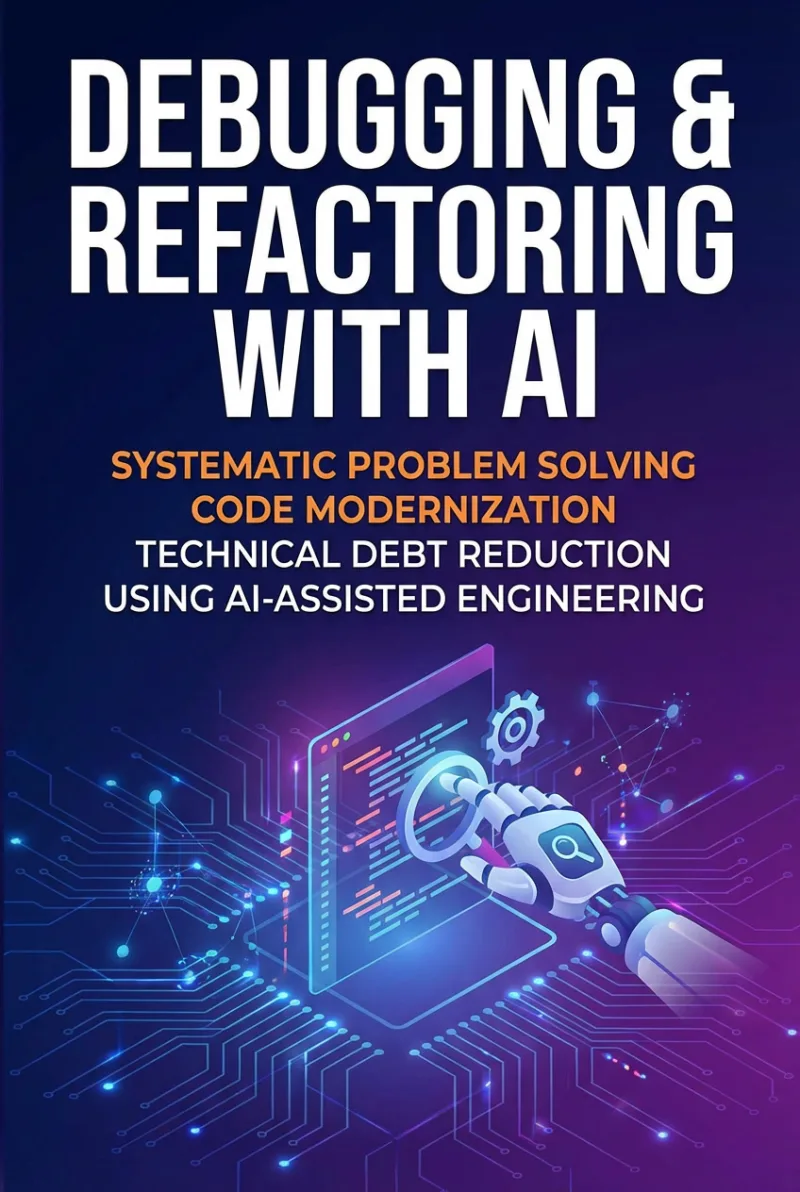
Stage 4: Debugging and Refactoring with AI
Debugging is where AI truly shines — if you know how to use it correctly. AI can analyze stack traces, identify root causes across complex codebases, and suggest targeted fixes that would take hours to find manually. Similarly, AI-assisted refactoring can modernize legacy code while preserving behavior.
Skills you will master:
- Feeding AI the right context for effective debugging
- Using AI to trace bugs across microservices and distributed systems
- Automated refactoring patterns with AI validation
- Performance optimization guided by AI analysis
Recommended reading: Debugging & Refactoring with AI
Stage 5: Secure Coding in the Age of AI
Here is an uncomfortable truth: AI coding assistants can introduce security vulnerabilities. They can suggest code with SQL injection risks, generate insecure authentication patterns, or produce code that leaks sensitive data. Understanding AI-specific security risks is no longer optional — it is a critical professional responsibility.
What you need to know:
- Common security anti-patterns in AI-generated code
- Prompt injection attacks and how to prevent them
- Secure code review practices for AI-assisted development
- Compliance and regulatory considerations for AI-generated code
- Building secure-by-default patterns into your AI prompts
Recommended reading: Secure Coding in the Age of AI
Stage 6: System Design with AI Support
System design is traditionally one of the most challenging skills for developers to master. AI changes this equation significantly. With the right approach, you can use AI to analyze requirements, evaluate architectural trade-offs, model system behavior, and generate design documentation — accelerating what used to take weeks into days.
Advanced capabilities:
- Using AI for requirements analysis and system modeling
- Evaluating architectural patterns with AI-assisted trade-off analysis
- Generating infrastructure-as-code from high-level designs
- Load testing and capacity planning with AI predictions
Recommended reading: System Design with AI Support
Stage 7: AI-Augmented Full-Stack Development
By this stage, you are ready to integrate AI across the entire technology stack. From frontend component generation to backend API design, from database optimization to deployment automation — AI can assist at every layer. The key is knowing which tasks to delegate to AI and which require human judgment.
Full-stack AI integration:
- AI-assisted frontend development (React, Vue, Angular)
- Backend API design and implementation with AI
- Database schema design and query optimization
- DevOps and CI/CD pipeline automation with AI
- Monitoring and observability with AI-powered insights
Recommended reading: AI-Augmented Full-Stack Development
Stage 8: Becoming an AI-Driven Senior Engineer
The final stage synthesizes everything into senior-level engineering practices. This is about more than technical skills — it is about leadership, mentoring, and strategic thinking in an AI-augmented world. How do you lead a team that uses AI effectively? How do you make architectural decisions when AI capabilities are evolving rapidly? How do you stay relevant in a field that is changing faster than ever?
Senior-level competencies:
- Technical leadership in AI-augmented teams
- Strategic technology decisions incorporating AI trends
- Mentoring developers on effective AI usage
- Building organizational AI adoption strategies
- Career positioning for long-term relevance
Recommended reading: Becoming an AI-Driven Senior Engineer
How to Get Started Today
The biggest mistake developers make is trying to learn everything at once. Instead, follow this structured approach:
- Assess your current level. If you are already using AI coding assistants daily, you might start at Stage 2 or 3. If you are new to AI-assisted development, start from Stage 1.
- Commit to one stage at a time. Spend 2-3 weeks on each stage. Read the recommended material, practice the techniques, and build a small project applying what you have learned.
- Build a portfolio project. As you progress through the stages, work on a single portfolio project that demonstrates your growing AI-augmented development skills.
- Join the community. Share your progress, ask questions, and learn from other developers on the same path.
The Complete Learning Path
We have curated all 8 stages into two convenient packages:
- AI-Powered Developer Path (Series) — The structured 8-volume series with progressive learning, available at €54.90 (23% savings vs. individual purchase).
- AI Developer Career Pack (Bundle) — All 8 books bundled together at €49.90 (30% savings), perfect if you want maximum flexibility in your reading order.
Both options give you access to the complete collection. The series emphasizes the structured learning path, while the bundle offers the best value.
Final Thoughts
The AI revolution in software development is not coming — it is already here. The question is not whether AI will change your career, but whether you will be prepared when it does. The developers who invest in systematic AI skill-building today will be the technical leaders of tomorrow.
Start with the foundations. Build progressively. Practice deliberately. And remember: the goal is not to replace your skills with AI, but to amplify them.