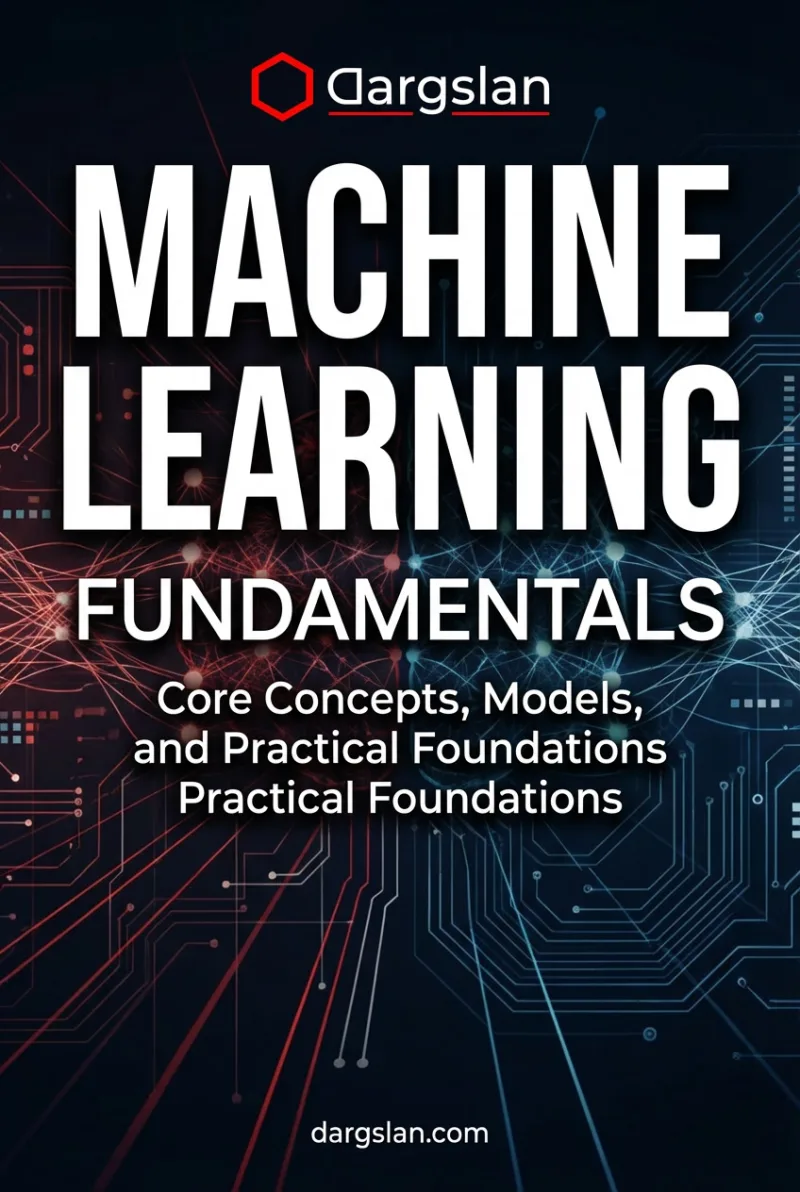
Machine Learning Fundamentals
Core Concepts, Models, and Practical Foundations
What's Included:
At a Glance
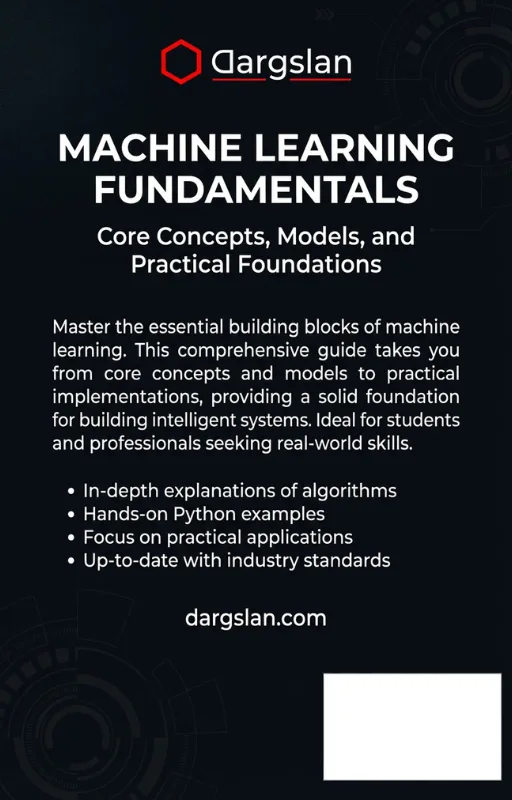
Machine Learning Fundamentals is a professional DATA & AI eBook by Lucas Winfield, 433 pages, available as an instant PDF and EPUB download for €24.90 with lifetime access and free updates. Core Concepts, Models, and Practical Foundations.
- Length: 433 pages
- Format: PDF and EPUB (instant download)
- Language: English
- Topic: DATA & AI
- Edition: 1st Edition
- Price: €24.90
Key Highlights
- Concept-first approach to machine learning
- Clear explanations without heavy math
- Real-world ML project perspective
- Ethics and responsible AI coverage
- Strong foundation for further ML study
Overview
Learn machine learning from the ground up. Understand core concepts, data preparation, models, evaluation techniques, and real-world ML workflows-no advanced math required.
The Problem
Machine learning often feels overwhelming due to complex mathematics, unclear terminology, and fragmented learning resources.
The Solution
This book provides a clear, structured introduction to machine learning, focusing on understanding concepts, models, and workflows without unnecessary complexity.
About This Book
Understand Machine Learning from First Principles
Machine Learning Fundamentals is a beginner-friendly yet comprehensive introduction to the concepts, models, and workflows that power modern machine learning systems. Machine learning is transforming industries from healthcare to finance, and understanding its fundamentals is increasingly essential for technology professionals.
This book focuses on understanding how machine learning works, why specific models are used for different problems, and how real-world machine learning projects are structured from data collection to deployment.
What This Book Covers
- What machine learning really is—and what it is not
- Types of machine learning: supervised, unsupervised, and reinforcement learning
- The machine learning workflow from problem definition to model deployment
- Working with data: collection, cleaning, exploration, and preparation
- Core algorithms: linear regression, logistic regression, decision trees, random forests
- Neural networks and deep learning fundamentals
- Training, validation, and testing: avoiding overfitting and underfitting
- Model evaluation metrics and choosing the right measure
- Feature engineering and building effective ML pipelines
- Practical tools: Python, scikit-learn, pandas, and Jupyter notebooks
- Ethics, bias, fairness, and responsible machine learning
Who Is This Book For?
This book is designed for anyone who wants to understand machine learning without getting lost in heavy mathematics. It is ideal for:
- Software developers expanding into ML and data science
- Data analysts learning predictive modeling
- Product managers working with ML teams
- Students starting their machine learning journey
- Business professionals who need to understand ML capabilities
Why This Book?
The book emphasizes clarity, intuition, and practical understanding over heavy mathematics. You will build a solid conceptual foundation that prepares you for more advanced ML topics.
Prerequisites
Basic Python knowledge is helpful but not required. No advanced mathematics background is needed.
Author: Lucas Winfield
Who Is This Book For?
- Beginners interested in machine learning
- Students exploring AI and data science
- Developers transitioning into ML
- Analysts working with data
- Professionals seeking ML literacy
Who Is This Book NOT For?
- Advanced ML researchers
- Readers seeking deep mathematical proofs
- Those looking only for framework-specific tutorials
Table of Contents
- What Machine Learning Really Is
- Types of Machine Learning
- Data
- Data Preparation and Cleaning
- Linear Models
- Tree-Based Models
- Training Machine Learning Models
- Evaluating Model Performance
- Clustering Fundamentals
- Dimensionality Reduction
- Feature Engineering Basics
- Machine Learning Pipelines
- Tools and Libraries Overview
- Ethics, Bias, and Responsible ML
- Machine Learning in Real Projects
- Learning Path Beyond ML Fundamentals
Requirements
- Basic programming concepts
- High-school level math understanding
- Curiosity about data and intelligent systems