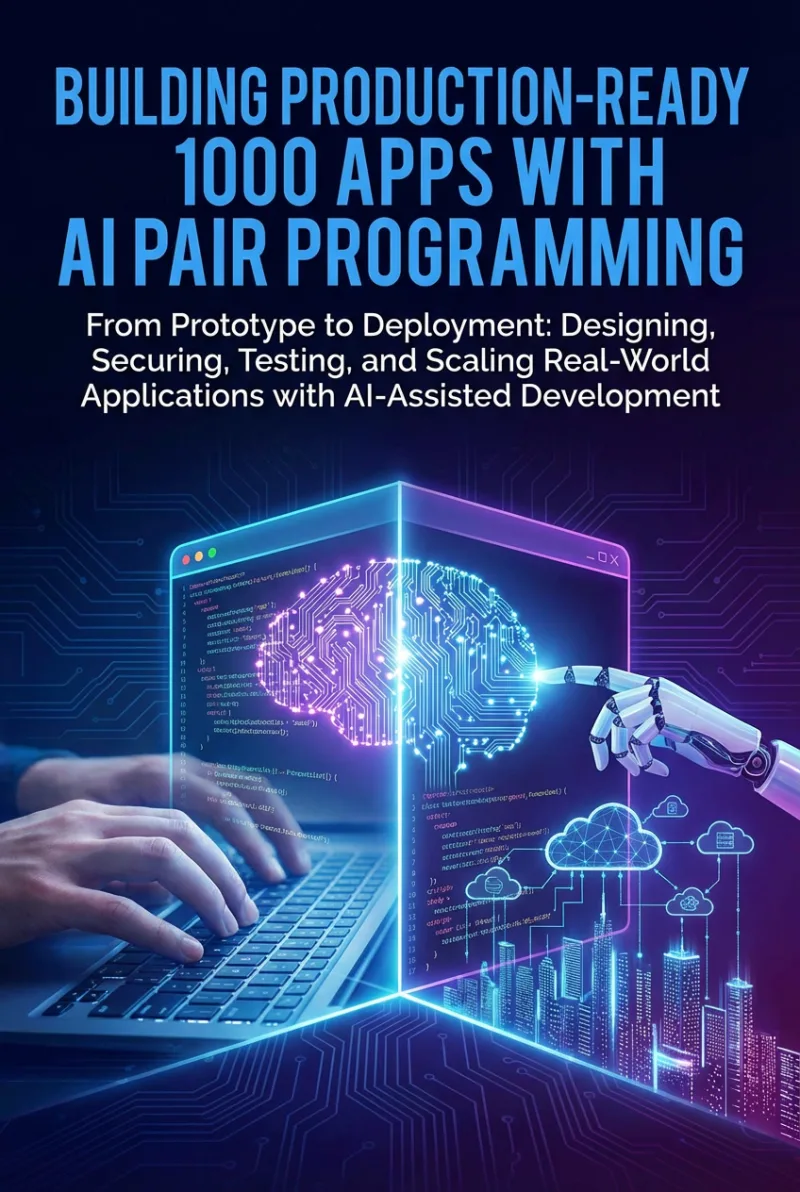
Building Production-Ready Apps with AI Pair Programming
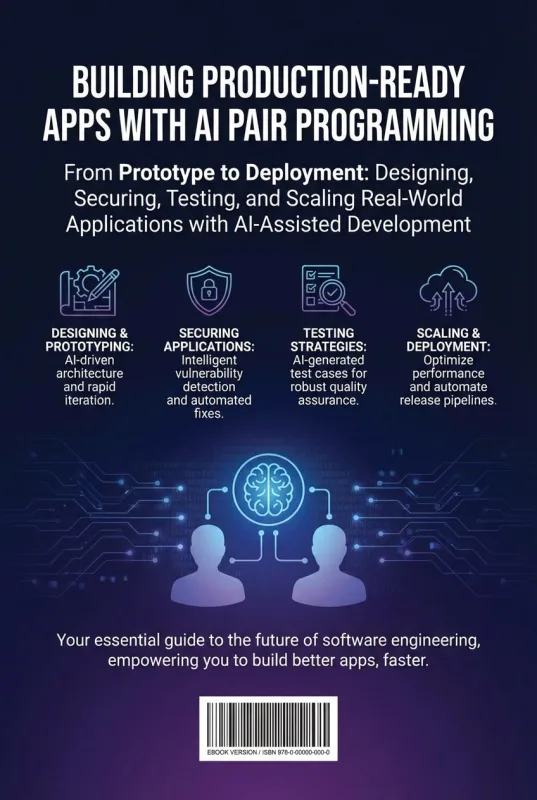
From Prototype to Deployment: Designing, Securing, Testing, and Scaling Real-World Applications with AI-Assisted Development
What's Included:
At a Glance
Building Production-Ready Apps with AI Pair Programming is a professional DATA & AI eBook by Lucas Winfield, 311 pages, available as an instant PDF and EPUB download for €8.90 with lifetime access and free updates. From Prototype to Deployment: Designing, Securing, Testing, and Scaling Real-World Applications with AI-Assisted Development.
- Length: 311 pages
- Format: PDF and EPUB (instant download)
- Language: English
- Topic: DATA & AI
- Edition: 1st Edition
- Price: €8.90
Key Highlights
- Prototype-to-production transition framework
- Architecture and system design fundamentals
- AI-assisted backend and frontend development
- Real testing strategies, not superficial coverage
- DevOps pipeline construction with AI support
- Observability and monitoring integration
- Security-first engineering mindset
- Performance tuning and scaling principles
- Full real-world production case study
Overview
Learn how to build real production-ready applications with AI pair programming. Master architecture, testing, DevOps, security, performance, scaling, and AI-assisted code reviews from prototype to deployment.
The Problem
AI makes it easy to generate large amounts of code quickly. But speed without discipline creates risk.
- Architectures that collapse under real traffic
- Security vulnerabilities hidden in generated code
- Weak or nonexistent test coverage
- Manual deployment processes prone to failure
- Lack of monitoring and observability
- Performance bottlenecks discovered too late
The gap between prototype and production remains — and AI alone does not close it.
The Solution
Building Production-Ready Apps with AI Pair Programming introduces a production-first development framework.
- Design before generation
- Verify every AI output against engineering standards
- Build testing and CI pipelines early
- Embed security and performance considerations from the start
- Adopt observability and reliability as core disciplines
- Use AI as a collaborator — not an unchecked author
This structured approach transforms AI acceleration into sustainable engineering practice.
About This Book
Building Production-Ready Apps with AI Pair Programming is a practical guide to turning AI-generated prototypes into secure, scalable, and maintainable production systems.
AI coding assistants can generate features in minutes. But production software demands far more than working code. It requires sound architecture, disciplined testing, deployment pipelines, observability, security hardening, performance optimization, and reliability engineering.
This book bridges the gap between demo and deployment.
What You'll Learn
- The mindset shift from prototype to production
- Production-grade architecture fundamentals
- AI-supported system planning and design workflows
- Backend development with disciplined AI pair programming
- Database design and migration strategies
- Frontend integration and state management patterns
- Writing meaningful tests that actually prevent regressions
- Building CI/CD pipelines with AI assistance
- Observability, monitoring, and logging best practices
- Security hardening and vulnerability prevention
- Performance optimization strategies
- Scaling and reliability engineering fundamentals
- AI-assisted production code reviews
- End-to-end production case study
- Developing professional judgment as an AI-native engineer
This is not a book about generating more code. It is a book about generating better systems.
AI can accelerate development — but engineering discipline makes software endure.
Who Is This Book For?
- Developers moving from prototypes to production systems
- Team leads integrating AI into engineering workflows
- Startup engineers shipping MVPs responsibly
- Backend and full-stack developers scaling applications
- Engineers seeking production-level AI discipline
Who Is This Book NOT For?
- Readers looking only for basic AI prompt tips
- Developers uninterested in DevOps or production concerns
- Those seeking purely theoretical AI discussions
Table of Contents
- The Shift from Prototype to Production
- Production Architecture Fundamentals
- Designing Before Coding (AI-Supported Planning)
- Backend Development with AI Pair Programming
- Database Design & Migration Strategy
- Frontend Integration & State Management
- Writing Tests That Actually Protect You
- DevOps & Deployment Pipelines
- Observability & Monitoring
- Security & Hardening
- Performance Optimization
- Scaling & Reliability Engineering
- Production Code Reviews with AI
- Full End-to-End Production Case Study
- Becoming a Production-Level AI Developer
Requirements
- Foundational programming experience
- Basic familiarity with web application architecture
- Interest in deploying real-world systems
- Access to an AI coding assistant (recommended)