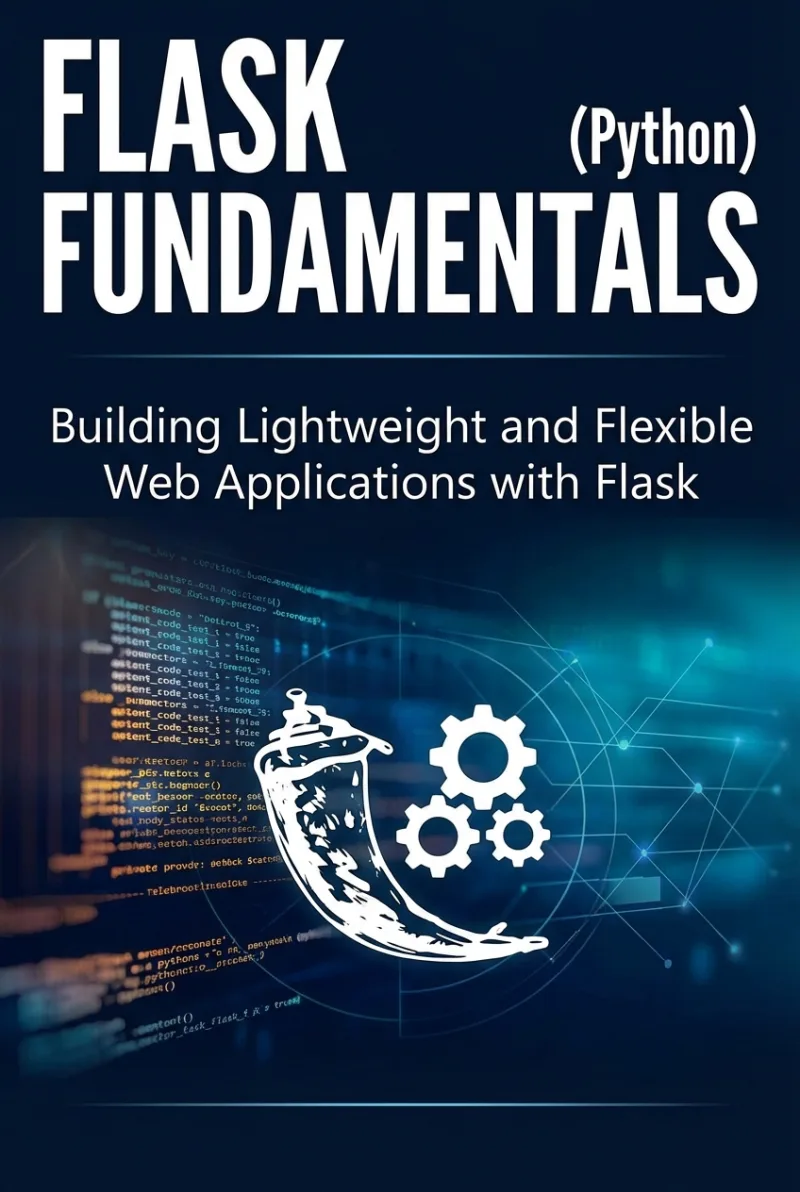
Flask Fundamentals (Python)
Building Lightweight and Flexible Web Applications with Flask
What's Included:
At a Glance
Flask Fundamentals (Python) is a professional Python eBook by Edward Carrington, 384 pages, available as an instant PDF and EPUB download for €14.90 with lifetime access and free updates. Building Lightweight and Flexible Web Applications with Flask.
- Length: 384 pages
- Format: PDF and EPUB (instant download)
- Language: English
- Topic: Python
- Edition: 1st Edition
- Price: €14.90
Key Highlights
- Beginner-to-production Flask learning path
- Routing, templates, forms, and database integration
- REST API development and JSON best practices
- Blueprint architecture for scalable apps
- User authentication fundamentals
- Security hardening and safe input handling
- Production configuration and real deployment workflow
- Performance optimization techniques
- Appendices: CLI cheat sheet, API template, deployment checklist, troubleshooting
Overview
Learn Flask from scratch and build lightweight, flexible Python web apps. Master routing, templates, forms, databases, REST APIs, Blueprints, authentication, security, deployment, and production readiness.
The Problem
Many Flask learners get stuck in “tutorial mode.” They learn isolated topics (a route here, a template there) but struggle to build a complete application because:
- Most resources don’t teach application structure and scalability early enough
- Security best practices are often missing or treated as optional
- Database and authentication integration feels confusing without a roadmap
- Deployment steps are fragmented across outdated or conflicting guides
- Projects work locally—but break in production
The result is often a Flask app that “runs,” but isn’t reliable, secure, or maintainable.
The Solution
Flask Fundamentals provides a clear, progressive, production-aware learning path.
- Step-by-step development from fundamentals to real-world architecture
- Blueprint-based structure for scalable Flask applications
- API-first thinking with practical REST patterns
- Authentication and security practices integrated into the workflow
- Production preparation, deployment guidance, and performance tuning
You’ll finish with the skills to build Flask applications that are not just functional—but production-ready.
About This Book
Flask Fundamentals (Python): Building Lightweight and Flexible Web Applications with Flask is a practical, hands-on guide that takes you from your first Flask route to deploying a production-ready web application.
Flask stands out because of its minimalist design: it gives you a clean foundation and lets you build exactly what you need—no heavy conventions, no unnecessary complexity. This book teaches you how to use that flexibility responsibly by combining Flask’s simplicity with professional architecture, security, and deployment practices.
Rather than teaching Flask as isolated “snippets,” every chapter builds on the last—so you learn how to connect routing, templates, databases, APIs, and authentication into a complete, real-world application.
What You'll Learn
- When to choose Flask and what makes it different from heavier frameworks
- Setting up a clean Flask development environment
- Routing and request/response fundamentals
- Building dynamic pages with Jinja2 templates
- Handling forms and validating user input safely
- Database integration and working with persistent data
- Building REST APIs and structured JSON responses
- Scaling application structure using Blueprints
- Adding user authentication and session management
- Securing Flask apps against common vulnerabilities
- Preparing for production and configuring a stable runtime
- Deploying Flask apps to real servers and hosting environments
- Performance tuning, scalability patterns, and practical optimization
By the end, you’ll be able to design Flask applications that are clean, maintainable, secure, and deployable—without losing the framework’s lightweight philosophy.
Flask gives you freedom. This book teaches you how to use that freedom like a professional.
Who Is This Book For?
- Python developers entering web development
- Students building their first real web applications
- Backend beginners who want a lightweight framework
- Developers who need REST APIs with Python
- Teams evaluating Flask for flexible, modular architectures
Who Is This Book NOT For?
- Readers who want “Django-style everything included” conventions
- Developers looking for deep framework internals only
- Beginners with zero Python knowledge
- GUI-based training seekers (this book is code-first)
Table of Contents
- What Is Flask and When to Use It?
- Setting Up a Flask Environment
- Understanding Routing
- Templates with Jinja2
- Handling Forms
- Working with Databases
- Building a REST API
- Blueprint Architecture
- User Authentication Basics
- Securing Flask Applications
- Preparing for Production
- Deploying Flask Applications
- Structuring Scalable Applications
- Performance Optimization
- From Flask Developer to Backend Engineer
- Building Your First Production-Ready Project
- Appendices and Reference Materials
Requirements
- Basic Python programming knowledge
- Familiarity with HTML and HTTP basics (helpful but not mandatory)
- A laptop/PC capable of running a Python environment
- Willingness to build hands-on and test locally