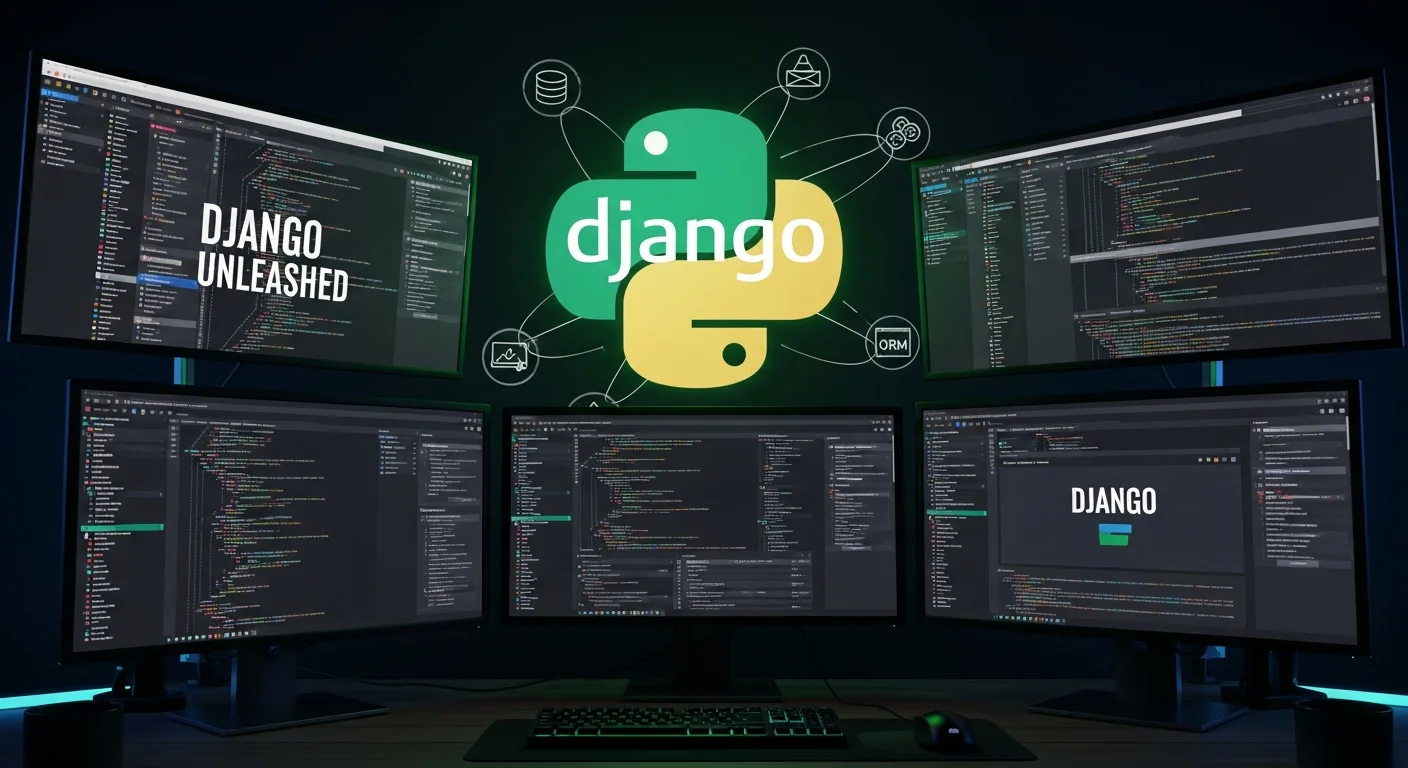
Django Fundamentals (Python)
Building Secure and Scalable Web Applications with Django
What's Included:
At a Glance
Django Fundamentals (Python) is a professional Python eBook by Edward Carrington, 416 pages, available as an instant PDF and EPUB download for €14.90 with lifetime access and free updates. Building Secure and Scalable Web Applications with Django.
- Length: 416 pages
- Format: PDF and EPUB (instant download)
- Language: English
- Topic: Python
- Price: €14.90
Key Highlights
- Complete beginner-to-production Django roadmap
- Models, ORM, views, templates, and forms explained clearly
- Authentication and admin mastery
- Advanced ORM optimization techniques
- API development for modern frontend integration
- Security hardening and deployment guidance
- Scaling strategies for high-traffic applications
- Appendices with CLI reference and deployment checklist
Overview
Learn Django from scratch and build secure, scalable web applications. Master models, ORM, views, templates, authentication, APIs, deployment, and production-ready backend development.
The Problem
Many developers struggle when transitioning into backend development because:
- They understand Python but not web architecture
- Django tutorials skip important structural concepts
- Security considerations are often overlooked
- Deployment steps feel confusing and fragmented
- Scaling strategies are rarely explained clearly
This leads to fragile applications that work locally but fail in production.
The Solution
Django Fundamentals provides a structured, production-focused approach to backend development.
- Clear explanation of Django’s architecture and philosophy
- Step-by-step project building process
- Security-first mindset throughout the book
- API development aligned with modern frontend workflows
- Deployment and scaling guidance for real-world environments
You’ll gain both technical skills and architectural understanding—turning you into a confident backend developer.
About This Book
Django Fundamentals (Python): Building Secure and Scalable Web Applications with Django is a practical, structured guide that takes you from your first Django project to deploying production-ready web applications with confidence.
Django has earned its reputation as one of the most powerful and secure web frameworks in the Python ecosystem. Its “batteries-included” philosophy, elegant ORM, built-in authentication system, and strong security defaults make it an ideal choice for developers who want to build robust backend systems efficiently.
This book follows a clear learning path designed to help you understand not just how Django works—but why it works the way it does.
What You'll Learn
- What Django is and why it remains a leading backend framework
- How to structure Django projects and applications properly
- Building database models using Django’s ORM
- Writing views and understanding the request-response cycle
- Using templates to generate dynamic HTML
- Handling user input securely with Django Forms
- Leveraging Django’s authentication system
- Using the powerful Django admin interface
- Advanced ORM queries and performance optimization
- Building RESTful APIs with Django
- Connecting Django to modern frontend applications
- Security best practices and production hardening
- Deploying Django applications to production
- Scaling Django applications for real-world traffic
By the final chapter, you won’t just know Django—you’ll understand how to design, build, deploy, and scale backend systems using it professionally.
Who Is This Book For?
- Python developers entering web development
- Aspiring backend developers
- Full-stack developers wanting a solid Django foundation
- Developers migrating from other backend frameworks
- Students preparing for backend engineering roles
Who Is This Book NOT For?
- Readers with no Python fundamentals
- Developers seeking deep Django internals only
- Frontend-only developers uninterested in backend systems
Table of Contents
- What Is Django and Why Use It?
- Setting Up a Django Project
- Understanding Django Apps
- Models and the ORM
- Creating Views
- Templates and Frontend Integration
- Django Forms
- Authentication System
- Django Admin Interface
- Advanced ORM Usage
- Building APIs with Django
- Connecting to Frontend Applications
- Preparing for Production
- Deploying a Django Application
- Scaling Django Applications
- From Beginner to Backend Developer
- Appendices and Reference Materials
Requirements
- Basic Python knowledge
- Familiarity with HTML fundamentals
- Willingness to build and test projects hands-on