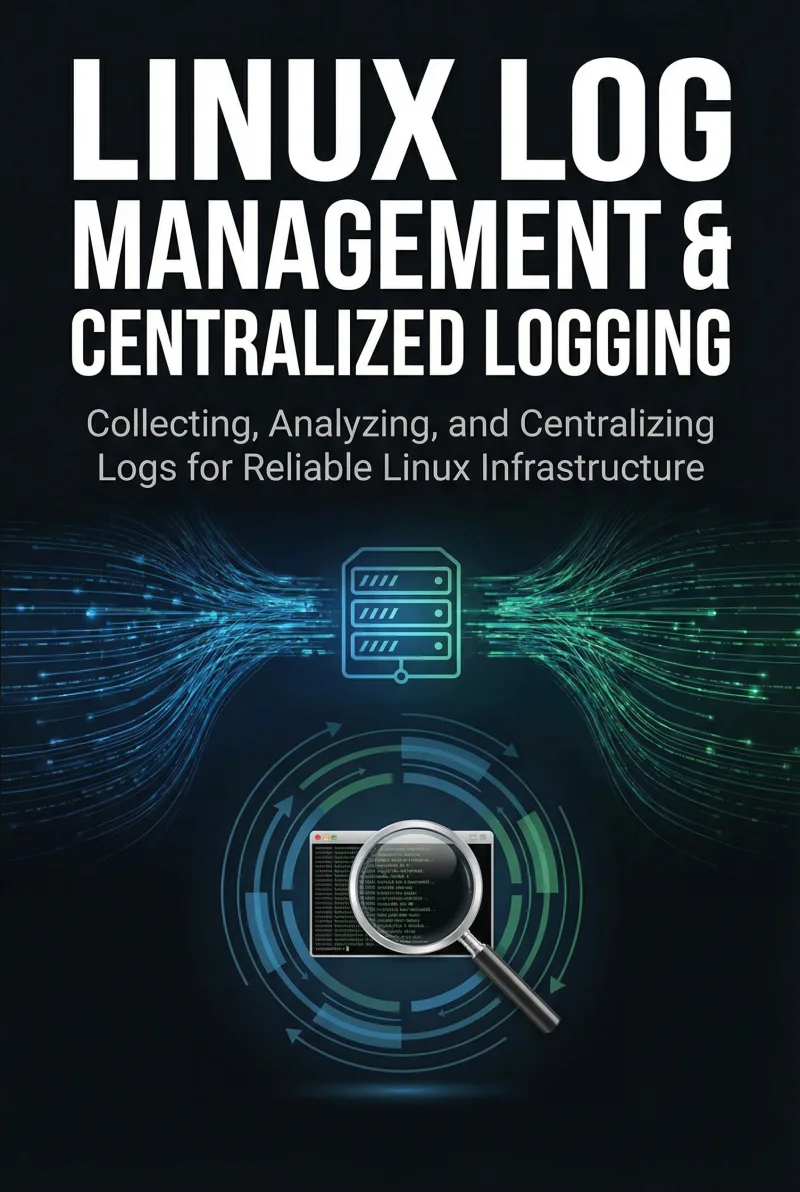
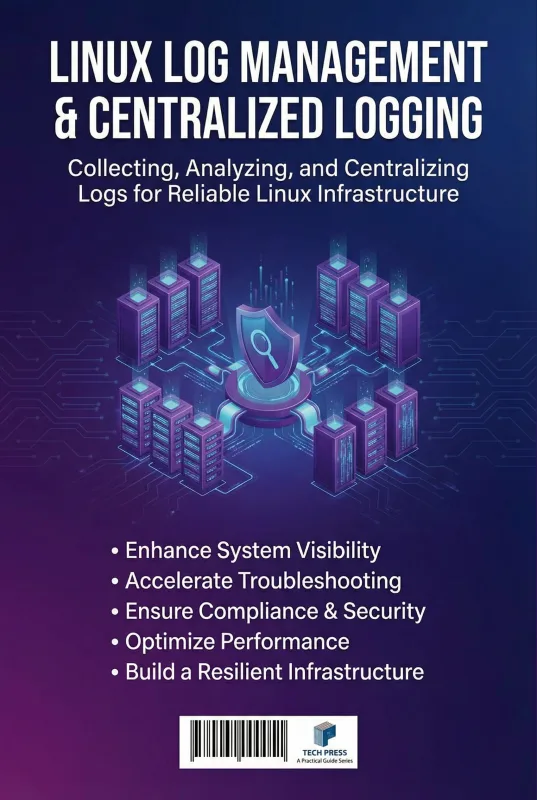
Linux Log Management & Centralized Logging
Collecting, Analyzing, and Centralizing Logs for Reliable Linux Infrastructure
What's Included:
At a Glance
Linux Log Management & Centralized Logging is a professional Linux Administration eBook by Elliot Mercer, 345 pages, available as an instant PDF and EPUB download for €13.90 with lifetime access and free updates. Collecting, Analyzing, and Centralizing Logs for Reliable Linux Infrastructure.
- Length: 345 pages
- Format: PDF and EPUB (instant download)
- Language: English
- Topic: Linux Administration
- Edition: 1st Edition
- Price: €13.90
Key Highlights
- Complete guide to Linux logging architecture
- systemd journal and journalctl mastery
- rsyslog configuration and log routing
- Practical troubleshooting using logs
- Security monitoring through log analysis
- Centralized logging architecture design
- Log aggregation and monitoring dashboards
- Log storage and retention strategies
- Automation techniques for log management
- Career transition to observability engineering
Overview
Learn Linux log management from fundamentals to centralized logging. Master journalctl, rsyslog, log analysis, monitoring, and scalable logging strategies.
The Problem
Linux systems generate massive amounts of log data, but many organizations struggle to use it effectively.
Common challenges include:
- Logs scattered across multiple servers
- Difficulty searching large log files
- Lack of centralized visibility
- Missed warning signs before outages
- Limited security monitoring capabilities
Without a structured log management strategy, troubleshooting becomes slow, security events go unnoticed, and infrastructure reliability suffers.
The Solution
Linux Log Management & Centralized Logging provides a structured path from basic log exploration to scalable centralized logging systems.
You will learn how to:
- Understand Linux logging architecture
- Search and analyze logs efficiently
- Configure rsyslog and journal-based logging
- Build centralized logging infrastructure
- Visualize logs using monitoring dashboards
- Design long-term logging strategies for organizations
The result: faster troubleshooting, stronger security visibility, and more reliable Linux systems.
About This Book
Linux Log Management & Centralized Logging is a practical guide to understanding, analyzing, and centralizing logs across Linux infrastructure. Whether you manage a single server or hundreds of systems, logs are the most valuable source of operational insight — if you know how to use them.
Every Linux system continuously records information about system activity, services, errors, and security events. But logs are often ignored until something breaks. This book teaches you how to transform logs from passive records into powerful operational tools.
Master Linux Logging Fundamentals
You will begin by understanding the core Linux logging architecture and tools:
- systemd journal and the
journalctlcommand - rsyslog configuration and log routing
- Searching and filtering logs effectively
- Managing log files and rotation strategies
Diagnose Problems and Detect Threats
Logs are critical for troubleshooting and security monitoring. You’ll learn how to:
- Detect system failures and service issues early
- Investigate performance problems
- Identify suspicious activity and potential intrusions
- Use logs for operational and security insight
Centralized Logging for Modern Infrastructure
The second half of the book focuses on centralized logging systems. You will build a scalable logging architecture, deploy a central log server, explore log aggregation platforms, and visualize logs with monitoring dashboards.
This book helps you turn Linux logs into operational intelligence.
Who Is This Book For?
- Linux system administrators
- DevOps and platform engineers
- Site Reliability Engineers (SREs)
- Security analysts monitoring Linux systems
- IT professionals managing Linux infrastructure
Who Is This Book NOT For?
- Readers without basic Linux command-line knowledge
- Developers focused only on application-level logging
- Advanced observability engineers seeking deep tool internals
- Those looking only for GUI-based monitoring solutions
Table of Contents
- Why Logging Matters in Linux Systems
- Understanding Linux Log Architecture
- Viewing and Searching Logs
- systemd Journal
- rsyslog Fundamentals
- Managing Log Files
- Detecting System Issues Through Logs
- Security Monitoring with Logs
- Why Centralize Logs?
- Setting Up a Central Log Server
- Introduction to Log Aggregation Systems
- Log Visualization and Monitoring
- Log Storage Management
- Automating Log Management
- Designing a Logging Strategy
- From System Administrator to Observability Engineer
- Appendices and Reference Guides
Requirements
- Basic familiarity with the Linux command line
- Access to a Linux system for experimentation
- Interest in troubleshooting and infrastructure reliability
- No prior log management experience required