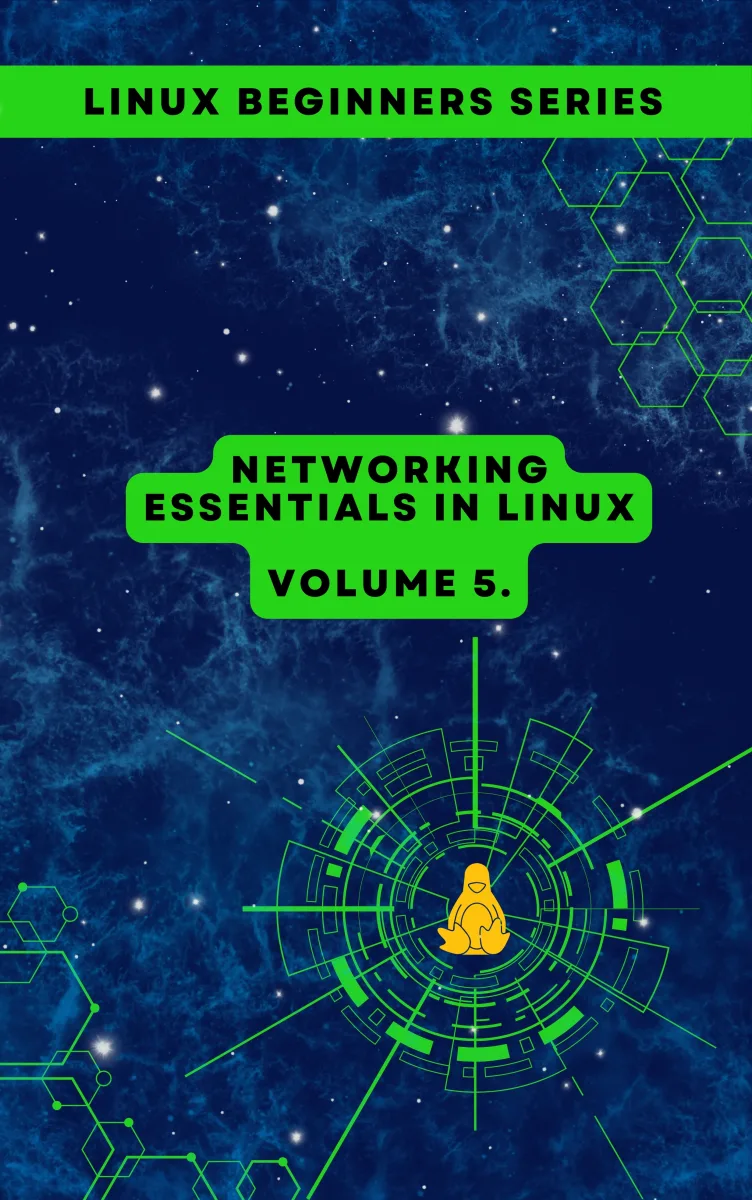
Networking Essentials in Linux
A Practical Guide to Configuration, Troubleshooting, and Secure Remote Access - Volume 5.
What's Included:
At a Glance
Networking Essentials in Linux is a professional Linux Fundamentals eBook by CloudMatrix sro, 178 pages, available as an instant PDF and EPUB download for €5.90 with lifetime access and free updates, last updated in 2026. A Practical Guide to Configuration, Troubleshooting, and Secure Remote Access - Volume 5.
- Length: 178 pages
- Format: PDF and EPUB (instant download)
- Language: English
- Topic: Linux Fundamentals
- Edition: 2nd Edition
- Last updated: 2026
- Price: €5.90
Key Highlights
- 10 progressive chapters covering everything from fundamentals to practical tasks
- 4 reference appendices you'll use long after your first read
- Focused on the modern Linux networking toolkit (
ip,ss, not deprecated tools) - Complete SSH workflow coverage, including key-based authentication
- Systematic troubleshooting methodology you can apply to any connectivity problem
- DNS and name resolution demystified with practical examples
- Security-minded thinking woven throughout every chapter
- Hands-on practice labs to reinforce your learning
- Clear, jargon-free writing with concepts introduced gently
- Real-world examples drawn from actual administrative tasks
- Part of the structured CloudMatrix Linux Mastery Series
- Instant-lookup cheat sheets for daily reference
Overview
Master Linux networking from the command line. Learn to configure interfaces, troubleshoot connectivity, resolve DNS issues, and secure remote access with SSH — all through practical, real-world examples.
The Problem
Linux networking has a reputation for being intimidating — a maze of cryptic commands, conflicting tutorials, and outdated guides that reference deprecated tools. When something breaks, the pressure is real: a broken SSH connection, a DNS failure, or a misconfigured interface can bring work to a complete halt.
Most resources fall into one of two traps: they bury you in networking theory before you ever touch a terminal, or they throw advanced commands at you with no foundation to understand why they work. The result? You end up copying and pasting commands from Stack Overflow, hoping they won't make things worse.
You need networking skills you can actually rely on — not just memorized commands, but real understanding.
The Solution
Networking Essentials in Linux delivers exactly that: a clear, practical, hands-on path from networking fundamentals to confident real-world execution. No padding. No deprecated tools. No assumed knowledge beyond basic command-line comfort.
This book is built around a simple philosophy: clarity over complexity. Every concept is introduced in context, every command is explained with real examples, and every chapter builds directly on the last. You'll learn the modern Linux networking toolkit — ip, ss, ping, traceroute, dig, SSH — and you'll learn when and why to use each one.
By the final chapter, you'll be configuring interfaces, troubleshooting connectivity, managing DNS, and establishing secure remote access with confidence. And the four reference appendices ensure the book keeps earning its place on your desk long after your first read.
About This Book
Take Full Control of Linux Networking — From the Terminal Up
Networking is the invisible backbone of every modern Linux system. Whether you're managing a single server, deploying cloud infrastructure, or simply trying to understand why your machine can't reach the internet, a solid grasp of Linux networking is no longer optional — it's essential.
Networking Essentials in Linux is the fifth installment in the CloudMatrix Linux Mastery series, and it's designed to transform networking from an intimidating specialty into a skill you wield with confidence. This volume strips away the jargon and focuses on what actually matters: the tools, commands, and concepts you'll use every single day.
Why This Book Exists
Too many networking books drown readers in theory before they ever touch a terminal. Others jump straight into advanced topics without building a foundation. This book takes a different approach — one rooted in clarity over complexity. Every concept is introduced gently, reinforced with practical examples, and tied directly to tasks you'll face in real Linux environments.
From the moment you open Chapter 1, you're not just reading — you're doing. You'll run commands, interpret their output, break configurations intentionally, and fix them again. That is where real learning happens.
What You'll Master
Across 10 progressive chapters and 4 reference appendices, you'll build a complete working knowledge of Linux networking:
- Networking fundamentals — IP addresses, subnets, ports, protocols, and how Linux fits into the bigger picture.
- Modern Linux tooling — Master
ip,ss,ping,traceroute,dig, and other essential commands. - Network interface management — Understand physical, virtual, and loopback interfaces and how to configure each.
- Connectivity troubleshooting — Systematically diagnose why something isn't working, from the cable to the application layer.
- DNS and name resolution — Demystify the system that underpins nearly every network interaction.
- SSH and remote access — Connect to remote machines securely, using both passwords and key-based authentication.
- Networking security — Apply firewall basics, secure SSH configurations, and defensive best practices.
Who Wrote This Book
This volume was produced by the CloudMatrix Editorial Team, a collective of Linux practitioners, system administrators, and technical educators. Every chapter has been reviewed against real-world scenarios — the kind of problems you'll actually encounter on production systems, not just classroom examples.
A Hands-On Approach
Each chapter includes practical examples drawn from real administrative work. By the time you reach Chapter 10 — Practical Linux Networking Tasks — you won't just understand the concepts. You'll be applying them fluently.
The book closes with four carefully curated reference appendices:
- A Linux Networking Command Cheat Sheet for instant lookup
- An SSH Quick Reference covering every common workflow
- A Common Network Errors and Fixes guide for rapid troubleshooting
- A set of Networking Practice Labs to reinforce your learning through doing
Part of the CloudMatrix Linux Mastery Series
This is Volume 5 in an ongoing series that builds practical, hands-on Linux expertise step by step. While earlier volumes introduced the command line and system administration fundamentals, this volume extends your reach outward — from the machine in front of you to the interconnected world beyond it.
Whether you're a system administrator expanding your toolkit, a developer who needs to understand how your applications talk to the world, a DevOps engineer automating deployments, or a cybersecurity learner building a foundation — this book meets you where you are and takes you further.
What Makes This Book Different
- No filler. Every page earns its place. You won't find padding or unnecessary history lessons.
- Modern commands only. We focus on the current Linux toolkit (
ip,ss) rather than deprecated utilities. - Security woven throughout. Secure practices aren't a separate chapter — they're part of every workflow.
- Designed for real work. Every example reflects tasks you'll perform on actual Linux systems.
- Reference-ready. The appendices make this book just as useful after your first read as during it.
By the End of This Book, You Will Be Able To
- Understand how Linux interacts with networks at both conceptual and practical levels
- Configure network interfaces and manage routing from the command line
- Diagnose connectivity problems methodically and efficiently
- Resolve DNS issues with confidence
- Use SSH effectively, including key-based authentication workflows
- Apply fundamental security principles to protect networked Linux systems
- Execute common networking tasks quickly and reliably
Start Connecting
Networking in Linux is a skill that rewards patience and practice. Approach this volume not as a manual to be memorized, but as a companion to be explored. Open a terminal, try the commands, break things, and fix them again.
Welcome to Volume 5. Let's get connected.
Who Is This Book For?
- System administrators expanding their networking toolkit
- Developers who need to understand how their applications communicate
- DevOps engineers managing cloud and on-premises Linux infrastructure
- Cybersecurity learners building a networking foundation
- Self-taught Linux users ready to move beyond the basics
- IT professionals transitioning to Linux-based environments
- Students preparing for Linux certifications (LPIC, RHCSA, LFCS)
- Anyone comfortable with the Linux command line who wants to master networking
Who Is This Book NOT For?
- Absolute beginners who have never used a Linux terminal — start with Volume 1 of the series first
- Readers seeking deep protocol-level theory (TCP/IP internals, packet dissection at the bit level)
- Network engineers looking for enterprise routing, BGP, or Cisco-specific material
- Those wanting a Windows-focused networking resource
- Readers expecting GUI-based network configuration tutorials — this book is command-line focused
- Anyone looking for a quick 30-minute read — this is a practical skills book that rewards time invested
Table of Contents
- Networking Fundamentals for Linux Users
- Understanding Linux Network Interfaces
- Viewing and Managing Network Configuration
- Configuring Network Connectivity
- Testing and Troubleshooting Connectivity
- DNS and Name Resolution
- Remote Access with SSH
- SSH Keys and Secure Access Workflows
- Basic Networking Security Concepts
- Practical Linux Networking Tasks
- Linux Networking Command Cheat Sheet
- SSH Quick Reference
- Common Network Errors and Fixes
- Networking Practice Labs
Requirements
- Basic comfort with the Linux command line (navigating directories, editing files, running commands)
- A working Linux system — physical, virtual machine, or cloud instance (Debian, Ubuntu, Fedora, or similar)
- Root or
sudoaccess on your practice system - An internet connection for following along with real examples
- A text editor you're comfortable with (
nano,vim, or similar) - Approximately 10–15 hours of reading and hands-on practice time
- No prior networking certification or deep theory knowledge required