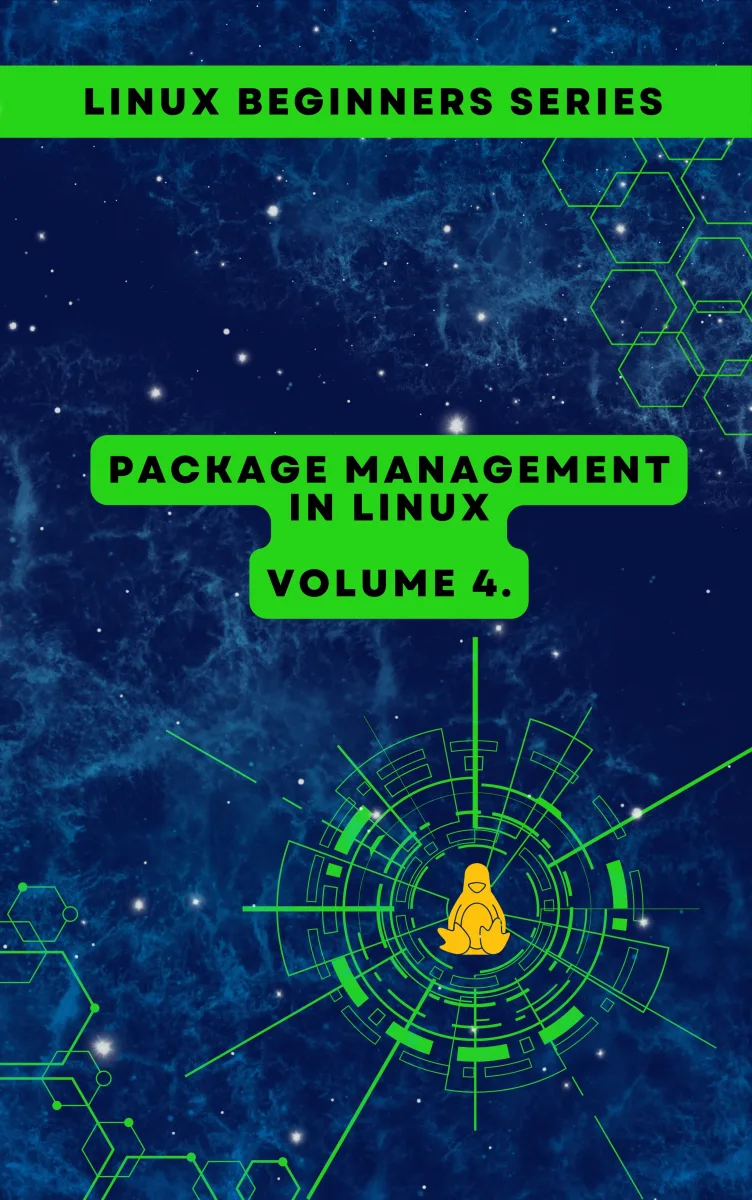
Package Management in Linux
Master APT, DNF, RPM, Snap, and Flatpak Across Every Major Distribution - Volume 4.
What's Included:
At a Glance
Package Management in Linux is a professional Linux Fundamentals eBook by CloudMatrix sro, 191 pages, available as an instant PDF and EPUB download for €5.90 with lifetime access and free updates, last updated in 2026. Master APT, DNF, RPM, Snap, and Flatpak Across Every Major Distribution - Volume 4.
- Length: 191 pages
- Format: PDF and EPUB (instant download)
- Language: English
- Topic: Linux Fundamentals
- Edition: 2nd Edition
- Last updated: 2026
- Price: €5.90
Key Highlights
- Complete coverage of APT, dpkg, DNF, YUM, and RPM — the five tools every Linux admin must know
- Dedicated chapters on Snap, Flatpak, and AppImage with honest comparisons and use-case guidance
- In-depth treatment of repository management, GPG keys, and signature verification
- Step-by-step troubleshooting procedures for broken dependencies and failed upgrades
- Real-world production workflows for managing software across fleets of servers
- Professional cheat sheets comparing APT, DNF, and RPM commands side by side
- Hands-on practice labs to solidify every concept
- Distribution-agnostic approach — applies to Debian, Ubuntu, Fedora, RHEL, Rocky, AlmaLinux, and more
- Written by experienced Linux professionals with production-tested guidance
- Perfect companion resource for LPIC, RHCSA, LFCS, and Linux+ certification preparation
Overview
Master Linux package management across every major distribution. Learn APT, DNF, RPM, dpkg, Snap, and Flatpak through hands-on examples, troubleshooting guides, and practical workflows for both desktops and production servers.
The Problem
You've been using Linux for a while, but every time a package fails to install, a dependency breaks, or an update leaves your system in an inconsistent state — you're stuck. Tutorials tell you what to type, but never explain why it works or what to do when it doesn't.
Maybe you've faced situations like these:
- ❌
aptrefusing to install a package because of "unmet dependencies" - ❌ A GPG signature error after adding a third-party repository
- ❌ A kernel update that left your system unbootable
- ❌ Confusion between
apt,apt-get,dpkg,dnf,yum, andrpm - ❌ Not knowing whether to use Snap, Flatpak, AppImage, or the native package manager
- ❌ A production server where you're afraid to run
upgradebecause something might break
Package management isn't optional — it's the beating heart of every Linux system. And without real understanding, you're always one bad command away from disaster.
The Solution
Package Management in Linux is the definitive, hands-on guide to mastering software management across every major Linux distribution. Instead of scattered blog posts and outdated tutorials, you get one focused, professionally written volume that teaches the principles, tools, and recovery procedures you need to work confidently on any system.
Inside, you'll learn to:
- ✅ Use APT and dpkg like a professional on Debian, Ubuntu, and derivatives
- ✅ Master DNF, YUM, and RPM on Fedora, RHEL, Rocky, and AlmaLinux
- ✅ Add, trust, and manage third-party repositories safely
- ✅ Resolve broken dependencies and recover from failed upgrades
- ✅ Choose correctly between native packages, Snap, Flatpak, and AppImage
- ✅ Build repeatable, production-ready workflows for fleets of servers
Every chapter is grounded in real commands, real output, and real-world scenarios. By the end, you'll not only know package management — you'll understand it.
About This Book
Take Full Control of Software on Any Linux System
Every Linux administrator, developer, and power user eventually faces the same wall: a package that won't install, a dependency that refuses to resolve, or an upgrade that breaks the system. When that happens, the tutorials stop working — and you need real understanding, not copy-paste commands.
Package Management in Linux is the fourth volume in the CloudMatrix Linux Mastery Series, and it is dedicated entirely to one of the most critical — yet most underestimated — skills in Linux administration: managing software safely, efficiently, and reliably across any distribution you encounter.
From a single Raspberry Pi to a fleet of enterprise servers, every Linux system lives or dies by its package manager. This book teaches you to master them all.
Why Package Management Matters More Than You Think
Most Linux users learn package management by accident. They memorize apt install or dnf update and move on — until something breaks. Suddenly they face cryptic dependency errors, GPG signature failures, broken repositories, or kernel updates that leave the system unbootable.
This volume closes that gap permanently. You won't just learn what to type — you'll learn why each command behaves the way it does, how the underlying tools interact, and how to recover gracefully when things go wrong.
What You Will Learn
Across fourteen carefully structured chapters and appendices, this book takes you on a complete journey through the Linux software ecosystem:
- The foundations of Linux software management — how packages, repositories, and dependencies really work under the hood.
- Debian-based package management — APT, apt-get, apt-cache, dpkg, and the complete Debian/Ubuntu/Mint workflow.
- Red Hat-based package management — DNF, YUM, RPM, and the full Fedora/RHEL/CentOS/Rocky/AlmaLinux toolkit.
- Working with local .deb and .rpm files — installing offline, verifying integrity, and building minimal repositories.
- Repositories and trusted sources — adding third-party repos, managing GPG keys, pinning packages, and locking versions.
- Updating and upgrading systems safely — routine updates, distribution upgrades, and rollback strategies.
- Querying and inspecting installed software — finding what's installed, what files belong to which package, and which package owns a file.
- Handling broken dependencies — rescuing systems from failed upgrades, dependency hell, and corrupted package databases.
- Alternative package systems — Snap, Flatpak, and AppImage explained with real use cases and trade-offs.
- Practical workflows — reproducible setups, automation with Ansible, and fleet-wide software management.
Hands-On, Distribution-Agnostic, and Production-Ready
This is not a theoretical book. Every chapter includes real commands, real output, and real-world scenarios drawn from production Linux environments. Whether you run Debian, Ubuntu, Fedora, RHEL, Rocky Linux, AlmaLinux, openSUSE, or Arch-derived systems, the patterns and principles you learn here apply directly.
You'll find dedicated appendices that act as permanent references long after your first read:
- 📋 APT, DNF, and RPM Cheat Sheet — every command you need, side by side.
- 🗂️ Repository Management Reference — key files, locations, and configuration syntax.
- 🛠️ Package Troubleshooting Guide — step-by-step recovery procedures for the most common failures.
- 🧪 Practice Labs — hands-on exercises to test and solidify your skills.
Who This Book Is For
This book is written for anyone who works with Linux seriously — system administrators, DevOps engineers, backend developers, cybersecurity professionals, cloud engineers, and Linux enthusiasts who want to stop guessing and start understanding.
It is especially valuable if you administer multiple distributions, manage servers in production, or are preparing for certifications such as LPIC, RHCSA, or the Linux Foundation Certified System Administrator (LFCS) exams.
Built on Proven Pedagogy
This volume follows the progressive learning structure that has defined the entire CloudMatrix series:
- Chapters 1–3 establish the foundations and introduce the two dominant package ecosystems.
- Chapters 4–6 expand into local package files, repository management, and safe upgrades.
- Chapters 7–8 focus on inspection, querying, and resolving broken states.
- Chapters 9–10 cover alternative package systems and real production workflows.
- Appendices A–D serve as permanent reference material for daily use.
What Makes This Volume Different
Most Linux books treat package management as a side topic — a few pages buried in a larger administration guide. This volume is different: it is entirely dedicated to software management. Every concept is treated with the depth it deserves, from the philosophy behind repository trust to the nuts and bolts of resolving a corrupted dpkg database.
You'll learn the why behind every how:
- Why APT and DNF resolve dependencies differently — and when it matters.
- Why GPG signatures are the backbone of Linux software trust.
- Why Snap and Flatpak exist alongside traditional packages — and when to choose each.
- Why a failed upgrade is almost always recoverable if you understand the underlying state.
Future-Proof Your Linux Skills
Package managers evolve. Repositories change. New formats like Flatpak and Snap continue to reshape the desktop landscape. This book teaches you the durable principles that remain true regardless of which distribution or tool becomes popular next. By the final chapter, you will have developed the intuition to troubleshoot situations you've never seen before — the single most valuable skill in modern Linux administration.
Part of the CloudMatrix Linux Mastery Series
This is Volume 4 of a comprehensive multi-volume series designed to take you from Linux beginner to confident professional. Each volume stands on its own, but together they form one of the most complete Linux learning paths available today. Previous volumes cover Linux fundamentals, the shell, and system administration basics — and future volumes will dive into networking, security, and automation.
Start Mastering Linux Software Management Today
Whether you're troubleshooting a broken server at 2 AM, setting up a new workstation, deploying software across hundreds of machines, or simply trying to understand why apt won't cooperate, this book will be your trusted companion. Clear explanations, practical examples, and battle-tested troubleshooting procedures make it the reference you'll return to again and again.
Get your copy today and take full, confident control of software on every Linux system you touch.
Who Is This Book For?
- Linux system administrators managing Debian, Ubuntu, RHEL, Fedora, Rocky, or AlmaLinux servers
- DevOps engineers building reproducible deployments across mixed Linux environments
- Backend and cloud developers who need reliable software environments on Linux
- IT professionals preparing for LPIC, RHCSA, LFCS, or Linux+ certifications
- Cybersecurity practitioners who need to understand package trust, GPG keys, and repository integrity
- Self-taught Linux users ready to move beyond tutorial-following into real mastery
- Students and career changers entering the Linux and open-source world
- Power users who want to confidently troubleshoot any package-related problem
Who Is This Book NOT For?
- ❌ Complete beginners who have never used a Linux terminal before — start with Volume 1 of the series first
- ❌ Readers looking for a Windows or macOS package management guide
- ❌ Developers seeking language-specific package managers only (npm, pip, cargo) — this book focuses on OS-level package management
- ❌ Users who only want a "type this command" cheat sheet with no explanations — this book teaches understanding, not just commands
- ❌ Readers who refuse to experiment in a safe test environment — hands-on practice is essential
Table of Contents
- Understanding Software Management in Linux
- Debian-Based Package Management
- Red Hat-Based Package Management
- Working with Local Package Files
- Repositories and Trusted Software Sources
- Updating and Upgrading Systems
- Querying and Inspecting Installed Software
- Handling Broken Dependencies and Package Problems
- Alternative Package Systems
- Practical Package Management Workflows
- APT, DNF, and RPM Cheat Sheet
- Repository Management Reference
- Package Troubleshooting Guide
- Practice Labs for Software Management
Requirements
- A working Linux system (physical, virtual, or cloud-based) — Debian, Ubuntu, Fedora, or a RHEL-compatible distribution recommended
- Basic familiarity with the Linux terminal and common shell commands (
cd,ls,sudo, etc.) - Administrative (
sudoorroot) access on a test system - An internet connection for downloading packages and testing repositories
- A willingness to experiment safely — ideally in a virtual machine or disposable container
- No prior package management experience required — everything is taught from fundamentals