Linux Environment Variables & Configuration Management
Managing System Configuration, Environment Variables, and Application Settings in Linux
What's Included:
At a Glance
Linux Environment Variables & Configuration Management is a professional Linux Administration eBook by Bas van den Berg, 367 pages, available as an instant PDF and EPUB download for €12.90 with lifetime access and free updates. Managing System Configuration, Environment Variables, and Application Settings in Linux.
- Length: 367 pages
- Format: PDF and EPUB (instant download)
- Language: English
- Topic: Linux Administration
- Edition: 1st Edition
- Price: €12.90
Key Highlights
- Understanding Linux environment variables
- Viewing and inspecting environment variables
- Creating and exporting variables
- Persistent shell configuration
- Global system environment variables
- Managing the PATH variable
- Environment variables in shell scripts
- Application configuration management
- Protecting sensitive configuration data
- Managing configuration across Linux systems
- Designing scalable configuration strategies
Overview
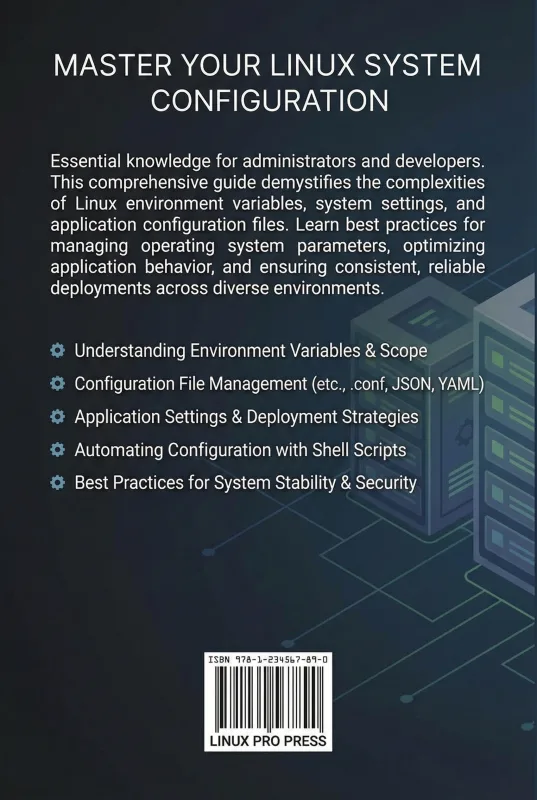
Master Linux environment variables and configuration management. Learn PATH, shell startup files, system configuration, and DevOps-ready environment strategies.
The Problem
Environment variables and configuration management are fundamental to Linux systems, yet many administrators struggle with them.
Common problems include:
- Confusion between shell configuration files
- Incorrect PATH settings that break commands
- Inconsistent configuration across servers
- Applications failing due to missing environment variables
- Unsafe storage of credentials and secrets
Without a clear configuration strategy, Linux systems become difficult to manage and troubleshoot.
The Solution
Linux Environment Variables & Configuration Management provides a structured guide to managing configuration in Linux environments.
You will learn how to:
- Inspect and manage environment variables
- Create persistent shell configuration
- Manage PATH and execution environments
- Use environment variables in scripts and applications
- Secure sensitive configuration data
- Design scalable configuration strategies across Linux infrastructure
The result is a Linux system that is predictable, maintainable, and production-ready.
About This Book
Linux Environment Variables & Configuration Management is a practical guide to understanding how Linux systems manage configuration, environment variables, and application settings.
Every Linux system depends on environment variables and configuration files to control how commands execute, how applications connect to services, and how systems behave across different environments. Despite their importance, many administrators learn these concepts through scattered documentation and troubleshooting sessions rather than structured guidance.
Understand Environment Variables from the Ground Up
The book begins with the core concepts of Linux environment variables. You will learn how variables are created, inspected, exported, and inherited across processes.
Key commands and tools such as env, printenv, and export are explained clearly so you can understand how the Linux shell manages execution environments.
Master Shell and System Configuration
The next chapters explore how Linux systems manage persistent configuration using shell startup files and global configuration mechanisms.
- .bashrc and .profile configuration
- Global environment variables
- Managing the PATH variable
- Controlling execution environments
Apply Configuration Management in Real Systems
The second half of the book moves beyond theory into real-world administration and DevOps practices.
- Using environment variables inside scripts
- Managing application configuration
- Handling secrets and credentials securely
- Designing configuration strategies across multiple Linux systems
This book provides a structured path to mastering Linux configuration management for modern infrastructure.
Who Is This Book For?
- Linux system administrators
- DevOps engineers and infrastructure engineers
- Developers working with Linux environments
- Students learning Linux system configuration
- Anyone preparing for a Linux or DevOps career
Who Is This Book NOT For?
- Users without basic Linux command-line knowledge
- Readers looking only for GUI-based system administration
- Advanced configuration management engineers seeking only enterprise tools
- Developers focused only on application code without system administration
Table of Contents
- What Are Environment Variables?
- Viewing and Inspecting Variables
- Creating and Exporting Variables
- Persistent Shell Configuration
- Global Environment Variables
- Application Configuration via Environment
- Understanding the PATH Variable
- Managing Execution Environment
- Linux Configuration File Structure
- Managing System Settings
- Environment Variables in Scripts
- Environment-Based Deployments
- Protecting Sensitive Configuration
- Managing Configuration Across Systems
- Designing a Configuration Strategy
- From Linux Administrator to DevOps Engineer
Requirements
- Basic familiarity with the Linux command line
- Access to a Linux system for experimentation
- Basic understanding of file editing and shell commands
- No prior configuration management experience required