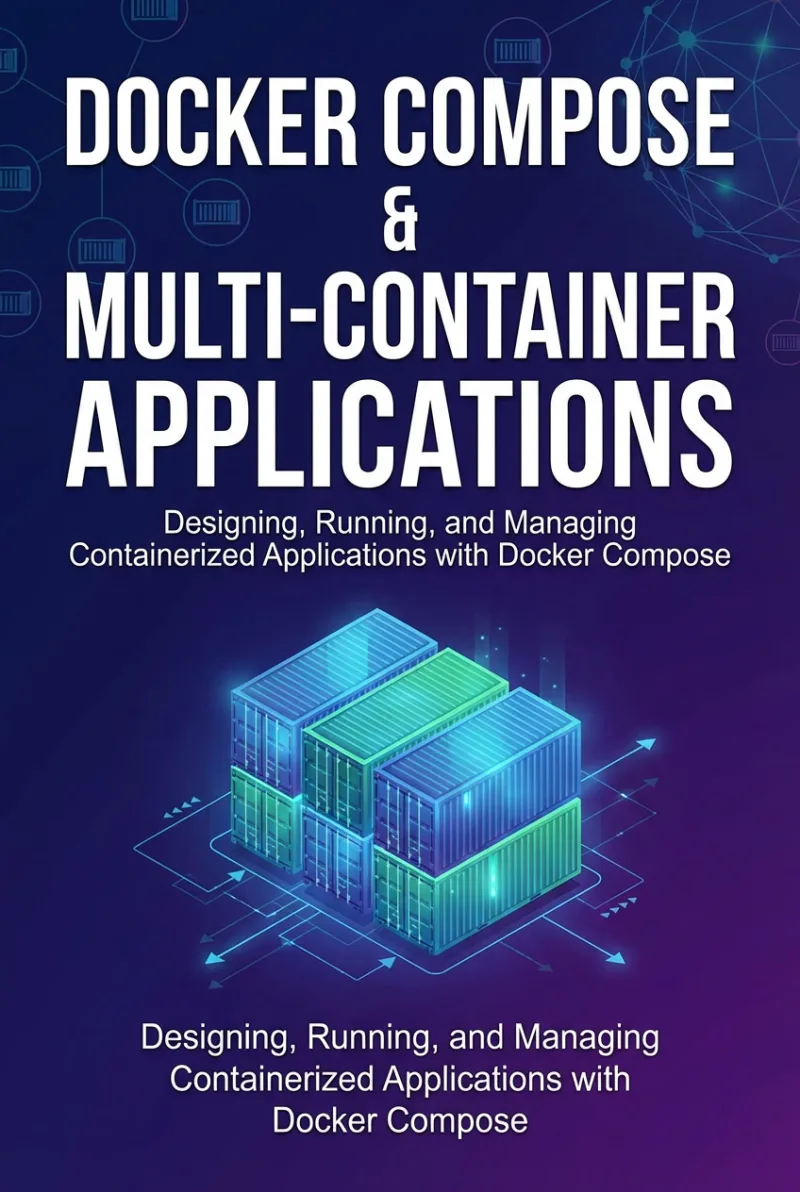
Containerization has transformed how we deploy and manage applications, but the real power emerges when you orchestrate multiple containers into cohesive application stacks. This week's Book of the Week — Docker Compose & Multi-Container Applications — teaches you exactly how to do that.
Whether you are deploying a WordPress site with a MySQL backend, building a microservices architecture, or setting up a complete development environment, Docker Compose is the tool that makes multi-container management practical and repeatable.
Why Docker Compose Is Essential in 2026
Single-container deployments are fine for learning, but production applications almost always consist of multiple services working together: web servers, databases, cache layers, message queues, monitoring tools, and more. Managing these services individually with docker run commands quickly becomes unmanageable.
Docker Compose solves this by letting you define your entire application stack in a single YAML file. With one command — docker compose up — you can launch, connect, and configure all your services simultaneously.
In 2026, Docker Compose has become even more relevant with the integration of Compose Spec features directly into Docker Engine, improved support for Docker Swarm mode, and growing adoption for local development environments that mirror production infrastructure.
What This Book Covers
Part 1: Docker Compose Fundamentals
The book starts with the basics for readers who are new to Compose, but quickly moves beyond surface-level tutorials:
- Compose file syntax — Understanding the YAML structure, service definitions, and configuration options
- Networking — How Docker creates networks between services and how to customize network configuration
- Volumes and data persistence — Named volumes, bind mounts, and strategies for persisting data across container restarts
- Environment variables — Using .env files, variable substitution, and managing secrets
- Build vs. image — When to build from Dockerfiles and when to use pre-built images
Part 2: Real-World Application Stacks
This section is where the book truly shines. Rather than abstract examples, each chapter presents a complete, production-ready application stack:
- LEMP Stack — Linux, NGINX, MySQL/MariaDB, PHP-FPM with SSL termination
- Node.js with Redis and MongoDB — Full-stack JavaScript application with caching and database
- WordPress with proper production configuration — Including Redis object cache, automated backups, and monitoring
- Python/Django with PostgreSQL and Celery — Background task processing and database management
- Monitoring Stack — Prometheus, Grafana, and Alertmanager configured together
Sample Compose File: Production WordPress
services:
  wordpress:
    image: wordpress:6.7-php8.3-fpm
    restart: unless-stopped
    volumes:
      - wordpress_data:/var/www/html
    environment:
      WORDPRESS_DB_HOST: mariadb
      WORDPRESS_DB_USER: ${DB_USER}
      WORDPRESS_DB_PASSWORD: ${DB_PASSWORD}
      WORDPRESS_DB_NAME: ${DB_NAME}
    depends_on:
      mariadb:
        condition: service_healthy
    networks:
      - backend

  mariadb:
    image: mariadb:11.4
    restart: unless-stopped
    volumes:
      - db_data:/var/lib/mysql
    environment:
      MYSQL_ROOT_PASSWORD: ${DB_ROOT_PASSWORD}
      MYSQL_DATABASE: ${DB_NAME}
      MYSQL_USER: ${DB_USER}
      MYSQL_PASSWORD: ${DB_PASSWORD}
    healthcheck:
      test: ["CMD", "healthcheck.sh", "--connect", "--innodb_initialized"]
      interval: 10s
      timeout: 5s
      retries: 3
    networks:
      - backend

  nginx:
    image: nginx:1.27-alpine
    restart: unless-stopped
    ports:
      - "80:80"
      - "443:443"
    volumes:
      - wordpress_data:/var/www/html:ro
      - ./nginx/conf.d:/etc/nginx/conf.d:ro
      - ./certbot/conf:/etc/letsencrypt:ro
    depends_on:
      - wordpress
    networks:
      - frontend
      - backend

  redis:
    image: redis:7-alpine
    restart: unless-stopped
    networks:
      - backend

volumes:
  wordpress_data:
  db_data:

networks:
  frontend:
  backend:
Part 3: Advanced Patterns
- Multi-stage builds — Optimizing image sizes for production deployments
- Compose profiles — Running different service combinations for development, testing, and production
- Health checks and dependencies — Ensuring services start in the correct order
- Secrets management — Securely handling passwords and API keys in Compose environments
- Scaling services — Running multiple instances of services with load balancing
- CI/CD integration — Using Compose in automated build and deployment pipelines
Who Should Read This Book
- System Administrators transitioning to containerized deployments
- DevOps Engineers who need production-ready Compose configurations
- Developers who want reproducible local development environments
- IT Students learning modern deployment practices
- Anyone managing Docker who has outgrown single-container deployments
What Sets This Book Apart
- Production-ready configurations — Every Compose file in the book is designed for production use, not just demonstration
- Security-conscious — Proper secrets handling, non-root containers, and network isolation throughout
- Troubleshooting guides — Each chapter includes a section on common problems and their solutions
- Performance optimization — Tips for optimizing container performance, image sizes, and build times
Recommended Reading
Build your container expertise with these complementary Dargslan titles:
- Docker Compose & Multi-Container Applications — This week's featured book
- Docker Fundamentals — Start here if you are new to Docker
- Microservices with Docker and Kubernetes — Take your container skills to orchestration scale