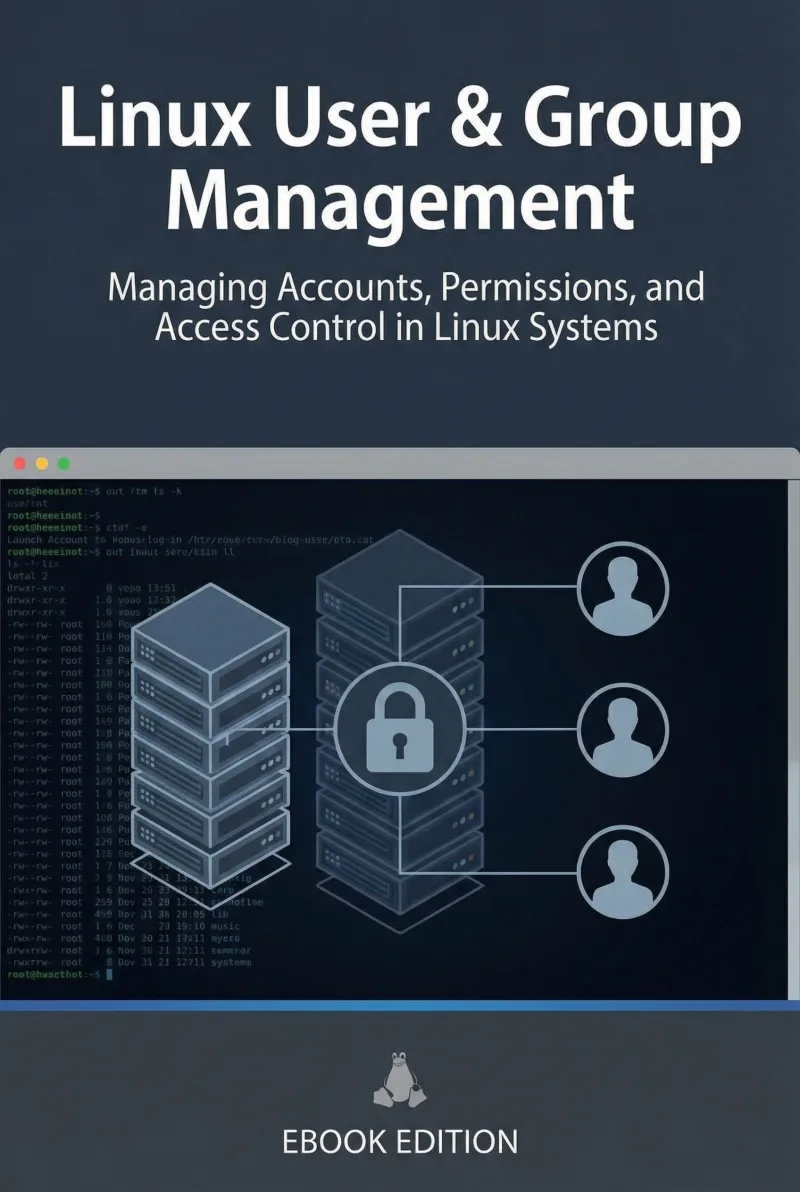
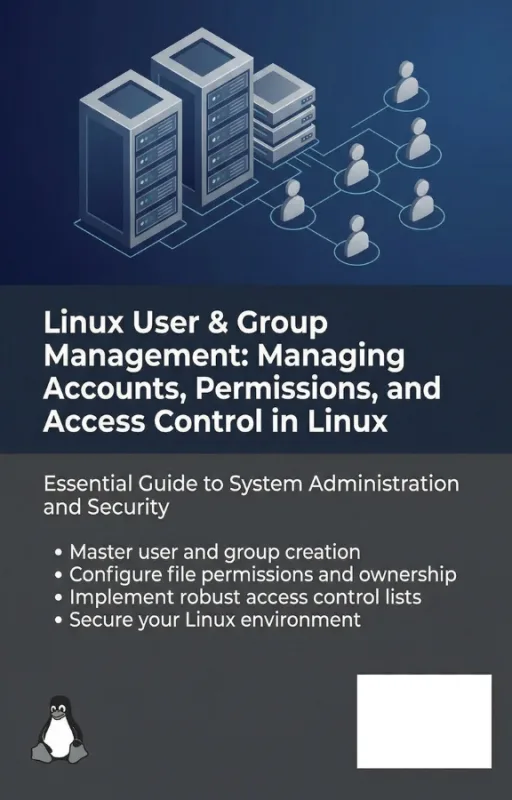
Linux User & Group Management
Managing Accounts, Permissions, and Access Control in Linux Systems
What's Included:
At a Glance
Linux User & Group Management is a professional Linux Administration eBook by Bas van den Berg, 360 pages, available as an instant PDF and EPUB download for €12.90 with lifetime access and free updates. Managing Accounts, Permissions, and Access Control in Linux Systems.
- Length: 360 pages
- Format: PDF and EPUB (instant download)
- Language: English
- Topic: Linux Administration
- Edition: 1st Edition
- Price: €12.90
Key Highlights
- Complete guide to Linux user and group management
- Understanding /etc/passwd, /etc/shadow, and /etc/group
- User account creation and lifecycle management
- Password and authentication management
- Linux file permissions and ownership
- Special permissions: SUID, SGID, and sticky bit
- Sudo privilege delegation and configuration
- Monitoring and auditing user activity
- Centralized authentication concepts
- Secure access policies for multi-server environments
Overview
Master Linux user and group management. Learn accounts, permissions, sudo access, authentication, and secure identity management for Linux systems.
The Problem
Many Linux administrators learn basic account management commands but never develop a deep understanding of how Linux identity and access control actually works.
Common challenges include:
- Misconfigured permissions that expose sensitive files
- Overuse of root privileges
- Inconsistent sudo policies
- Difficulty managing accounts across multiple servers
- Lack of auditing and activity monitoring
Without structured identity management practices, Linux environments become difficult to secure and maintain.
The Solution
Linux User & Group Management provides a comprehensive guide to Linux identity and access control.
You will learn how to:
- Create and manage user accounts safely
- Implement secure password policies
- Configure groups and permission structures
- Manage file ownership and special permissions
- Delegate privileges securely with sudo
- Design secure access policies across multiple Linux systems
The result is a Linux environment that is secure, auditable, and easier to manage.
About This Book
Linux User & Group Management is a practical guide to managing accounts, permissions, and access control in Linux systems. Whether you administer a single workstation or a fleet of servers, understanding how Linux handles identity and authorization is essential for maintaining security and operational integrity.
User and group management sits at the heart of Linux administration. Every file access, command execution, and service interaction depends on permissions and identity policies. When configured correctly, these mechanisms create a secure and auditable system. When misconfigured, they become a major security risk.
Understand Linux Identity Architecture
The book begins by explaining how Linux represents users and groups internally. You’ll explore key system files such as /etc/passwd, /etc/shadow, and /etc/group, learning how Linux stores identity data and authentication details.
Manage Accounts and Permissions Confidently
From there, the book walks you through the everyday administrative tasks that form the backbone of Linux access management:
- Creating and managing user accounts
- Password and authentication configuration
- Working with Linux groups
- Understanding file ownership and permissions
- Using special permissions such as SUID, SGID, and the sticky bit
Secure Administrative Access
The later chapters focus on privilege management and system security, covering:
sudoconfiguration and delegation- Monitoring user activity
- Account lifecycle management
- Centralized authentication concepts
- Access control strategies across multiple Linux systems
This book provides the practical knowledge needed to build secure, well-managed Linux environments.
Who Is This Book For?
- Linux system administrators
- DevOps and infrastructure engineers
- Security professionals managing Linux systems
- Students preparing for Linux certifications
- Anyone responsible for Linux user management
Who Is This Book NOT For?
- Readers without basic Linux command-line knowledge
- Developers focused only on application-level access control
- Advanced identity management architects seeking enterprise IAM design
- Those looking only for GUI-based administration tools
Table of Contents
- Why User Management Matters
- Linux Account Architecture
- Creating and Managing User Accounts
- Password and Authentication Management
- Understanding Linux Groups
- Creating and Managing Groups
- File Ownership and Permissions
- Special Permissions
- Sudo and Privilege Delegation
- Securing Administrative Access
- Monitoring User Activity
- Account Lifecycle Management
- Centralized Authentication Concepts
- Managing Users Across Multiple Servers
- Designing Secure Access Policies
- From Linux Administrator to Infrastructure Engineer
- Appendices and Reference Guides
Requirements
- Basic familiarity with the Linux command line
- Access to a Linux system for practice
- Basic understanding of file operations and system navigation
- No prior expertise in access control required