Python is the most beginner-friendly programming language in 2026, and for good reason. Whether you want to automate boring tasks, build web applications, analyze data, or break into AI and machine learning — Python is where it all starts.
But here's the problem: most tutorials either overwhelm you with theory or leave you with useless "Hello World" examples. You need a practical, hands-on approach that gets you writing real code from day one.
That's exactly why we created the free "Python Quick Start — Your First 100 Lines" eBook. And in this article, we'll walk you through what you'll learn, why Python is the best choice for beginners, and how to take your skills further.
🎁 Free Download: Python Quick Start eBook
Learn Python fundamentals with 100 lines of practical, real-world code. No fluff, no filler — just the essentials you need to start building.
Download Free eBook →PDF format • No credit card required • Instant download
Why Python Is the Best First Programming Language in 2026
Before diving into code, let's address the elephant in the room: why Python and not JavaScript, Go, or Rust?
Here are the cold, hard facts:
- Most-demanded language — Python topped the TIOBE Index, Stack Overflow Survey, and GitHub Octoverse in 2025
- Highest salary potential — Python developers earn an average of €55,000–€85,000/year in Europe
- Readable syntax — Python reads almost like English, making it perfect for beginners
- Massive ecosystem — 400,000+ packages on PyPI covering everything from web development to AI
- AI and Data Science gateway — 80% of machine learning projects use Python
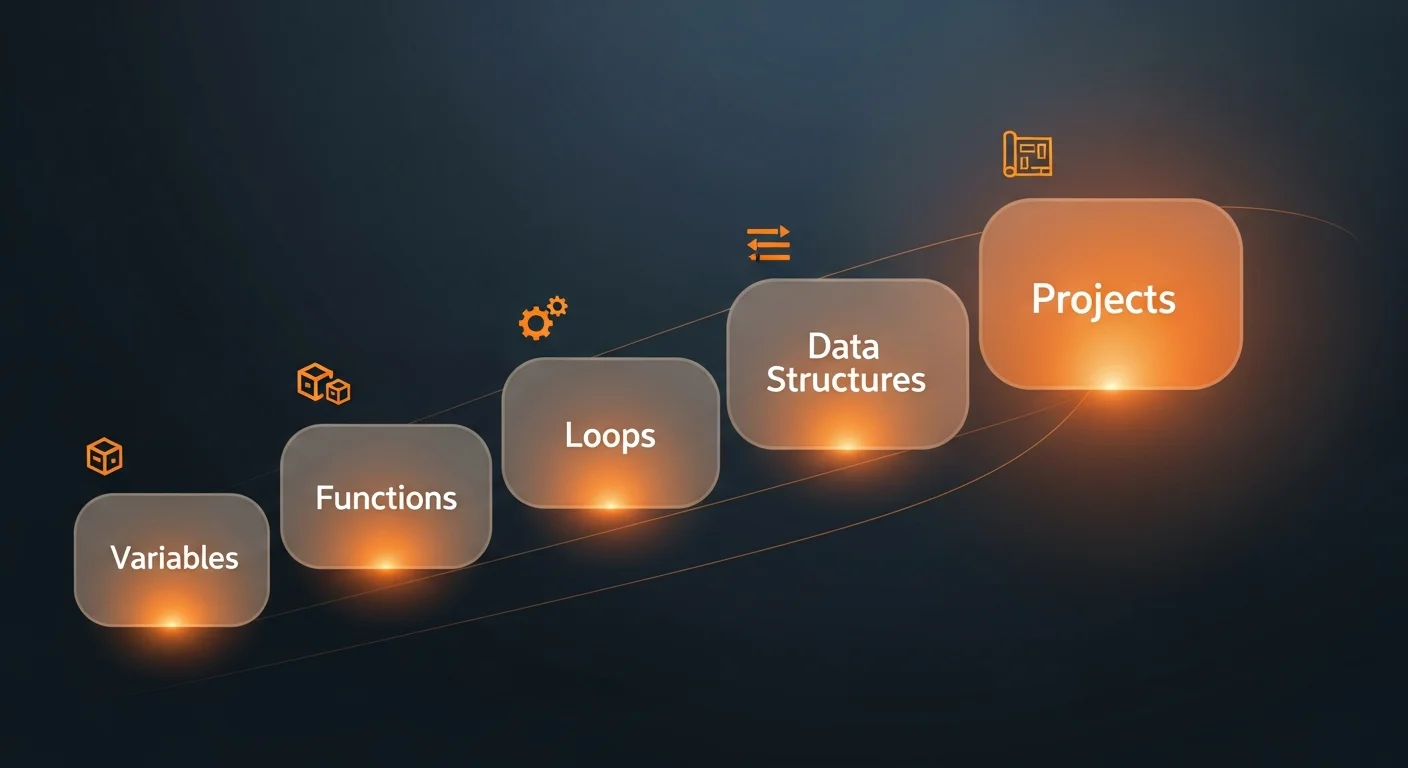
What You'll Learn in "Your First 100 Lines"
Our free eBook is structured around practical milestones, not abstract theory. Here's the roadmap:
Lines 1–20: Variables, Data Types & Input
You'll start by understanding how Python stores and manipulates data. By line 20, you'll have a working program that takes user input and produces meaningful output.
name = input("What's your name? ")
age = int(input("How old are you? "))
print(f"Hello {name}! In 10 years you'll be {age + 10}.")
Lines 21–45: Control Flow & Decision Making
Learn if/elif/else statements and build a simple decision engine. This is where your code starts making intelligent choices.
Lines 46–70: Loops & Data Structures
Master for loops, while loops, lists, and dictionaries. You'll build a mini task manager that stores, displays, and removes items.
Lines 71–100: Functions & Your First Real Project
Write reusable functions and combine everything into a complete command-line application — a personal expense tracker that saves data to a file.
What Comes After "Your First 100 Lines"?
The free eBook gets you started, but to become a professional Python developer, you'll want to go deeper. Here's the recommended path:
📘 Step 1: Master the Fundamentals
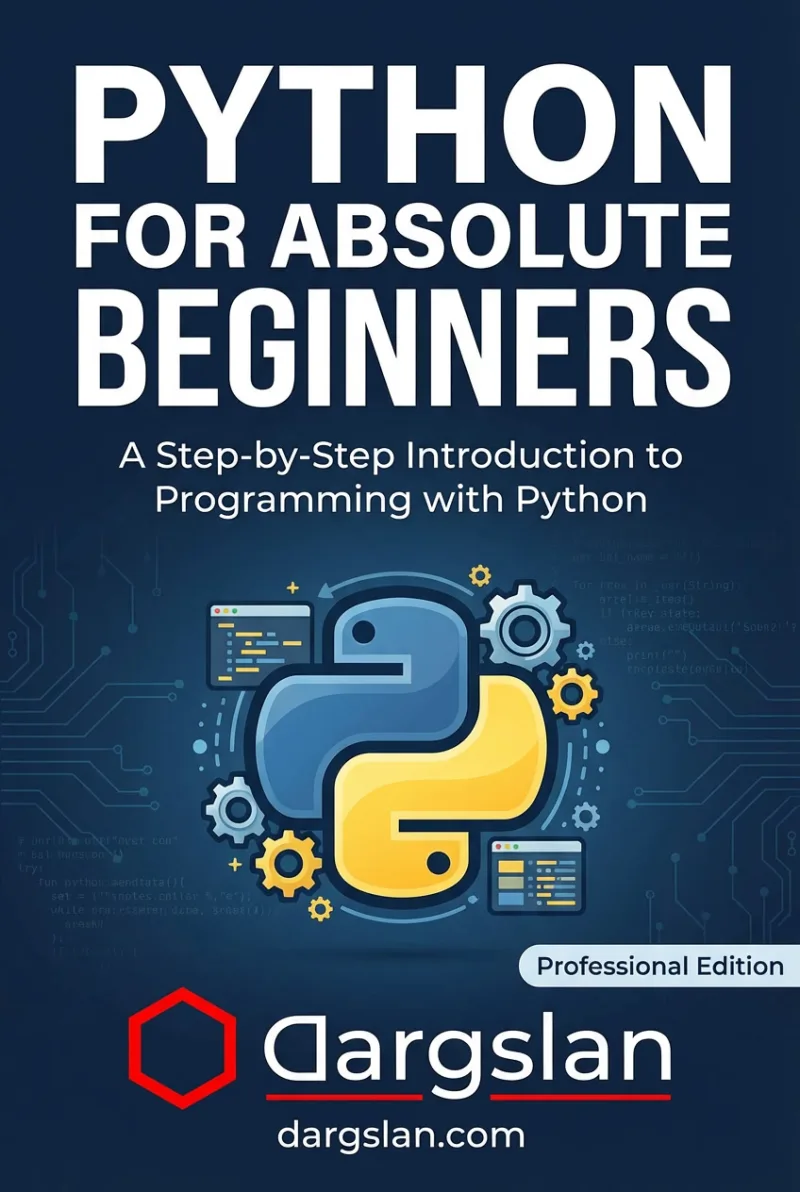
Python for Absolute Beginners (€14.90) — Goes deep into every concept from the free eBook, with 50+ exercises and real-world projects. Perfect if you want a structured, comprehensive foundation.
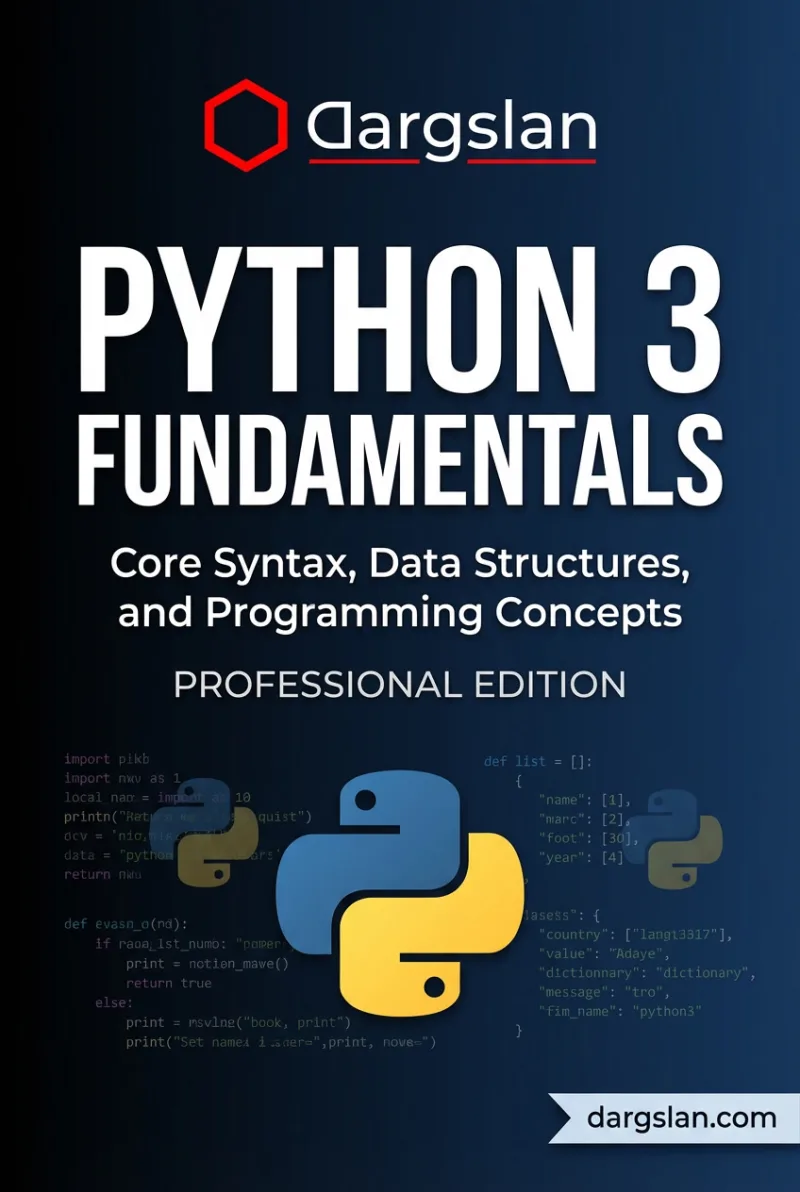
Or try Python 3 Fundamentals (€19.90) — The most complete Python reference in our catalog. Covers everything from basics to advanced topics like decorators, generators, and context managers.
🏋️ Step 2: Practice, Practice, Practice
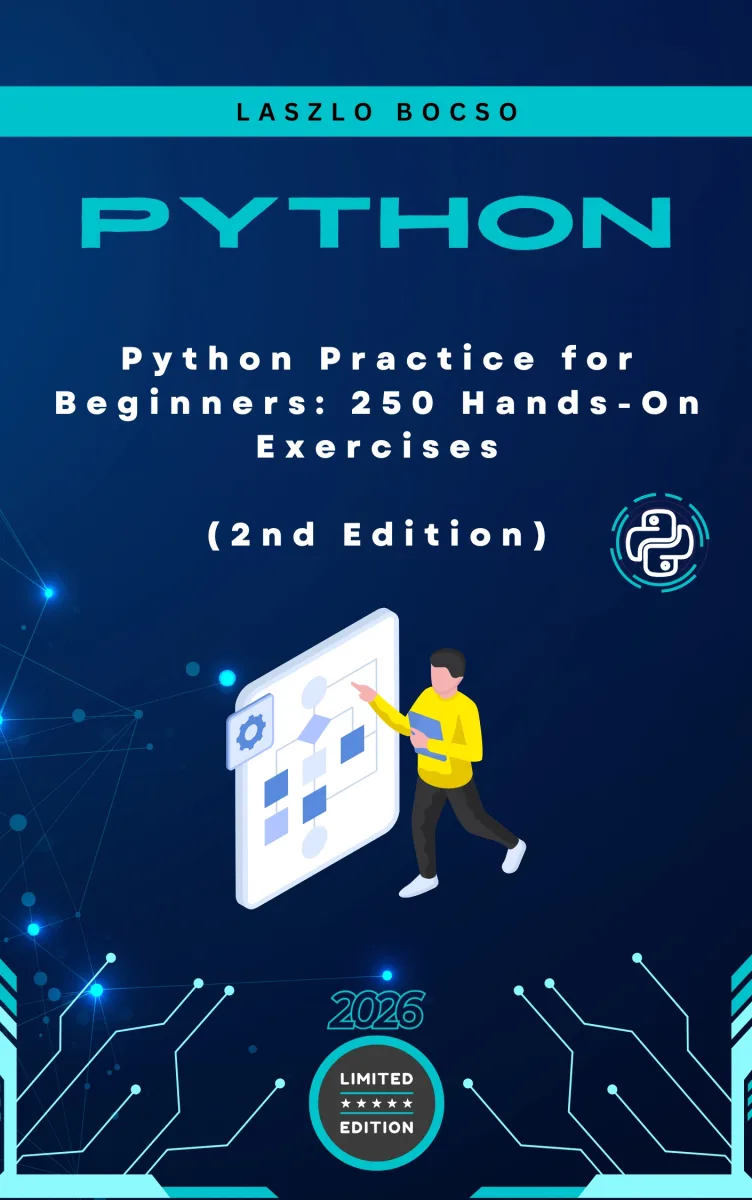
Python Practice for Beginners: 250 Hands-On Exercises (2nd Edition) (€8.90) — The single best way to solidify your Python skills. Each exercise builds on the last, with detailed solutions explained.
Also available: Python Programming: 200 Practice Exercises (€9.90) — A different set of exercises covering practical scenarios.
🚀 Step 3: Specialize
Once you're comfortable with Python basics, pick your specialization:
- Web Development: Django Fundamentals (€14.90) or Flask Fundamentals (€14.90)
- Clean Code: Clean Python Code (€9.90)
- Design Patterns: Python Design Patterns (€9.90)
- OOP Mastery: Mastering Python OOP (2nd Edition) (€7.90)
- AI & APIs: OpenAI API Mastery with Python (€9.90)
- Automation: Automating Microsoft 365 with Python (€12.90)
- Data Handling: Mastering Python and JSON (€9.90) or Python and SQLite (€16.90)
The 5 Biggest Mistakes Python Beginners Make
After helping thousands of learners, we've seen the same mistakes over and over. Avoid these and you'll learn 3x faster:
- Tutorial Hell — Watching tutorials without writing code yourself. Our free eBook forces you to type every line.
- Skipping fundamentals — Jumping to frameworks (Django, Flask) before understanding functions, loops, and data structures.
- Not reading error messages — Python's tracebacks are actually helpful! Learn to read them.
- Copying code without understanding — Type it yourself, break it, fix it. That's how learning works.
- Giving up too early — The first 20 hours are the hardest. After that, Python clicks and becomes genuinely fun.
How Long Does It Take to Learn Python?
| Goal | Time Needed | Recommended Book |
|---|---|---|
| Write basic scripts | 1–2 weeks | Free: Python Quick Start |
| Build small projects | 1–2 months | Python for Absolute Beginners |
| Get a junior dev job | 3–6 months | Python 3 Fundamentals |
| Build web applications | 4–8 months | Django Fundamentals |
| Work with AI/ML | 6–12 months | OpenAI API Mastery |
Frequently Asked Questions
Is Python really free to learn?
Yes! Python itself is open source and free. Our Python Quick Start eBook is also completely free — no credit card, no strings attached. When you're ready to go deeper, our premium books start at just €6.90.
Do I need a powerful computer?
Not at all. Python runs on any computer — Windows, macOS, or Linux. Even a 10-year-old laptop will work perfectly for learning Python.
Should I learn Python 2 or Python 3?
Always Python 3. Python 2 has been officially retired since January 2020. All our books and resources cover Python 3.10+ exclusively.
Can I get a job with just Python?
Absolutely. Python developers are in high demand across web development, data science, DevOps, automation, and AI. Check out our Python Developer Roadmap reading list for a complete career path.
What's the best way to practice?
Our 250 Hands-On Exercises book is specifically designed for this. Start with the free eBook, then move to structured practice.
Ready to Start Your Python Journey?
Download the free Python Quick Start eBook and write your first 100 lines of code today.
Join 1,000+ learners who started their programming career with Dargslan.
Get Free eBook → Browse All Python Books →