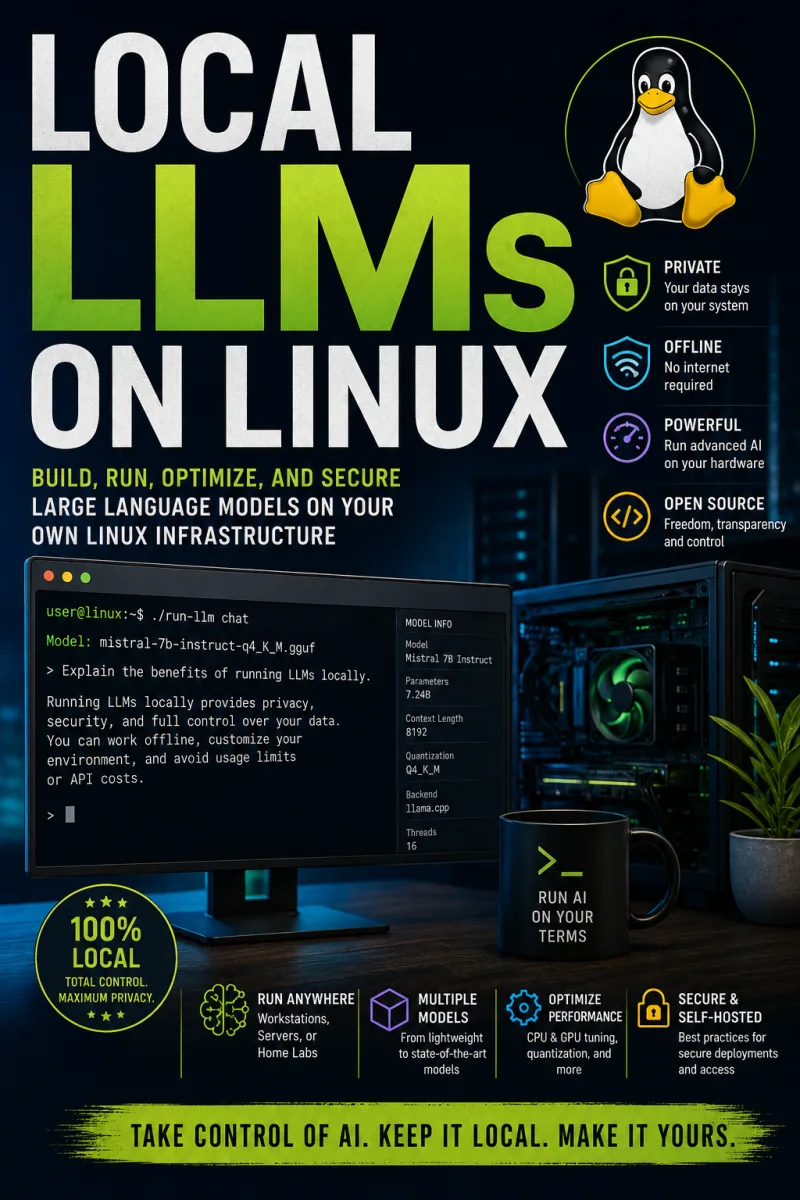
Local LLMs on Linux
Build, Run, Optimize, and Secure Large Language Models on Your Own Linux Infrastructure
What's Included:
At a Glance
Local LLMs on Linux is a professional DATA & AI eBook by Dargslan AI Team, 329 pages, available as an instant PDF and EPUB download for €16.90 with lifetime access and free updates. Build, Run, Optimize, and Secure Large Language Models on Your Own Linux Infrastructure.
- Length: 329 pages
- Format: PDF and EPUB (instant download)
- Language: English
- Topic: DATA & AI
- Edition: 1st Edition
- Price: €16.90
Key Highlights
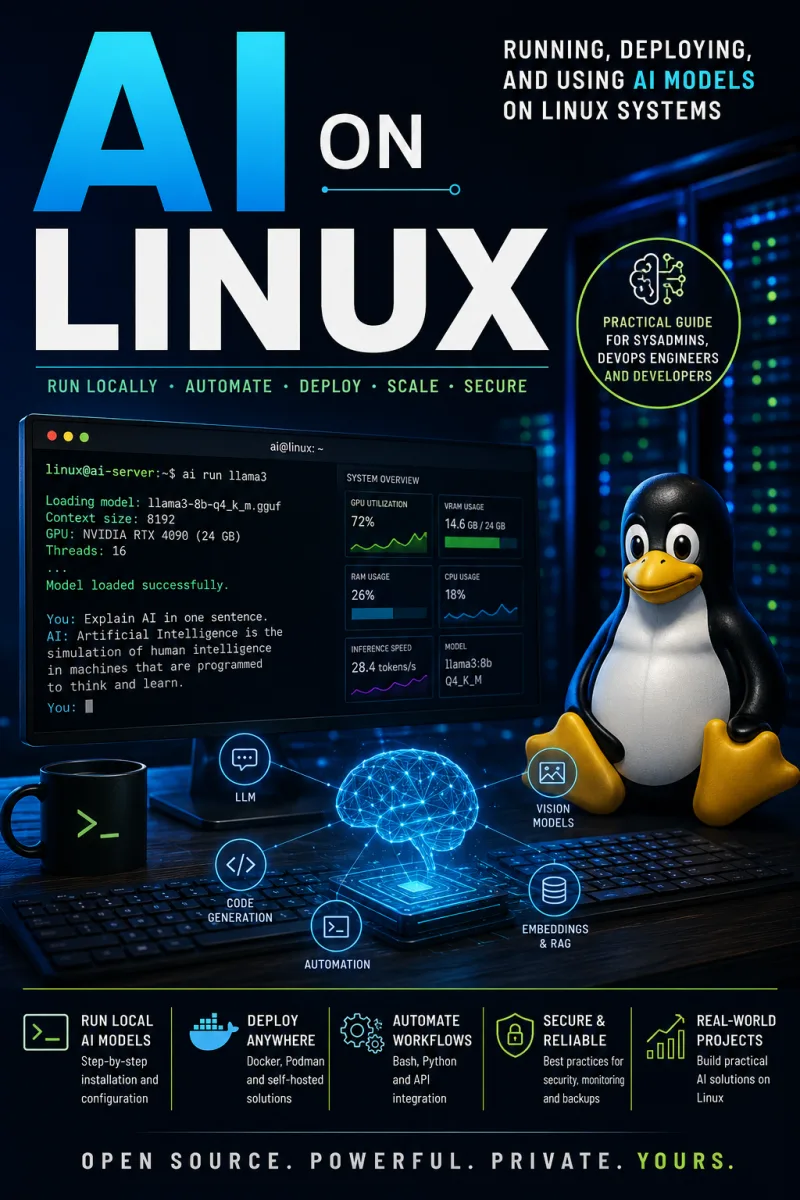
- Run LLMs on infrastructure you own—privacy, control, and no vendor lock-in
- Complete path from first principles to production-grade deployments
- Select the right hardware: GPUs, CPUs, memory, and storage for your workload
- Prepare a Linux environment optimized for AI inference
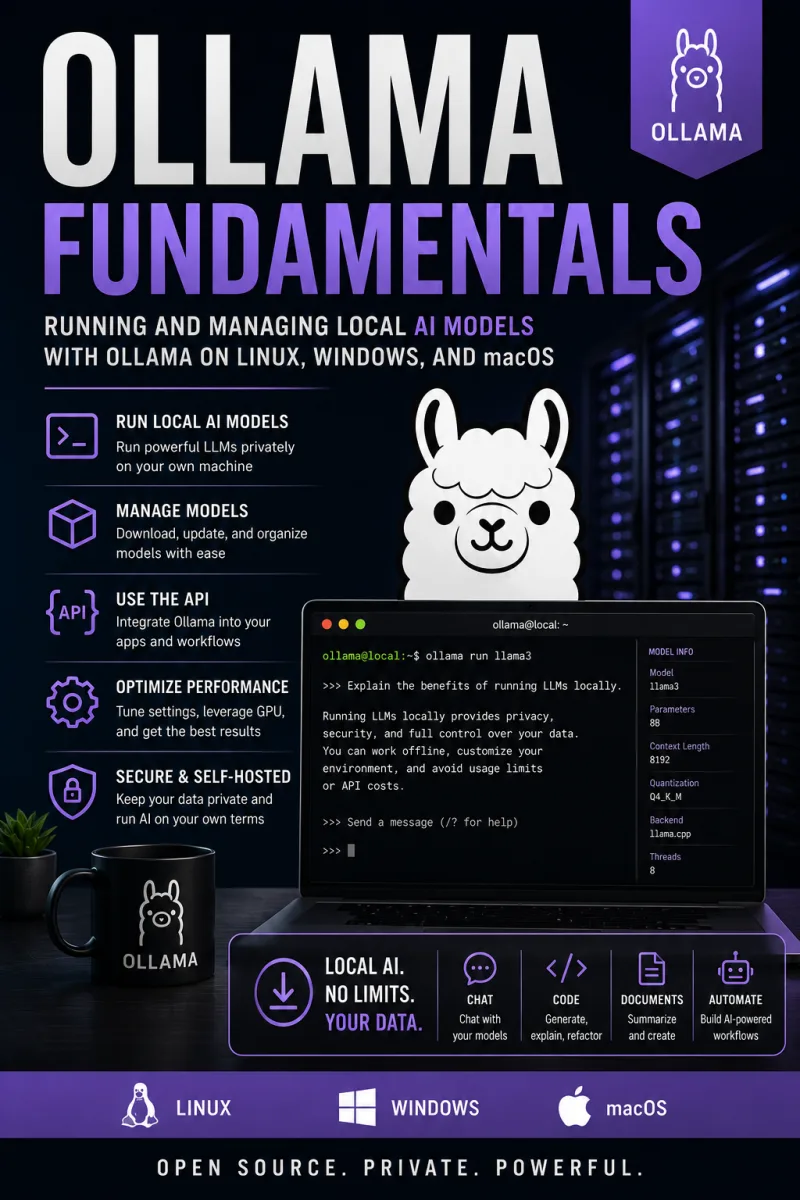
- Install and configure llama.cpp, Ollama, vLLM, and other runtimes
- Choose the right model, balancing size, speed, and quality
- Prompt engineering fundamentals and parameter tuning
- Serve local AI APIs and integrate them into your own applications
- Optimize inference for maximum performance
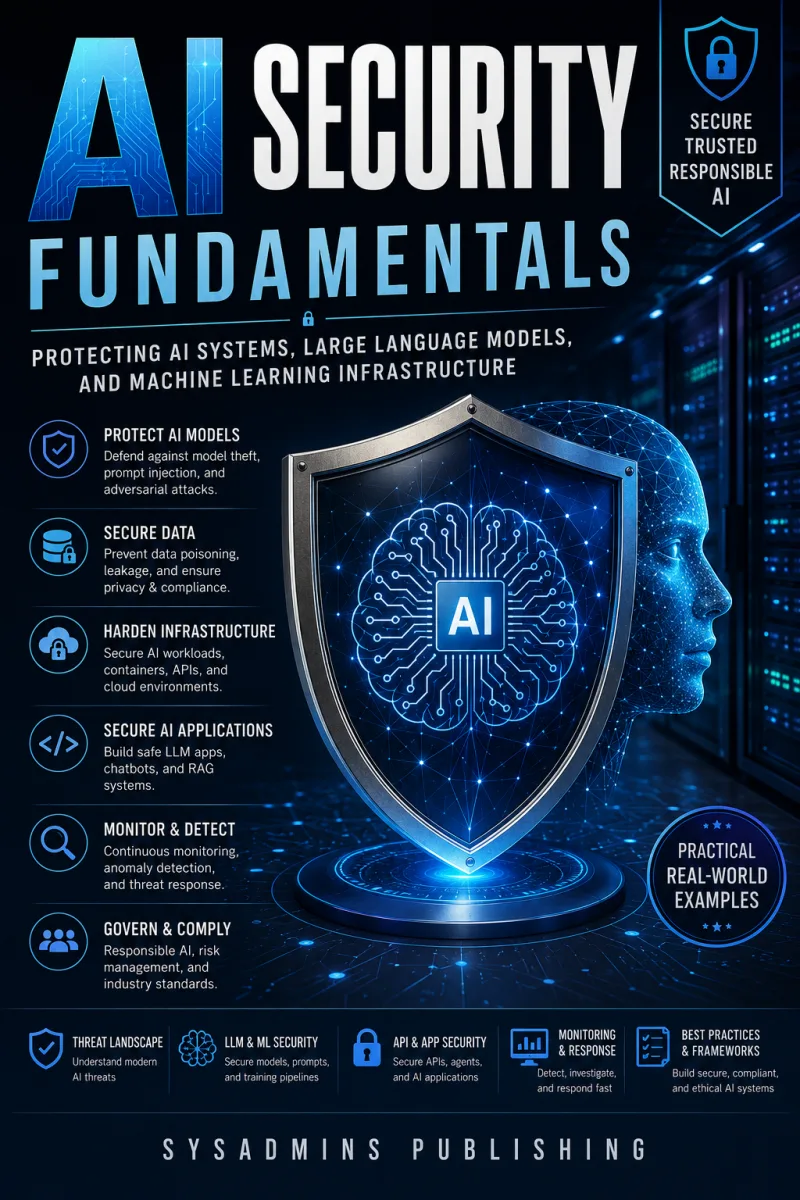
- Monitor, deploy, and secure local LLM infrastructure
- Build practical projects and your own dedicated AI lab
- Eight reference appendices: command cheat sheet, hardware sizing, model comparison, optimization and deployment checklists, security best practices, troubleshooting, and a learning roadmap
Overview
Reclaim AI on infrastructure you own. This hands-on guide shows you how to build, run, optimize, and secure large language models on your own Linux systems—from hardware selection and runtimes like llama.cpp, Ollama, and vLLM to prompt engineering, API serving, deployment, and scaling.
The Problem
Every time you use a cloud AI service, your private thoughts, business data, and sensitive queries travel to servers you don't own, owned by companies you can't audit. Prompts may be logged, mined, or repurposed. Costs scale unpredictably, rate limits throttle you at the worst moments, and a single policy change or model deprecation can break your workflow overnight. For anyone handling confidential information—or who simply values control—that's an uncomfortable dependency.
The obvious answer is to run models yourself. But that path is littered with obstacles: which GPU and how much memory, which runtime among llama.cpp, Ollama, and vLLM, how to prepare a Linux environment for inference, how to serve an API, and how to optimize, secure, and scale it all. The knowledge is scattered across project docs and forum posts, and one wrong configuration can cost you days. Without a clear, end-to-end guide, self-hosted AI stays just out of reach—and you stay tethered to the cloud.
The Solution
Local LLMs on Linux gives you a complete, hands-on path from first principles to production-grade local AI. It's about sovereignty, privacy, performance, and craftsmanship—bringing modern AI back to hardware you own and control, whether that's a desktop, a server rack, or a home lab.
You'll move step by step through hardware selection, Linux environment preparation, and runtime installation with llama.cpp, Ollama, and vLLM. Then you'll operate like a pro—choosing the right model, engineering prompts, tuning configuration, serving APIs, and integrating AI into your own applications. Finally you'll conquer production: optimizing inference, monitoring workloads, deploying infrastructure, and securing your services. With sizing guides, comparison matrices, optimization and security checklists, and a troubleshooting reference, this book turns self-hosted AI from a daunting unknown into a private, powerful platform that belongs entirely to you.
About This Book
Local LLMs on Linux: Build, Run, Optimize, and Secure Large Language Models on Your Own Linux Infrastructure is a practical, hands-on guide for everyone who believes AI should answer to no one but you. Large Language Models have redefined what software can do—writing, reasoning, coding, summarizing, and conversing at a level that once belonged to science fiction. Yet for most people, using these models means sending private thoughts, business data, and sensitive queries to distant cloud servers owned by a handful of corporations. This book is for those who believe there's a better way.
This is a book about sovereignty, privacy, performance, and craftsmanship—about bringing the power of modern AI back to the machine sitting on your desk, in your server rack, or humming quietly in your home lab. Running LLMs locally isn't merely a technical exercise; it's a stance. When your model runs locally, your data never leaves your network, your prompts are never logged or mined, your costs are predictable, and your latency is minimal. No rate limits, no surprise policy changes, no vendor lock-in—just you, your Linux system, and models under your complete control.
Linux: The Natural Home for Local AI
Linux is the ideal platform for serious AI work. Its openness, flexibility, and unmatched ecosystem of tools give you the control that local deployment demands—whether you're running a modest 7B parameter model on a single GPU or orchestrating a fleet of inference servers. This book leans fully into that strength, using native Linux tools and workflows every step of the way.
From First Principles to Production
This guide takes you from foundational concepts all the way to production-grade deployments. You'll learn:
- What LLMs are and why running them locally changes everything
- How to select hardware—GPUs, CPUs, memory, and storage—sized for your workload
- How to prepare a Linux environment optimized for AI inference
- How to install and configure runtimes such as llama.cpp, Ollama, vLLM, and others
- How to choose the right model for your use case, balancing size, speed, and quality
- How to engineer prompts, tune parameters, and serve APIs locally
- How to integrate local AI into your own applications and workflows
- How to optimize, monitor, secure, and scale your local LLM infrastructure
A Carefully Structured Journey
The book is organized as a progressive path. It begins by establishing what LLMs are and why local deployment matters, then guides you through hardware selection, Linux preparation, and runtime installation. From there it moves into practical operation—selecting models, prompt engineering, configuration, serving APIs, and integrating AI into applications. The later chapters tackle the real challenges of production: optimizing inference, monitoring workloads, deploying infrastructure, and securing your services. Finally, you'll build real projects and stand up your own dedicated AI lab.
Built Around the Tools That Matter
Throughout, you'll work with the open-source runtimes and projects the community actually relies on—llama.cpp, Ollama, vLLM, Hugging Face, and more. You'll gain genuine command-line competence, learning to prepare environments, install and tune runtimes, serve inference APIs, and wire local models into your own software. By the final chapter, you'll have the knowledge to build a personal, private, and powerful platform for experimentation and production alike.
Appendices You'll Return To for Years
The extensive appendices serve as lifelong companions: a Linux AI command cheat sheet, an LLM hardware sizing guide, a model comparison matrix, a performance optimization checklist, a local AI deployment checklist, AI security best practices, an infrastructure troubleshooting guide, and a learning roadmap to continue your growth long after the final page.
Why This Book
Local AI means privacy, control, predictable costs, and freedom from the cloud. If you want to reclaim modern AI and run it on infrastructure you own and understand, this book is your invitation and your guide. Welcome to local AI—let's build something that belongs to you.
Who Is This Book For?
- Developers who want to run and integrate LLMs locally on Linux
- System administrators and DevOps engineers deploying self-hosted AI infrastructure
- Privacy-conscious professionals handling confidential or regulated data
- Researchers and tinkerers who want full control over their AI environment
- Self-hosting enthusiasts and home lab builders running local models
- Businesses seeking predictable costs and freedom from cloud vendor lock-in
- Anyone ready to build their own private, powerful AI lab
Who Is This Book NOT For?
- Readers seeking a theoretical machine learning textbook or the math behind transformers
- Users content to use cloud AI services through a web app and nothing more
- Those working exclusively on Windows or macOS with no interest in Linux
- Data scientists aiming to train frontier models from scratch rather than run and deploy them
- Complete Linux beginners with no command-line experience (some familiarity is assumed)
Table of Contents
- What Are Large Language Models?
- Why Run LLMs Locally?
- Hardware Requirements
- Preparing the Linux Environment
- Installing Local LLM Runtimes
- Selecting the Right Model
- Prompt Engineering Fundamentals
- Model Configuration
- Running an AI API Server
- Integrating AI Applications
- Optimizing Inference
- Monitoring AI Workloads
- Deploying Local LLM Infrastructure
- Securing AI Services
- Practical Local AI Projects
- Building Your Own AI Lab
- Appendix: Linux AI Command Cheat Sheet
- Appendix: LLM Hardware Sizing Guide
- Appendix: Model Comparison Matrix
- Appendix: Performance Optimization Checklist
- Appendix: Local AI Deployment Checklist
- Appendix: AI Security Best Practices
- Appendix: AI Infrastructure Troubleshooting Guide
- Appendix: Linux AI Learning Roadmap
Requirements
- Basic familiarity with the Linux command line and shell navigation
- A Linux system (desktop, server, or home lab) to follow along
- A compatible GPU is recommended for best performance; hardware sizing is covered in depth
- Root or sudo access to install runtimes, drivers, and services
- General understanding of what AI and large language models are (helpful but not required)
- Basic Python and API familiarity is useful for the integration chapters but built up as needed