Protect and Harden Your Linux Systems
In an era of sophisticated cyber attacks, ransomware campaigns, and state-sponsored hacking, securing your Linux infrastructure is not optional — it is a fundamental responsibility. Every server exposed to the internet faces thousands of attack attempts daily, from automated brute-force login attempts to complex exploitation chains targeting known vulnerabilities. As a security-focused Linux administrator, your job is to make your systems as resilient as possible.
Dargslan's Linux Security and Hardening Hub brings together the best resources for building defense-in-depth strategies. Our curated collection of books, tutorials, and cheat sheets covers everything from basic server hardening to advanced intrusion detection, forensics, and incident response.
The Linux Security Landscape in 2025
Linux systems are high-value targets precisely because they run critical infrastructure. Web servers, database servers, cloud platforms, IoT devices, and container hosts all run Linux. A compromised Linux server can lead to data breaches, service outages, cryptocurrency mining abuse, and regulatory penalties that can cost organizations millions.
The good news is that Linux provides excellent security tools and frameworks out of the box. With proper configuration, regular updates, and monitoring, you can significantly reduce your attack surface and detect threats before they cause damage.
Core Security Topics
System Hardening Best Practices
Hardening is the process of reducing your system's attack surface by disabling unnecessary services, removing unused software, and configuring strict security policies. Our resources teach you to apply the CIS (Center for Internet Security) Benchmarks, which provide detailed, step-by-step hardening guides for all major Linux distributions. Key hardening tasks include disabling root SSH login, configuring strong password policies, setting proper file permissions, removing SUID/SGID binaries, configuring /etc/security/limits.conf, and implementing proper partition layouts with noexec, nosuid, and nodev mount options.
Firewall Configuration
A properly configured firewall is your first line of defense. Our resources cover both traditional iptables and the modern nftables framework, as well as higher-level tools like firewalld and ufw. Learn to create stateful packet filtering rules, implement rate limiting, configure port knocking, set up NAT and port forwarding, and design zone-based firewall architectures. Advanced topics include logging strategies, connection tracking, and integrating firewalls with intrusion detection systems.
SELinux and AppArmor
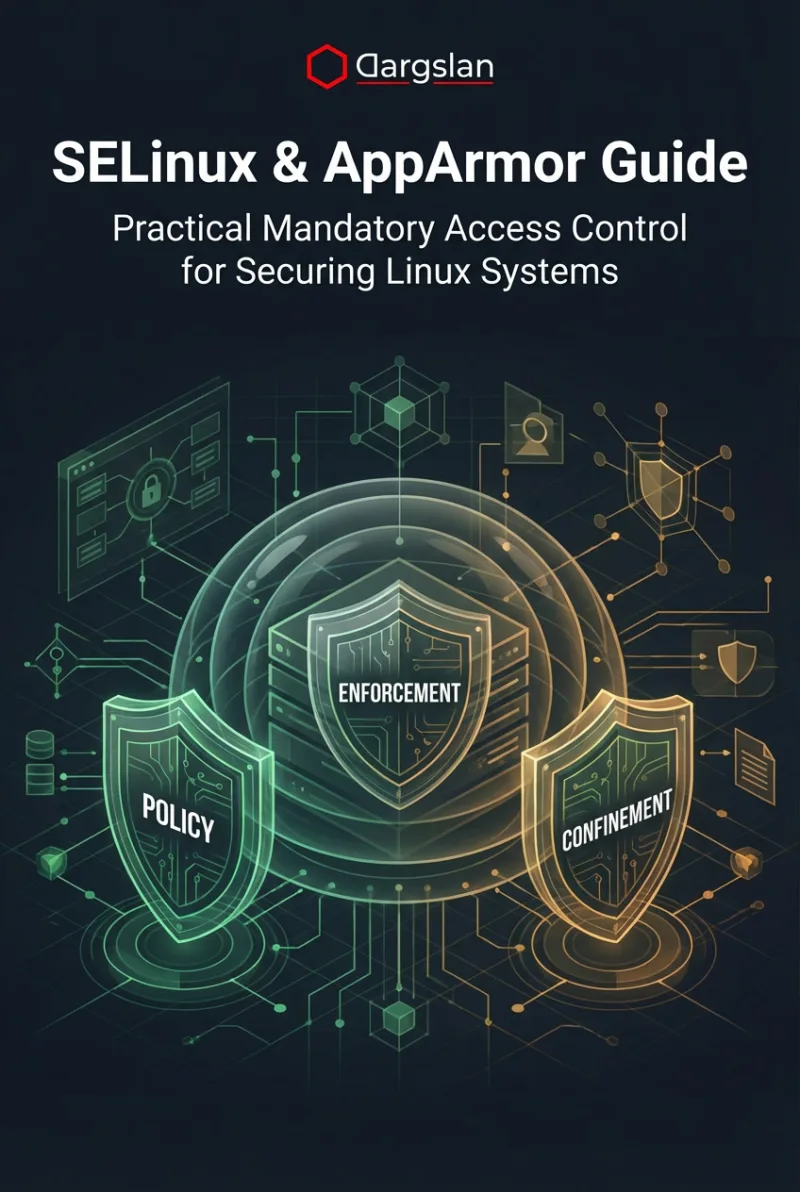
Mandatory Access Control (MAC) systems like SELinux and AppArmor provide an additional security layer beyond traditional Unix permissions. SELinux (used primarily on RHEL/CentOS/Fedora) enforces fine-grained policies that control which processes can access specific files, ports, and system resources. AppArmor (default on Ubuntu/SUSE) uses profile-based restrictions. Our resources help you understand these complex but powerful systems, create custom policies, troubleshoot denials, and maintain security without impacting application functionality.
Intrusion Detection and Prevention
Detecting unauthorized access attempts and suspicious activity is crucial for timely incident response. Learn to deploy and configure intrusion detection systems (IDS) like Snort, Suricata, and OSSEC. Our resources cover network-based and host-based detection, file integrity monitoring with AIDE and Tripwire, log analysis for security events, and automated response using tools like Fail2Ban. You will also learn to build custom detection rules tailored to your environment.
Security Auditing and Compliance
Regular security audits help you identify vulnerabilities before attackers do. Learn to use automated auditing tools like Lynis, OpenSCAP, and Nessus to scan your systems for misconfigurations and known vulnerabilities. Our resources cover compliance frameworks including PCI-DSS (for payment card processing), HIPAA (for healthcare), SOC 2 (for service organizations), and ISO 27001. You will learn to generate audit reports, prioritize findings, and implement remediation plans.
SSH Security and Key Management
SSH is the primary remote access protocol for Linux servers, making it a prime target for attackers. Our resources cover SSH hardening including disabling password authentication, implementing key-based access, configuring SSH certificates, using jump hosts (bastion hosts), setting up multi-factor authentication (MFA), and managing SSH keys across large environments. Learn to use ssh-agent, configure ~/.ssh/config for complex environments, and implement SSH auditing.
Encryption and Data Protection
Protect data at rest and in transit using Linux encryption tools. Our resources cover full disk encryption with LUKS, file-level encryption with GPG, TLS/SSL certificate management with OpenSSL and Let's Encrypt, encrypted backup strategies, and VPN configuration for secure network communication. Learn about key management best practices, certificate rotation, and implementing zero-trust network architectures.
Vulnerability Management
Proactive vulnerability management is essential for maintaining secure systems. Learn to track CVEs (Common Vulnerabilities and Exposures), implement patch management procedures, use vulnerability scanners like OpenVAS and Nessus, and prioritize remediation based on risk scores. Our resources cover automated patching strategies, testing patches in staging environments, and maintaining patch compliance across large server fleets.
Incident Response and Forensics
When a security incident occurs, rapid and systematic response is critical. Our advanced resources cover incident response planning, evidence preservation, log analysis for forensic investigation, malware analysis basics, and post-incident reporting. Learn to create incident response playbooks, conduct root cause analysis, and implement improvements to prevent recurrence.
Security Certifications
Our resources align with industry-recognized security certifications:
- CompTIA Security+: Foundation-level security certification covering network security, threats, and security architecture.
- CEH (Certified Ethical Hacker): Validates offensive security skills including penetration testing and vulnerability assessment.
- OSCP (Offensive Security Certified Professional): Hands-on penetration testing certification using Linux-based tools.
- RHCSA/RHCE Security: Red Hat certifications with security-focused objectives.
- CySA+ (CompTIA Cybersecurity Analyst): Focuses on defensive security operations and threat detection.
Building a Security-First Mindset
Security is not a one-time task — it is an ongoing process. We recommend starting with basic system hardening, then progressively adding layers of defense. Keep your systems updated, monitor logs regularly, conduct periodic audits, and stay informed about new threats and vulnerabilities. Our resources will guide you through each stage of your security journey.
Explore our curated books, tutorials, and cheat sheets below to start building more secure Linux systems today.