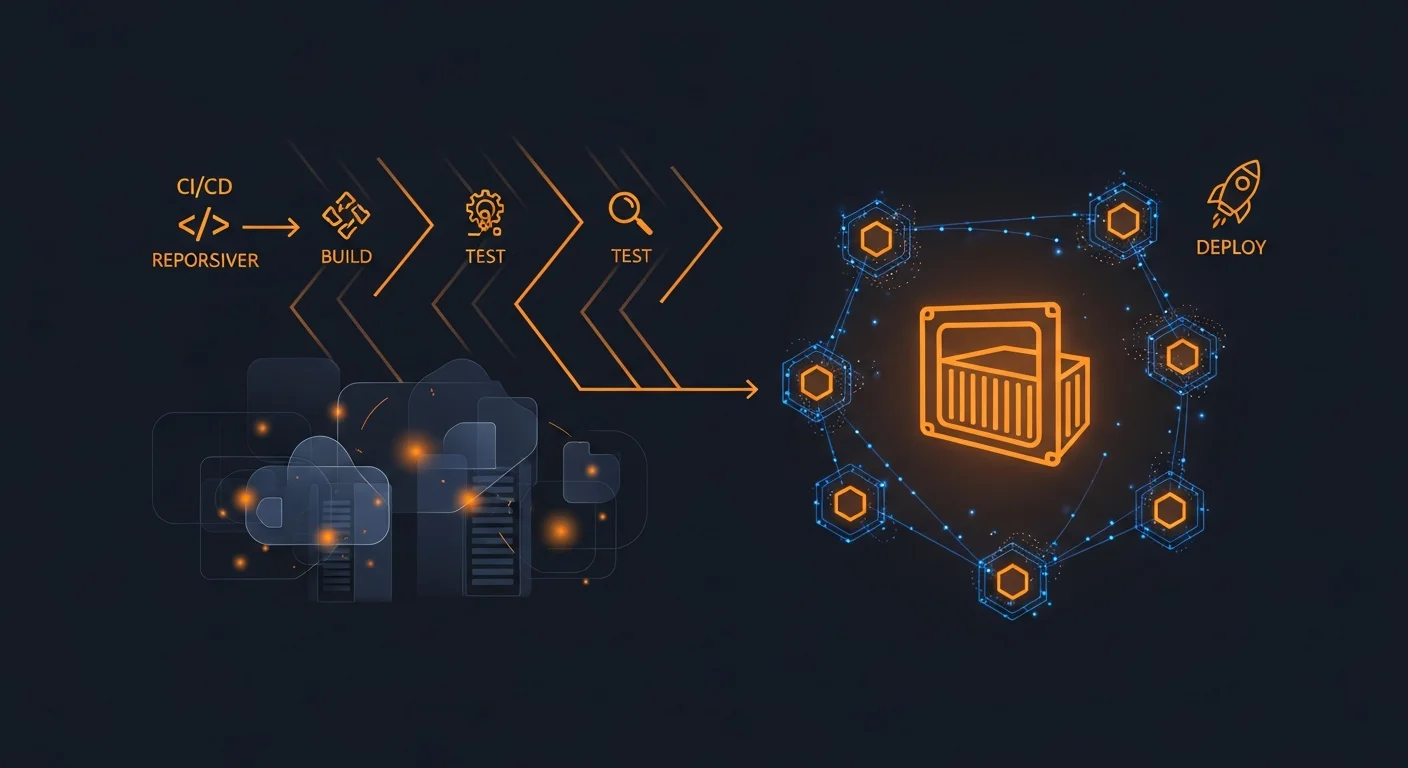
Master Modern DevOps and Container Technologies
DevOps is not just a set of tools — it is a cultural and technical transformation that bridges the gap between software development and IT operations. By embracing automation, continuous integration, continuous delivery, and infrastructure as code, organizations can deliver software faster, more reliably, and at greater scale than ever before. Containerization with Docker and orchestration with Kubernetes have become the standard deployment model for modern applications.
This comprehensive guide brings together Dargslan's best DevOps and containerization resources. Whether you are a developer looking to understand infrastructure, a system administrator transitioning to DevOps, or a team lead implementing DevOps practices, our curated collection provides the knowledge and practical skills you need.
The DevOps Revolution
Traditional IT organizations suffered from siloed teams, manual deployments, long release cycles, and finger-pointing between development and operations. DevOps breaks down these barriers by fostering collaboration, automating processes, and treating infrastructure as code. The results are dramatic: organizations practicing DevOps deploy 200x more frequently, recover from failures 24x faster, and have 3x lower change failure rates compared to traditional approaches.
Core DevOps Topics
Docker Fundamentals and Best Practices
Docker revolutionized software delivery by packaging applications and their dependencies into lightweight, portable containers. Our resources cover Docker architecture (images, containers, registries, and the Docker daemon), Dockerfile best practices (multi-stage builds, layer optimization, security scanning), Docker Compose for multi-container applications, Docker networking (bridge, host, overlay, and macvlan drivers), volume management for persistent data, and Docker security (rootless containers, image signing, and vulnerability scanning).
You will learn to build optimized container images that are small, secure, and fast to deploy. Our best practices guide covers choosing the right base image (Alpine vs Debian vs distroless), minimizing layer count, using .dockerignore effectively, and implementing health checks.
Kubernetes Orchestration
Kubernetes (K8s) is the industry standard for container orchestration. Our comprehensive resources cover Kubernetes architecture (control plane, nodes, etcd), core objects (Pods, Deployments, Services, ConfigMaps, Secrets), advanced features (StatefulSets, DaemonSets, Jobs, CronJobs), networking (ClusterIP, NodePort, LoadBalancer, Ingress controllers), storage (PersistentVolumes, StorageClasses), and security (RBAC, NetworkPolicies, Pod Security Standards).
Learn to deploy applications on Kubernetes, implement rolling updates and rollbacks, configure horizontal pod autoscaling, manage cluster resources with namespaces and resource quotas, and troubleshoot common Kubernetes issues. Our resources also cover Helm for package management, Kustomize for configuration management, and popular operators for databases and other stateful workloads.
CI/CD Pipeline Design
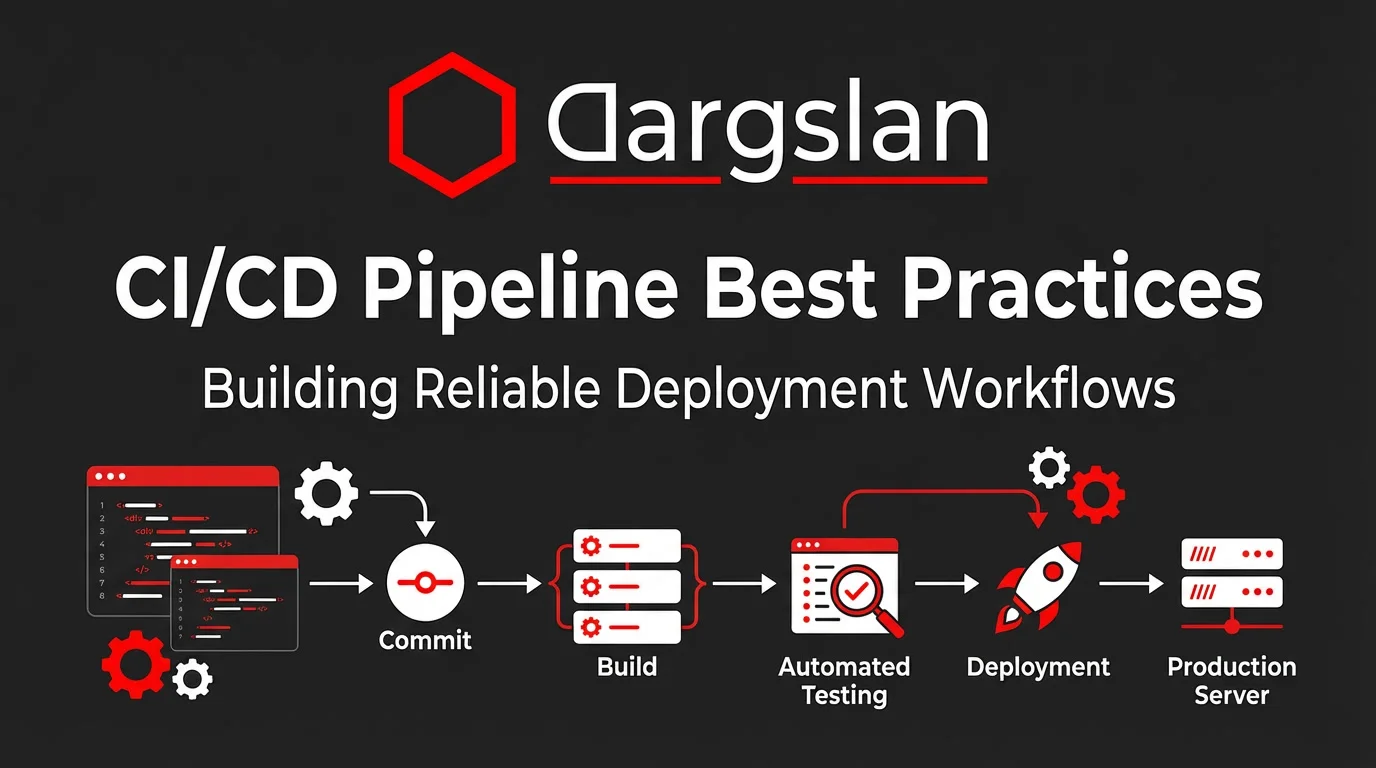
Continuous Integration and Continuous Delivery form the backbone of modern software delivery. Our resources cover pipeline design principles, implementation with popular CI/CD platforms (Jenkins, GitLab CI, GitHub Actions, CircleCI), automated testing integration (unit, integration, and end-to-end tests), artifact management, and deployment strategies including blue-green deployments, canary releases, and rolling updates.
Learn to build pipelines that automatically build, test, scan, and deploy your applications. Our resources cover pipeline as code, secret management in pipelines, matrix builds for multi-platform testing, and implementing quality gates that prevent broken code from reaching production.
Infrastructure as Code (IaC)
Managing infrastructure manually is error-prone and unscalable. Infrastructure as Code treats your infrastructure definitions like software — version-controlled, reviewed, tested, and reproducibly deployed. Our resources cover:
- Terraform: Cloud-agnostic infrastructure provisioning for AWS, Azure, GCP, and more. Learn HCL syntax, state management, modules, workspaces, and best practices for team collaboration.
- Ansible: Agentless configuration management and application deployment. Learn playbook structure, roles, inventory management, Jinja2 templating, vault for secrets, and idempotent task design.
- Pulumi: Infrastructure as code using familiar programming languages (Python, TypeScript, Go).
- CloudFormation: AWS-native infrastructure provisioning with templates and stacks.
Monitoring, Logging, and Observability
You cannot improve what you cannot measure. Our resources cover the three pillars of observability: metrics (Prometheus, Grafana, Datadog), logs (ELK Stack, Loki, Fluentd), and traces (Jaeger, Zipkin, OpenTelemetry). Learn to build comprehensive monitoring dashboards, configure meaningful alerts (avoiding alert fatigue), implement structured logging, and trace requests across microservices.
Advanced topics include SLO/SLI/SLA definition, error budgets, chaos engineering with tools like Chaos Monkey and LitmusChaos, and building on-call runbooks that help engineers respond to incidents effectively.
Cloud Platforms
Modern DevOps involves cloud-native services. Our resources cover multi-cloud practices across major providers:
- AWS: ECS, EKS, Lambda, CloudWatch, CodePipeline, and core infrastructure services (VPC, EC2, S3, RDS).
- Google Cloud: GKE, Cloud Run, Cloud Build, Cloud Monitoring, and BigQuery.
- Azure: AKS, Azure DevOps, Azure Monitor, and Azure Functions.
GitOps and Modern Deployment
GitOps extends Infrastructure as Code by using Git as the single source of truth for both application and infrastructure state. Our resources cover GitOps principles, implementation with tools like ArgoCD and Flux, declarative configuration management, and automated reconciliation. Learn to implement a GitOps workflow that provides full audit trails, easy rollbacks, and self-healing infrastructure.
DevOps Career Path
The DevOps field offers excellent career opportunities with salaries ranging from $90,000 to $180,000+. Our resources help you build skills aligned with these career stages:
- Junior DevOps: Linux basics, Git, basic CI/CD, Docker fundamentals, scripting.
- Mid-Level DevOps: Kubernetes, Terraform, advanced CI/CD, monitoring, cloud services.
- Senior DevOps / SRE: Architecture design, reliability engineering, security, cost optimization, team leadership.
Relevant certifications include AWS Solutions Architect, CKA (Certified Kubernetes Administrator), CKAD (Certified Kubernetes Application Developer), Terraform Associate, and Google Cloud Professional DevOps Engineer.
Browse our recommended books, tutorials, and cheat sheets below to accelerate your DevOps journey.