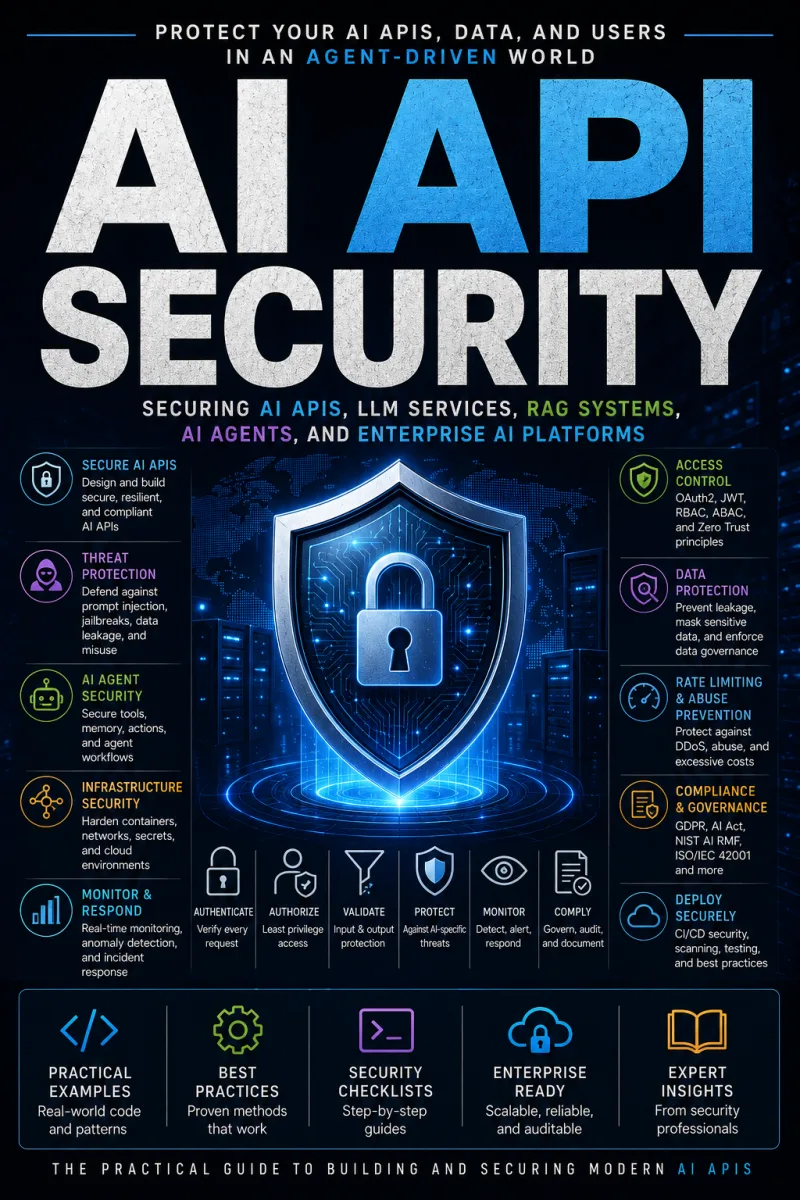
AI API Security
Securing AI APIs, LLM Services, AI Agents, and Enterprise AI Platforms
What's Included:
At a Glance
AI API Security is a professional DATA & AI eBook by Dargslan, 442 pages, available as an instant PDF and EPUB download for €23.90 with lifetime access and free updates. Securing AI APIs, LLM Services, AI Agents, and Enterprise AI Platforms.
- Length: 442 pages
- Format: PDF and EPUB (instant download)
- Language: English
- Topic: DATA & AI
- Edition: 1st Edition
- Price: €23.90
Key Highlights
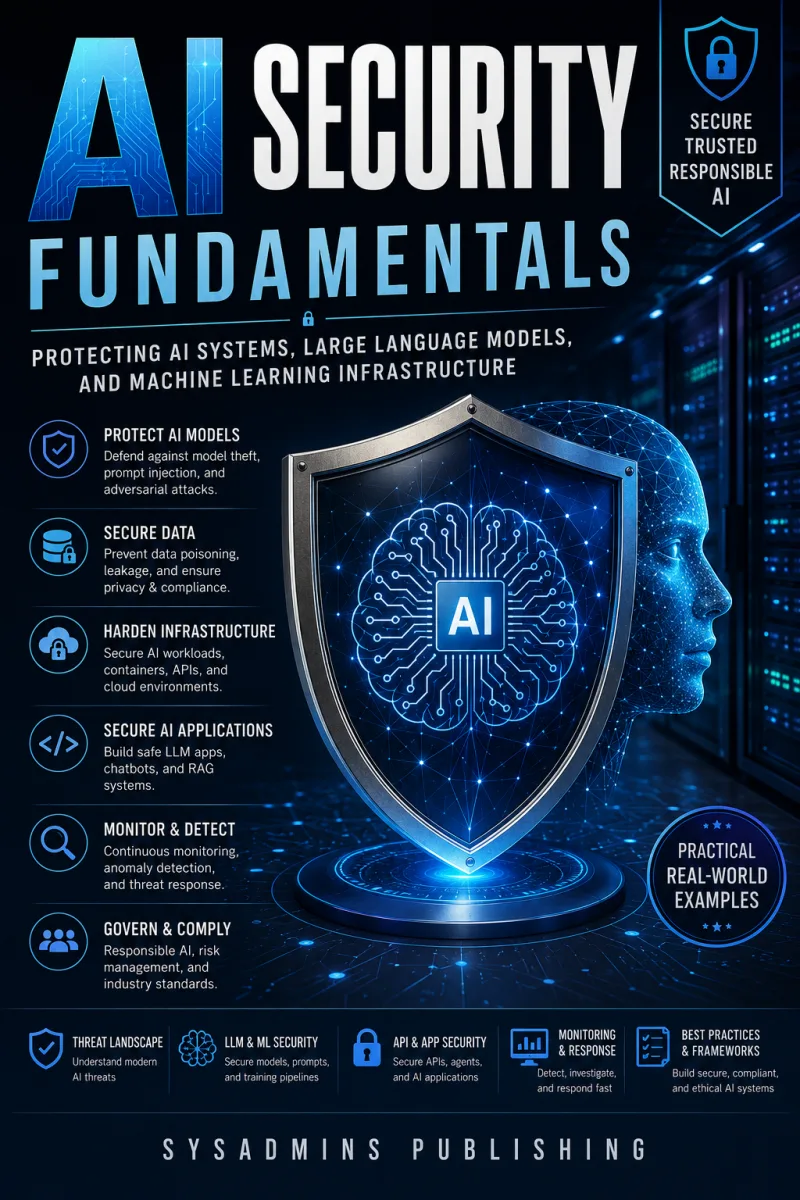
- A dedicated, practical guide to securing AI APIs, LLM services, and agents
- Understand why traditional API security is necessary but insufficient for AI
- Threat modeling tailored to AI APIs, LLM services, and agentic systems
- Authentication and authorization for machine-to-machine and human-to-AI interactions
- In-depth coverage of prompt injection and data leakage through inference
- Secure API design, rate limiting, and abuse prevention as first-line defenses
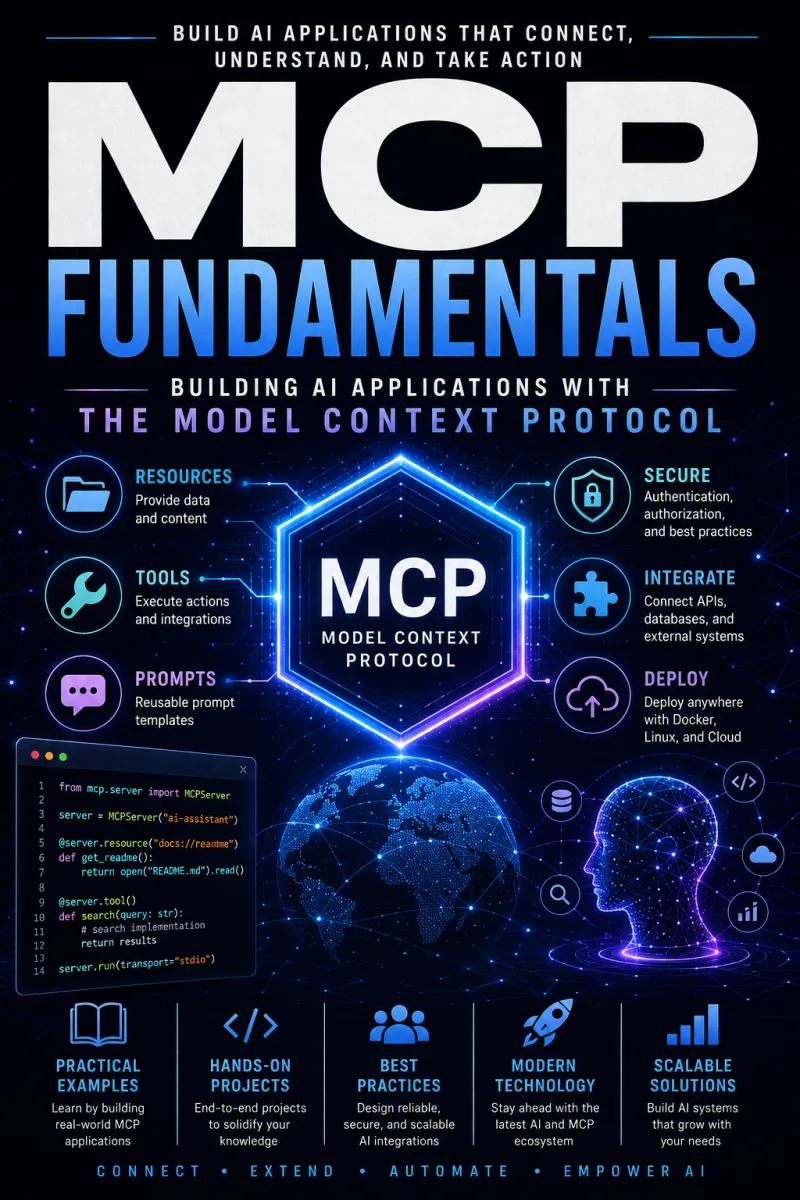
- Securing AI agents and MCP (Model Context Protocol)—the frontier of autonomous risk
- AI infrastructure and network security for workloads at scale
- Monitoring AI APIs and AI-specific incident response
- Compliance and governance for sustainable, auditable security
- DevSecOps practices that embed security into AI pipelines
- Enterprise AI security architecture and emerging trends
- Hands-on projects and a security-first mindset throughout
- Ten reference appendices: security checklist, auth reference and patterns, prompt injection prevention guide, API gateway best practices, incident response playbook, DevSecOps checklist, compliance reference, architecture patterns, and a roadmap
Overview
Secure AI APIs, LLM services, and autonomous agents against threats traditional API security can't handle. This practical guide covers threat modeling, authentication and authorization, prompt injection, data leakage, rate limiting, agent and MCP security, monitoring, incident response, and DevSecOps.
The Problem
AI has moved into the core of enterprise infrastructure—running customer service, automating decisions, orchestrating agents that act on the organization's behalf—and it's being exposed to the internet faster than anyone is securing it. Every day, LLM endpoints, agent frameworks, and AI-powered APIs go live without a full understanding of the unique threat landscape they introduce.
The core problem is that traditional API security, while necessary, simply isn't enough. Nothing in the classic playbook accounts for prompt injection hijacking a model's behavior, data leaking through inference, models being manipulated, or autonomous agents acting with real-world permissions across your systems. These are novel attack vectors that didn't exist a few years ago, and defending against them with authentication and rate limiting alone leaves high-value, decision-making systems dangerously exposed—often without anyone realizing it until something goes wrong.
The Solution
AI API Security is the dedicated, practical resource that gap demands. It recognizes that traditional API security is necessary but insufficient, and weaves security through every layer of the AI stack—from authentication and authorization to network architecture to governance—treating it as a foundational requirement, never an afterthought.
You'll start with threat modeling tailored to AI APIs, LLM services, and agents, then build layered defenses: authentication and authorization patterns, secure API design, rate limiting, and abuse prevention. Dedicated chapters tackle the AI-specific threats classic security misses—prompt injection, data leakage, and the frontier risks of AI agents and MCP. Infrastructure and network security, monitoring, incident response, compliance, and DevSecOps round out a complete program, culminating in enterprise security architecture. With hands-on projects, checklists, an incident response playbook, and reference appendices, this book turns security theory into operational practice you can apply immediately.
About This Book
AI API Security: Securing AI APIs, LLM Services, AI Agents, and Enterprise AI Platforms is a dedicated, practical resource for defending the AI systems now embedded in the core of enterprise infrastructure. AI powers customer service, automates decisions, and orchestrates autonomous agents that act on behalf of organizations—yet as these systems have grown more capable and more deeply embedded, security has struggled to keep pace. Every day, organizations expose LLM endpoints, agent frameworks, and AI-powered APIs to the internet without fully understanding the unique threat landscape they introduce.
This book exists to close that gap. Traditional API security practices, while necessary, are insufficient for the novel risks AI systems pose: prompt injection, model manipulation, data leakage through inference, and the emergent complexities of autonomous agents acting with real-world permissions. Security professionals, API developers, and AI engineers need a focused, practical guide—and that's exactly what this book delivers.
Security Woven Through Every Layer
This book treats security as a discipline that must be woven into every layer of the AI stack—from authentication and authorization, to network architecture, to the governance frameworks that keep enterprises compliant and resilient. Every chapter is grounded in the same premise: security is not an afterthought bolted onto AI systems—it's a foundational requirement for building trustworthy, resilient, enterprise-ready AI platforms.
What You'll Learn
The book progresses from foundations to enterprise architecture, covering:
- Threat modeling tailored specifically to AI APIs, LLM services, and agentic systems
- Authentication and authorization patterns for machine-to-machine and human-to-AI interactions
- Prompt injection and data leakage—two of the most pressing challenges unique to generative AI
- Secure API design, rate limiting, and abuse prevention as first-line defenses
- AI agent and MCP (Model Context Protocol) security, addressing the frontier of autonomous system risk
- Infrastructure and network security for AI workloads at scale
- Monitoring, incident response, and compliance, so organizations can detect, respond to, and govern AI-related incidents
- DevSecOps practices that embed security into AI development pipelines
- Enterprise architecture and emerging trends, preparing you for the challenges on the horizon
Defenses for Threats Traditional Security Misses
AI introduces attack vectors that classic API security simply doesn't address. Dedicated chapters go deep on prompt injection and data leakage through inference—two threats that don't exist in traditional systems—and on securing AI agents and MCP, where autonomous systems act with real permissions across your environment. You'll learn to identify these AI-specific attack vectors and implement layered defenses against them.
From Detection to Response to Governance
Protection isn't only about prevention. The book equips you to build monitoring and incident response capabilities tailored to AI systems, so you can detect and respond to incidents when they occur, and covers compliance and governance so your security posture is sustainable and auditable. DevSecOps chapters show how to embed all of this into your development pipelines rather than bolting it on before launch.
Practical, Not Abstract
This book treats security as both a technical discipline and a mindset, written for practitioners who need clear, actionable guidance rather than abstract theory. Concepts are grounded in real-world scenarios, concrete patterns, and hands-on projects that reinforce a security-first approach. The practical projects, checklists, and reference appendices translate security theory into operational practice you can apply immediately.
Reference Material You'll Return To
Extensive appendices serve as ongoing security references: an AI API security checklist, an authentication reference, authorization patterns, a prompt injection prevention guide, API gateway best practices, an incident response playbook, a DevSecOps security checklist, an AI compliance reference, enterprise security architecture patterns, and an AI security engineer roadmap.
Who This Book Is For
Whether you're a security engineer protecting AI infrastructure, a developer building LLM-powered applications, or an architect designing enterprise AI platforms, this book equips you with actionable frameworks for reducing risk. Security is not a destination—it's a continuous practice, and this book is your guide to mastering that practice in the age of AI.
Who Is This Book For?
- Security engineers protecting AI APIs and infrastructure
- API developers building LLM-powered and agent-based services
- AI and ML engineers responsible for securing what they ship
- Architects designing enterprise AI platforms and security architecture
- DevSecOps engineers embedding security into AI development pipelines
- Incident responders and SOC teams handling AI-related incidents
- Security leaders and CISOs responsible for AI risk and compliance
Who Is This Book NOT For?
- Readers seeking a general AI API development tutorial rather than security (start with a development guide)
- Those wanting a machine learning or model-building book
- Complete non-technical readers looking for a high-level AI overview
- Developers seeking a specific vendor product manual rather than vendor-neutral principles
- Anyone expecting abstract theory without hands-on projects, checklists, and concrete patterns
Table of Contents
- Introduction to AI API Security
- Threat Modeling
- Authentication
- Authorization
- Prompt Injection
- Data Leakage
- Secure API Design
- Rate Limiting & Abuse Prevention
- Securing AI Agents
- MCP Security
- AI Infrastructure Security
- Network Security
- Monitoring AI APIs
- Incident Response
- Compliance & Governance
- DevSecOps for AI APIs
- Practical Projects
- Enterprise AI Security Architecture
- Emerging Security Trends
- Becoming an AI Security Engineer
- Appendix: AI API Security Checklist
- Appendix: Authentication Reference
- Appendix: Authorization Patterns
- Appendix: Prompt Injection Prevention Guide
- Appendix: API Gateway Best Practices
- Appendix: Incident Response Playbook
- Appendix: DevSecOps Security Checklist
- Appendix: AI Compliance Reference
- Appendix: Enterprise Security Architecture Patterns
- Appendix: AI Security Engineer Roadmap
Requirements
- A technical background in security, API development, or AI/ML engineering
- Familiarity with core API concepts (REST, authentication, authorization)
- Understanding of how LLMs, AI APIs, or agents work is strongly helpful
- Basic cybersecurity knowledge (threats, controls, defense in depth) is useful
- Comfort with APIs, containers, and cloud infrastructure for the hands-on chapters
- Access to a test environment to apply the projects, checklists, and patterns
- No prior AI-security experience required—concepts build from foundations