

Vulnerability Tracking Guide
What's Included:
At a Glance
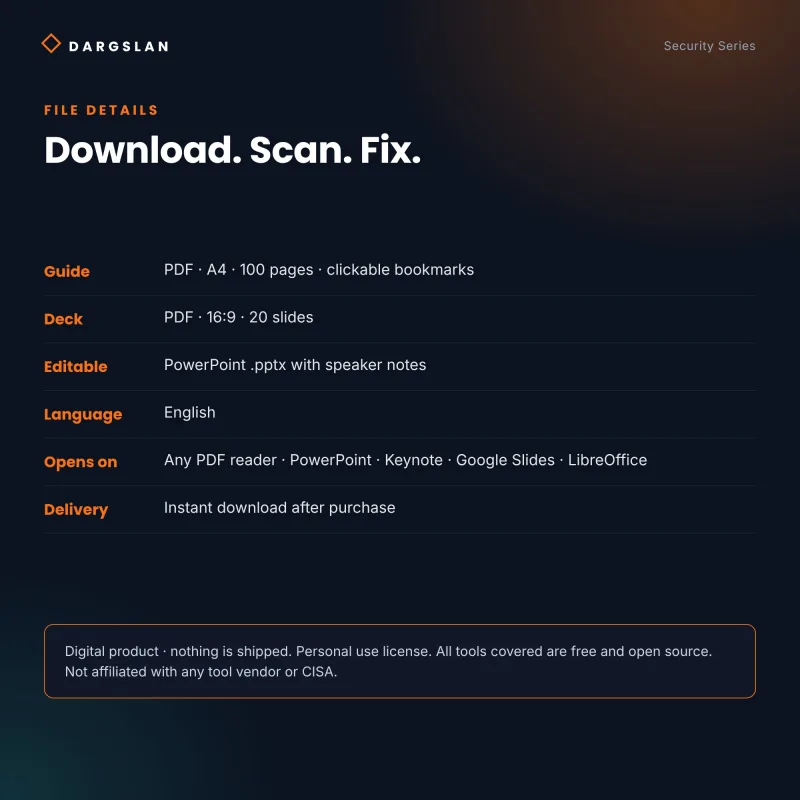
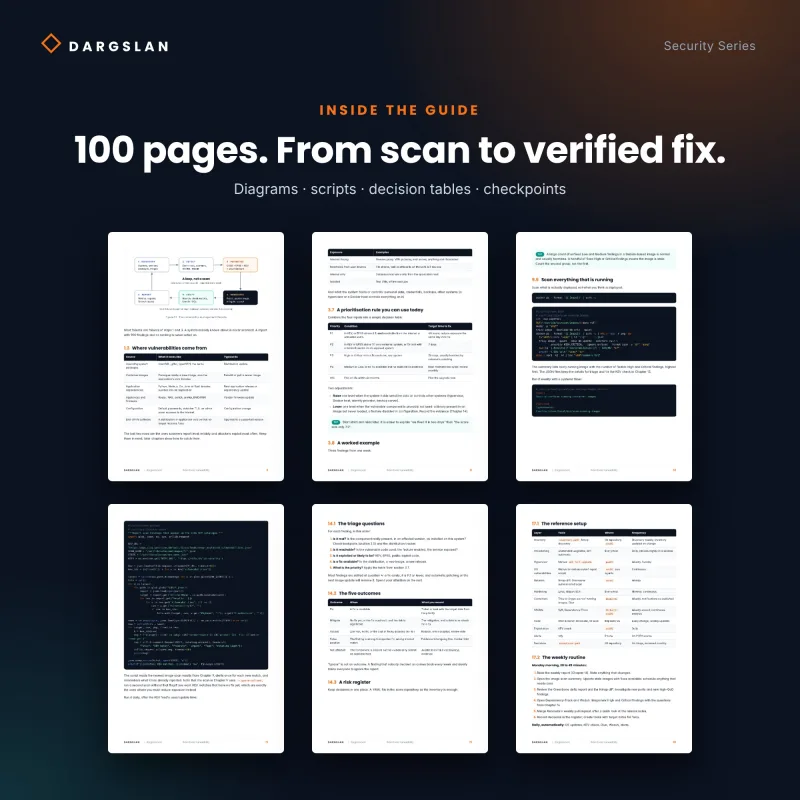
Vulnerability Tracking Guide is a professional Linux Security eBook by Dargslan, 101 pages, available as an instant PDF and EPUB download for €19.96, DRM-free and yours to keep, with free updates. Find, prioritise, and fix vulnerabilities across Linux servers, containers, and home labs. This practical guide runs from inventory to verified patches, coverin...
- Length: 101 pages
- Format: PDF and EPUB (instant download)
- Language: English
- Topic: Linux Security
- Edition: 1st Edition
- Price: €19.96
Key Highlights
- A complete, repeatable loop: inventory, detect, prioritise, fix and verify
- Covers Linux servers, containers, and home labs alike
- Two detection tracks: host (OS, patching, scanning, Wazuh) and software (images, SBOMs, Dependency-Track, your code)
- Understand CVEs, security advisories, and vulnerability databases
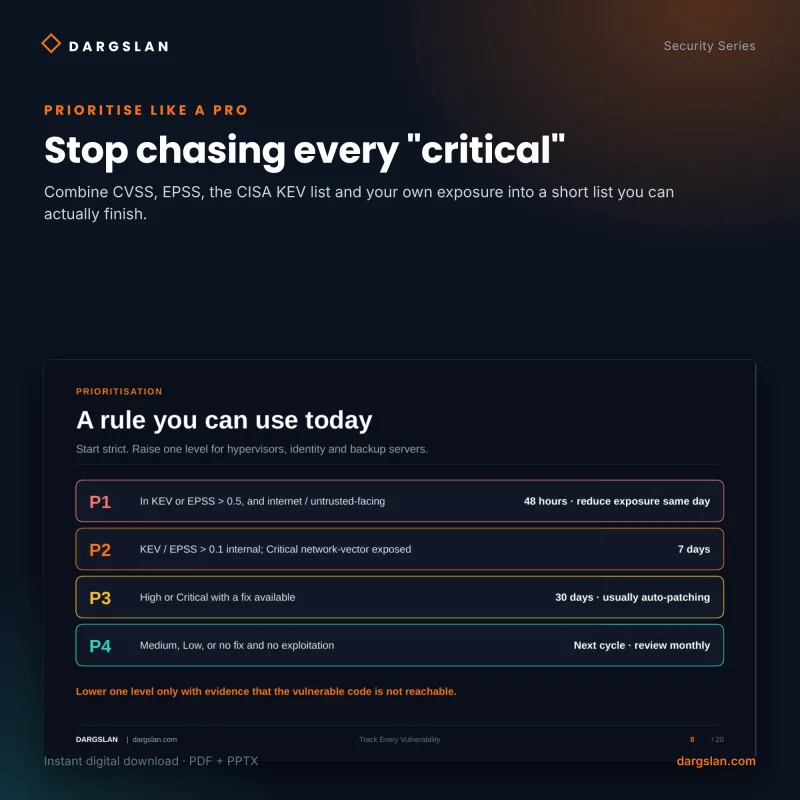
- Scoring and prioritising so you can separate urgent from noise
- Build the inventory foundation-know what you run
- Distribution security tooling and automatic patching
- Network vulnerability scanning for exposed services
- Host auditing and continuous detection with Wazuh
- Scanning container images for known vulnerabilities
- Software bills of materials (SBOMs) and continuous monitoring with Dependency-Track
- Tracking application dependencies and your own code
- Feeds, alerts, and early warning for new threats
- Triage, remediation, and verification that fixes actually worked
- Metrics, reporting, and a "putting it all together" program view
- Built on open-source tooling-no enterprise budget required
Overview
Find, prioritise, and fix vulnerabilities across Linux servers, containers, and home labs. This practical guide runs from inventory to verified patches, covering CVEs and scoring, distro security tooling, automatic patching, network and host scanning, container images, SBOMs, and continuous monitoring.
The Problem
New vulnerabilities are disclosed every single day, and keeping up feels impossible. You run a scanner and get back hundreds of findings with cryptic CVE numbers and severity scores. Which ones actually matter? Which are exploitable in your environment? What do you fix first, and how do you know a fix actually worked? For most administrators and small teams, vulnerability management turns into either paralysis or a false sense of security.
The problem is compounded by scope. It's not just operating systems anymore-it's containers pulling in layers of unknown packages, application dependencies you didn't write, and your own code. Enterprise vulnerability platforms are expensive and overkill for a server fleet, a container stack, or a home lab, while scattered tutorials cover one tool in isolation and never connect inventory, detection, prioritisation, and verification into a workflow you can actually run and sustain.
The Solution
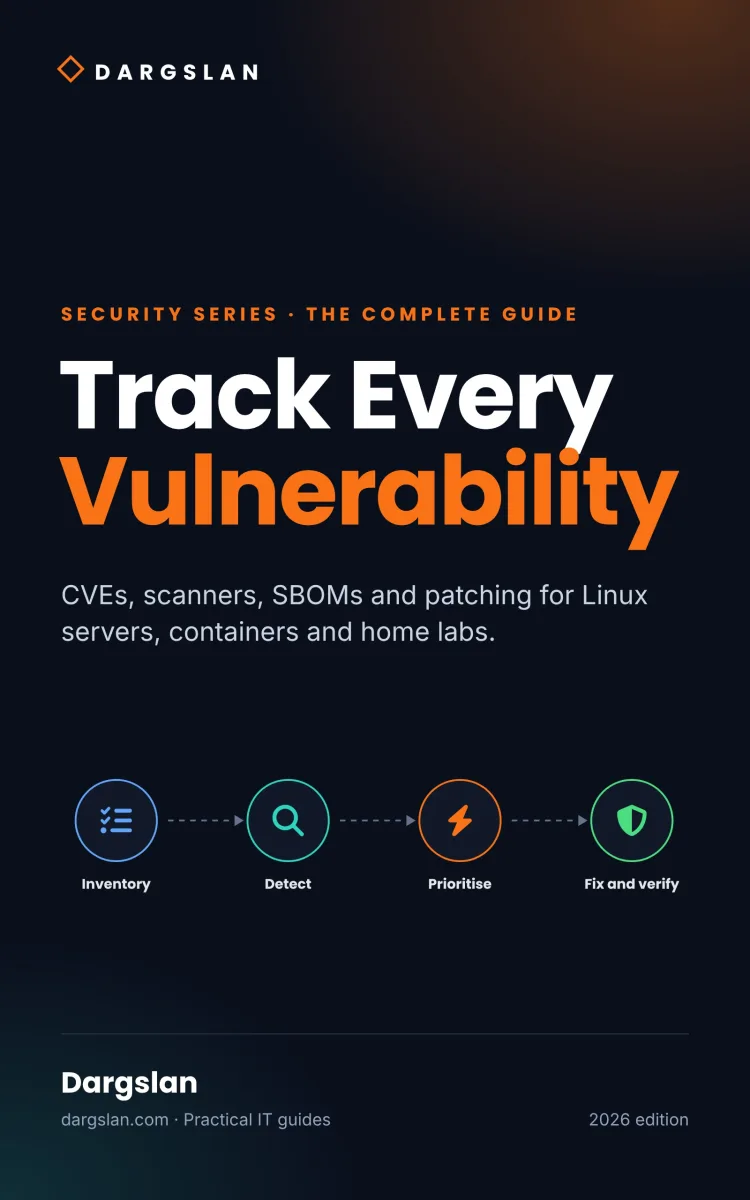
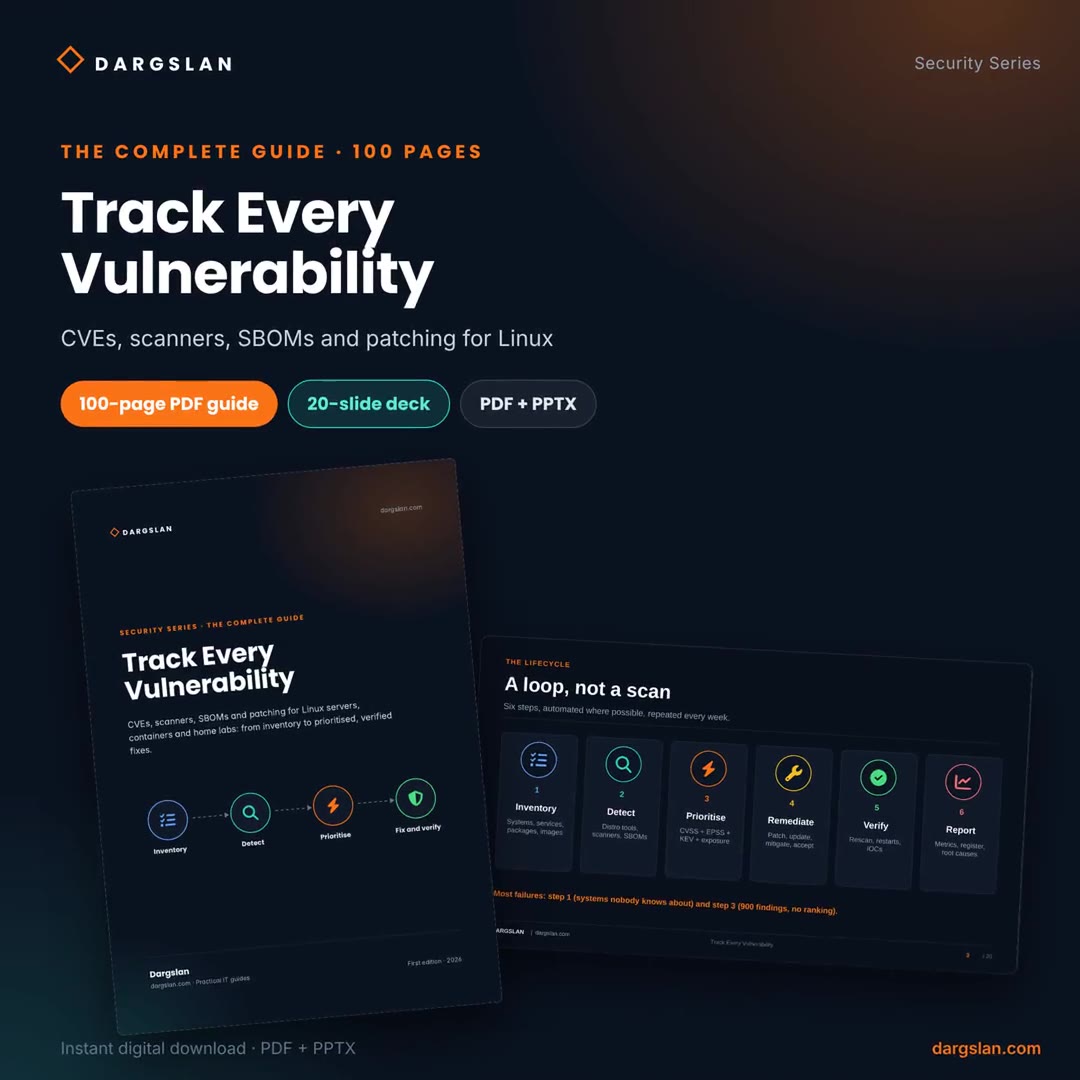
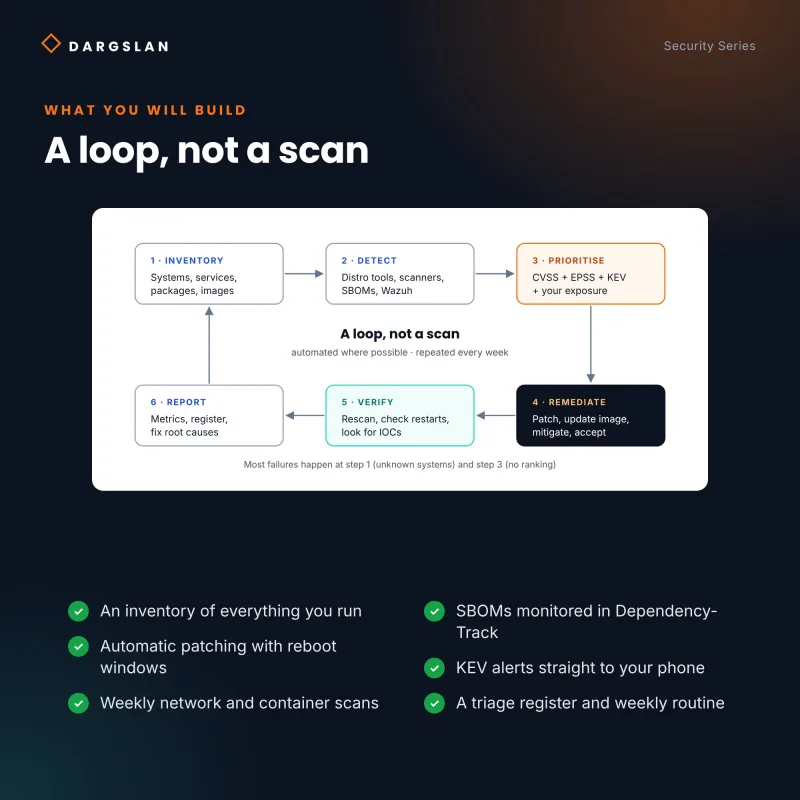
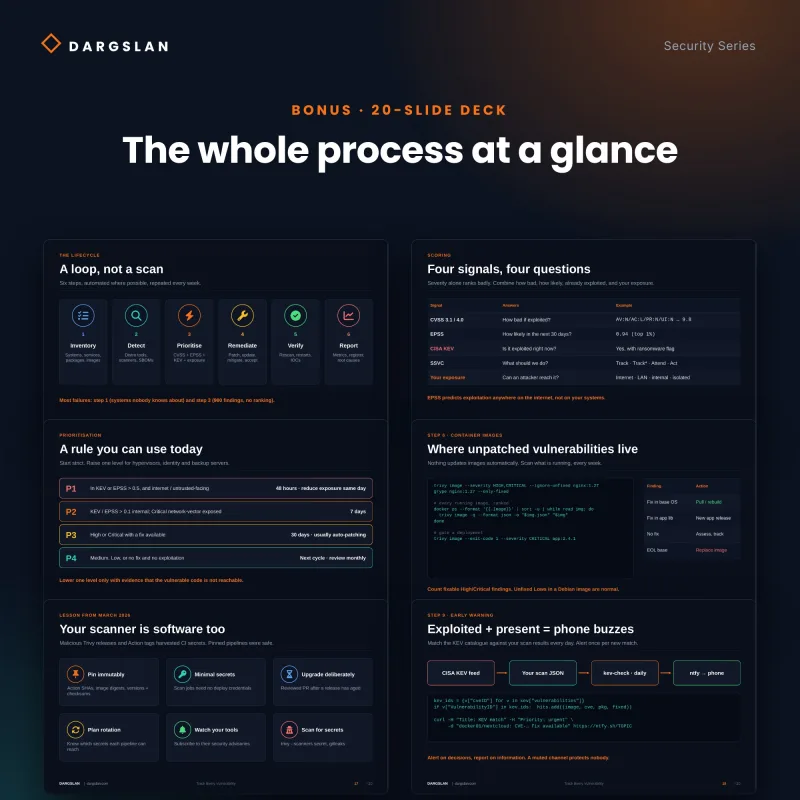
Track Every Vulnerability turns that chaos into a repeatable loop: inventory, detect, prioritise, fix and verify. It's a practical, end-to-end guide to vulnerability management for Linux servers, containers, and home labs-built on open-source tooling, no enterprise budget required.
Two detection tracks run through the book. The host track covers operating systems, patching, network scanning, and continuous auditing with Wazuh; the software track covers container images, SBOMs, Dependency-Track, and your own code. You'll ground yourself in CVEs, scoring, and knowing what you run, then detect across every layer, before mastering the parts most guides skip: triage that turns findings into decisions, and remediation with verification that proves the fix worked. With metrics, reporting, early-warning feeds, and a "putting it all together" chapter, you'll leave with a complete, sustainable vulnerability management program-not just a pile of scan results.
About This Book
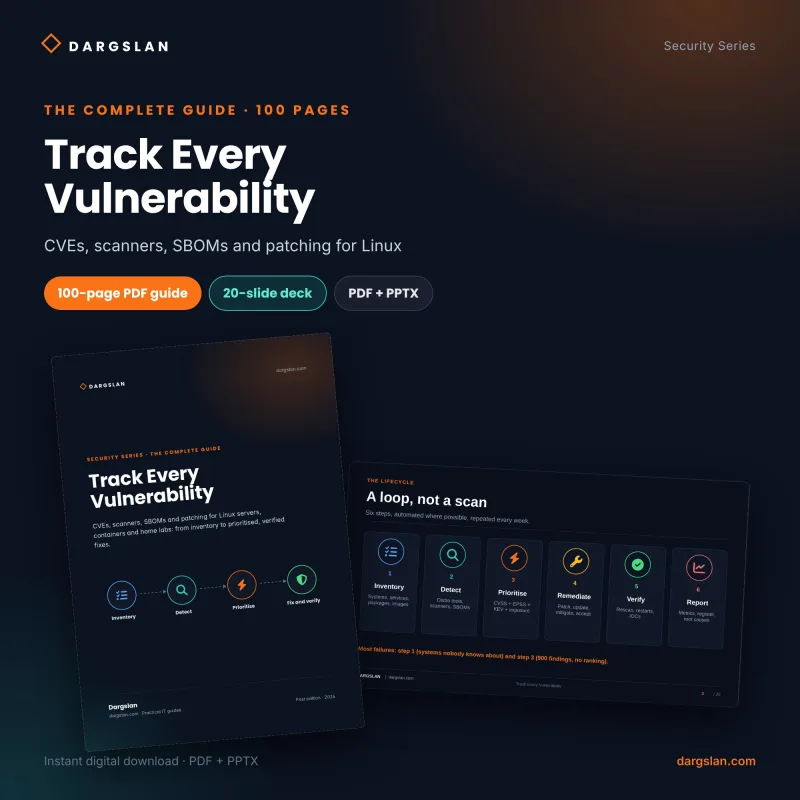
Track Every Vulnerability: CVEs, Scanners, SBOMs and Patching for Linux Servers, Containers and Home Labs takes you from the question "what am I actually running?" all the way to prioritised, verified fixes. Part of Dargslan's Security Series, it's a practical, end-to-end guide to vulnerability management built around a simple, repeatable loop: inventory, detect, prioritise, fix and verify.
Vulnerability management is one of those disciplines everyone knows they should do and few do well. New CVEs appear every day, scanners spit out hundreds of findings, and it's genuinely hard to tell what matters, what to fix first, and whether a fix actually worked. This guide cuts through that noise with a structured workflow you can apply whether you run a fleet of production servers, a stack of containers, or a home lab.
Two Detection Tracks, One Workflow
The book is organised around two complementary detection tracks that run through the whole guide. The host track covers operating systems, patching, network scanning, and continuous host auditing with Wazuh. The software track covers container images, software bills of materials (SBOMs), Dependency-Track, and your own application code and dependencies. Together they give you full coverage-from the OS up through the software you build and ship.
Foundations That Make the Rest Make Sense
You'll start by understanding what vulnerability management actually is, then get a clear grounding in CVEs, security advisories, and databases, and in scoring and prioritising findings so you can separate the urgent from the noise. A dedicated chapter on knowing what you run establishes the inventory foundation that everything else depends on-because you can't secure what you don't know you have.
Detect Across Every Layer
From there, the guide walks the full detection surface:
- Distribution security tooling and automatic patching to keep systems current
- Network vulnerability scanning to find exposed, exploitable services
- Host auditing and continuous detection with Wazuh
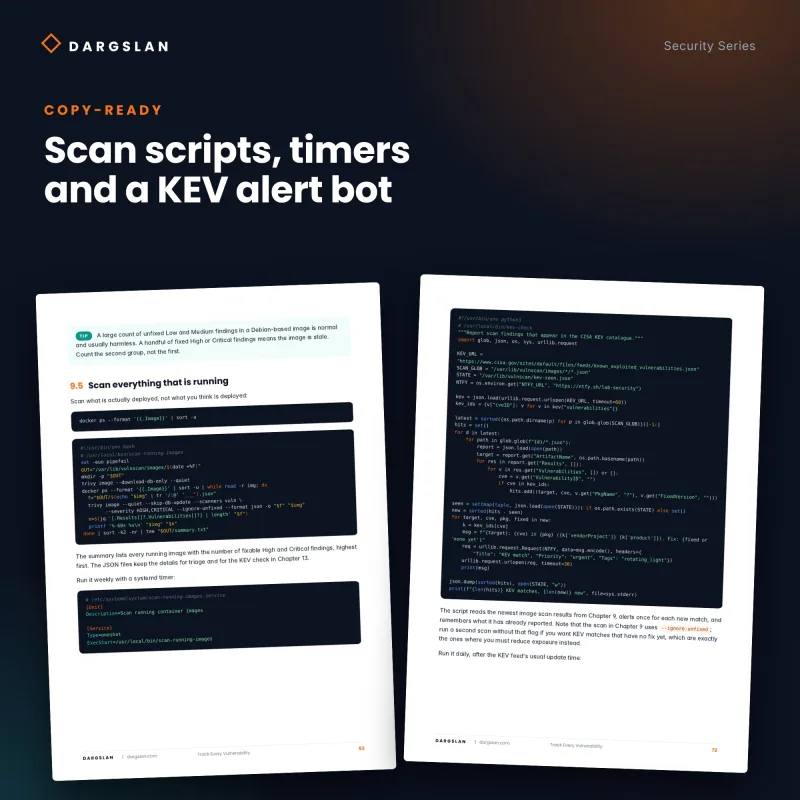
- Scanning container images for known vulnerabilities before and after deployment
- Software bills of materials (SBOMs) to know exactly what's inside your software
- Continuous monitoring with Dependency-Track
- Application dependencies and your own code, closing the loop on what you build
- Feeds, alerts, and early warning so new threats reach you fast
From Findings to Verified Fixes
Detection is only half the job. The guide dedicates real attention to what most tools leave you to figure out alone: triage-turning a pile of findings into actual decisions-followed by remediation and verification, so you can prove a fix genuinely closed the hole rather than hoping it did. Chapters on metrics and reporting, and on putting it all together, turn these pieces into a sustainable program you can measure and improve over time.
Practical for Real Environments
This isn't enterprise theory bolted onto tools you'll never run. The guidance is grounded in open-source tooling and scaled for Linux servers, containers, and home labs alike, so you can stand up a real vulnerability management workflow without an enterprise budget. The appendices provide reference material to support the workflow as you operate it day to day.
Who This Book Is For
Whether you're a system administrator responsible for patching, a DevOps or security engineer building detection into your pipelines, or a home lab enthusiast who wants to take security seriously, this guide meets you where you are and gives you a complete, repeatable process-from inventory to prioritised, verified fixes.
Why This Book
You can't patch everything, and you can't patch nothing. The real skill is knowing what you run, seeing what's vulnerable, deciding what matters, fixing it, and proving it's fixed. This guide gives you that skill as a working discipline, across both the host and software sides of your environment.
Who Is This Book For?
- System administrators responsible for patching and keeping systems current
- DevOps and SRE engineers building scanning into their pipelines
- Security practitioners running vulnerability management on a budget
- Developers who want to track and fix vulnerabilities in their dependencies and code
- Home lab enthusiasts taking security seriously
- Small teams needing an open-source alternative to enterprise vuln platforms
- Anyone who needs to go from scanner noise to prioritised, verified fixes
Who Is This Book NOT For?
- Complete beginners with no Linux or command-line experience
- Readers seeking a Windows- or macOS-focused vulnerability guide
- Those wanting a manual for one specific commercial vulnerability platform
- Users looking for offensive security or penetration testing rather than defensive vuln management
- Anyone wanting pure theory without hands-on tooling and a real workflow
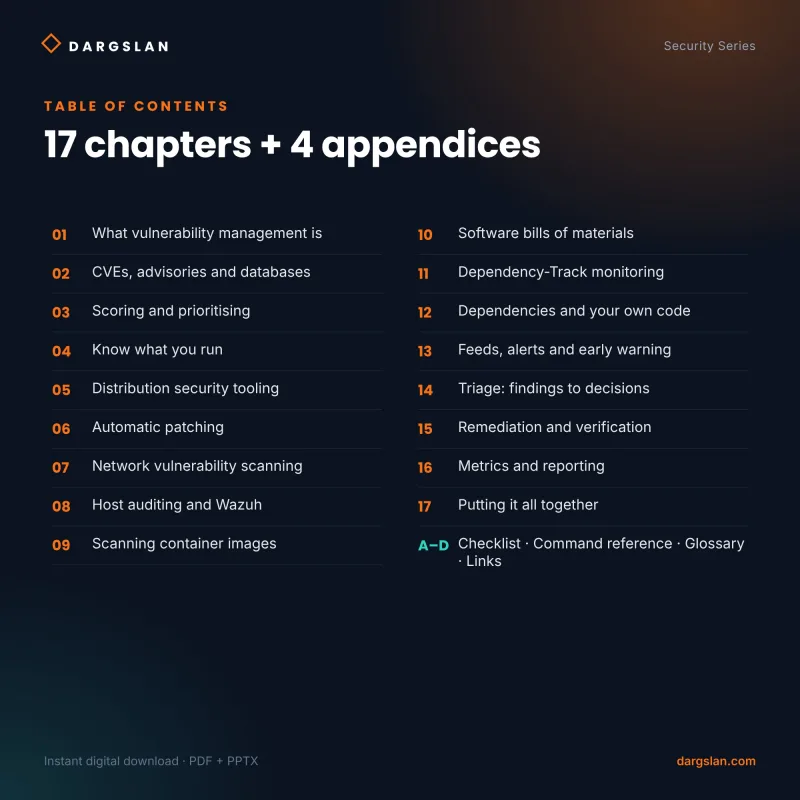
Table of Contents
- What Vulnerability Management Is
- CVEs, Advisories and Databases
- Scoring and Prioritising
- Know What You Run
- Distribution Security Tooling
- Automatic Patching
- Network Vulnerability Scanning
- Host Auditing and Continuous Detection (Wazuh)
- Scanning Container Images
- Software Bills of Materials (SBOMs)
- Continuous Monitoring with Dependency-Track
- Application Dependencies and Your Own Code
- Feeds, Alerts and Early Warning
- Triage: From Findings to Decisions
- Remediation and Verification
- Metrics and Reporting
- Putting It All Together
- Appendices
Requirements
- Working familiarity with Linux and the command line
- Access to Linux systems, containers, or a home lab to scan and secure
- Root or sudo access to patch systems and run auditing tools
- Basic understanding of networking and how services are exposed
- Familiarity with containers (Docker/Podman) helps for the software track
- Willingness to run open-source tooling such as scanners, Wazuh, and Dependency-Track
- No prior vulnerability-management experience required-the workflow builds from first principles